
De vs Desde
De = OF or FROM (origin). Desde = SINCE or FROM (starting point).
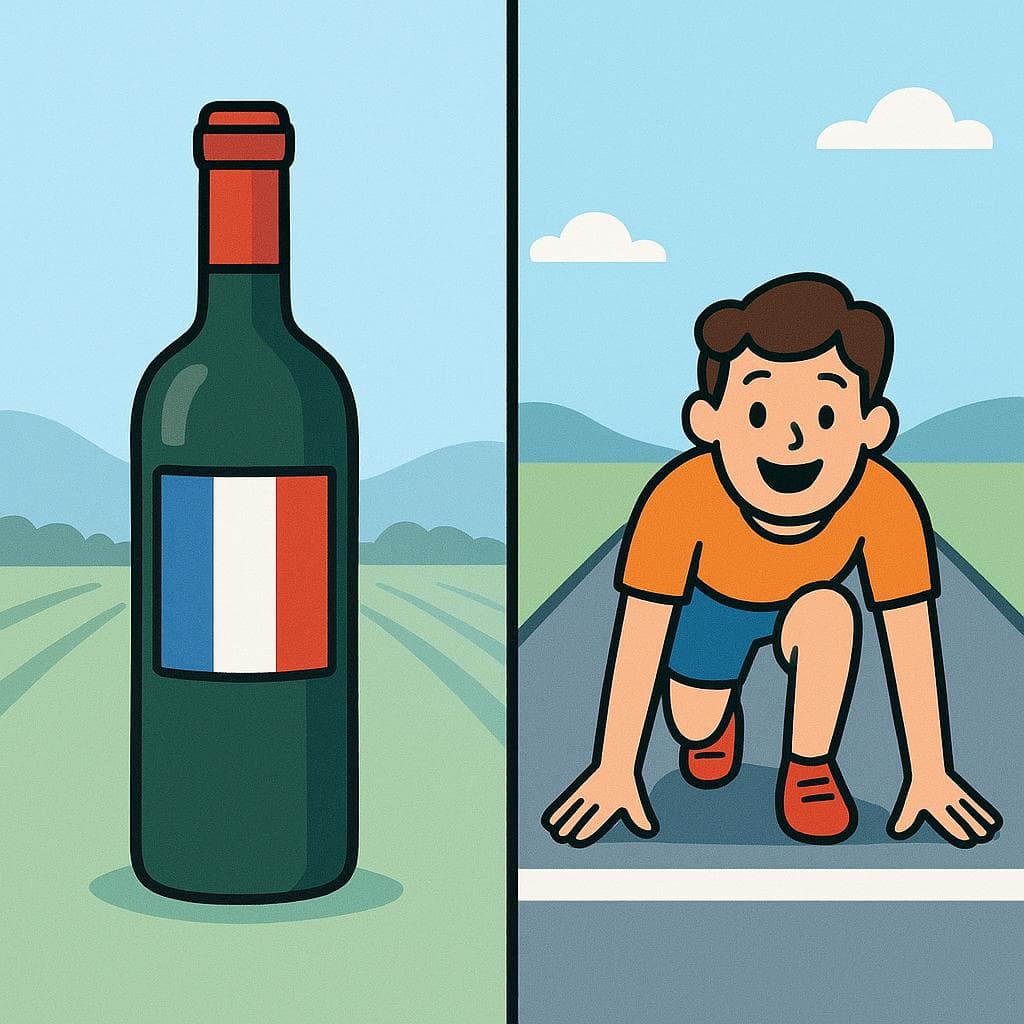
de
Of, from (used for origin, possession, material, and simple ranges)
DEHdesde
From (a starting point in space), since (a starting point in time)
DEHS-dehQuick Rule
De = OF or FROM (origin). Desde = SINCE or FROM (starting point).
Think: De for DNA (your origin). Desde for Distance (a starting point).
- For simple 'from A to B' travel, you can often use 'de' ('Voy de Madrid a Barcelona'), but 'desde' adds more emphasis on the starting point of the journey.
Comparison Table
| Context | de | desde | Why? |
|---|---|---|---|
| Origin vs. Starting Point | Este vino es de Chile. | Viajo desde Chile mañana. | De states the wine's permanent origin. Desde marks the starting point of a journey. |
| Time | La clase es de 10 a 11. | Estoy en clase desde las 10. | De... a... describes a fixed schedule. Desde means 'since' a starting time. |
| Movement | Vengo de la oficina. | Corrí desde la oficina. | De is a neutral 'from'. Desde emphasizes the start of the action (running). |
| Location/Viewpoint | La foto de la montaña. | La foto desde la montaña. | De = a photo OF the mountain. Desde = a photo taken FROM the mountain. |
When to Use "de / desde"
de
Of, from (used for origin, possession, material, and simple ranges)
DEH
Origin & Nationality
Mi amigo es de Perú.
My friend is from Peru.
Possession ('s)
Es el coche de mi padre.
It's my father's car.
Material (made of)
Una camisa de algodón.
A cotton shirt.
Topic (about)
Un libro de aventuras.
An adventure book.
Simple Time/Space Range (de... a...)
Trabajo de 9 a 5.
I work from 9 to 5.
desde
From (a starting point in space), since (a starting point in time)
DEHS-deh
Starting point in space
Caminamos desde la playa hasta el hotel.
We walked from the beach to the hotel.
Starting point in time (since)
Vivo aquí desde 2020.
I've lived here since 2020.
From a viewpoint
Se ve el mar desde mi ventana.
You can see the sea from my window.
Used with 'hasta' for a clear range
La oferta es válida desde hoy hasta el viernes.
The offer is valid from today until Friday.
Contrast Examples
With "de":
El autobús va de Sevilla a Madrid.
The bus goes from Seville to Madrid.
With "desde":
Conduje desde Sevilla hasta Madrid.
I drove from Seville to Madrid.
The Difference: 'De... a...' is like reading a bus schedule—it's a standard route. 'Desde... hasta...' emphasizes the journey itself, the starting point, and the destination.
With "de":
Es una foto de la torre.
It's a photo of the tower.
With "desde":
Es una foto desde la torre.
It's a photo (taken) from the tower.
The Difference: 'De' describes the subject of the photo. 'Desde' describes the location or viewpoint where the photo was taken.
Common Mistakes
Vivo en Madrid de 2018.
Vivo en Madrid desde 2018.
When talking about a starting point in time that continues to the present ('since'), you must use 'desde'.
Este café es desde Colombia.
Este café es de Colombia.
To talk about where a product comes from (its origin), always use 'de'.
Te llamo de mi casa.
Te llamo desde mi casa.
When you want to say 'I'm calling you FROM my house', 'desde' is better because it marks your current location as the starting point of the call.
Quick Practice
Quick Quiz: De vs Desde
Question 1 of 2
Which is correct? 'Mi familia es ___ México.'
Related Grammar
Want to understand the grammar behind this pair? Explore these lessons for a deep dive:
Key Words



Tags
Build the instinct, not just the rule
Rules help you get it right; context makes it automatic. Read 200+ illustrated and narrated Spanish stories to see confusing pairs chosen correctly — over and over — until you stop thinking about it.
Frequently Asked Questions
Can I always use 'de' instead of 'desde' for travel?
Not always. For a simple statement of a route like 'The train goes from A to B,' 'de' is common. But if you want to emphasize your personal journey or the distance covered, 'desde' is better. For example, 'Caminé desde mi casa' (I walked from my house) sounds more natural than 'Caminé de mi casa'.
What's the difference between 'de... a...' and 'desde... hasta...'?
'De... a...' is very common for schedules and fixed ranges (e.g., 'de lunes a viernes'). 'Desde... hasta...' is used for the same thing but adds a bit more emphasis on the start and end points, and is more common for durations and journeys. Think of 'de... a...' as 'from... to...' and 'desde... hasta...' as 'all the way from... until...'.