
Después de vs Detrás de
Después de = Time (after). Detrás de = Space (behind).
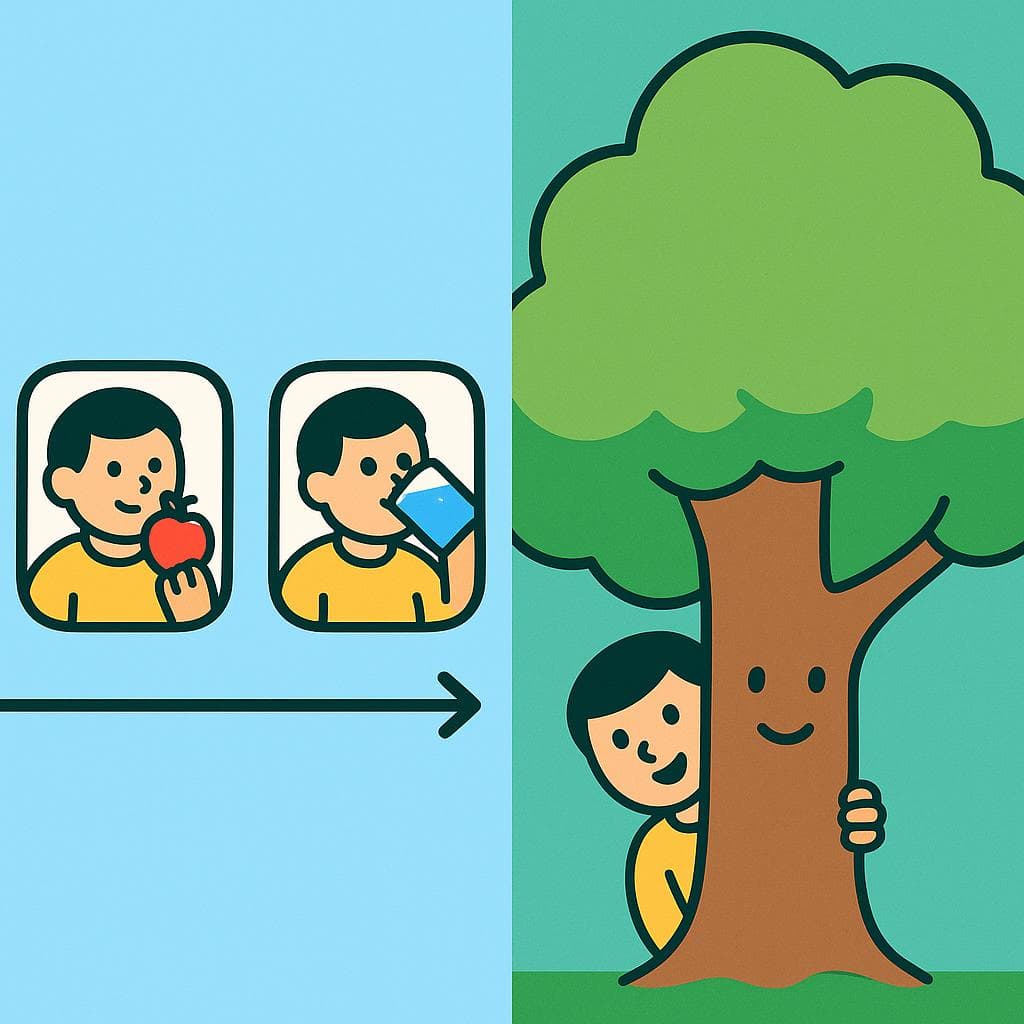
después de
After (in time); following a sequence of events.
dess-PWESS dehdetrás de
Behind (in physical location); at the back of something.
deh-TRASS dehQuick Rule
Después de = Time (after). Detrás de = Space (behind).
Think: 'Después' feels like 'day pass' (time). 'Detrás' has 'tras' which sounds like 'track' (a physical place).
- The main confusion is for English speakers. In English, 'after' can mean 'behind' (e.g., 'B comes after A'), but in Spanish, this distinction between time and space is very strict.
Comparison Table
| Context | después de | detrás de | Why? |
|---|---|---|---|
| In a queue | Llegué después de ti. | Estoy parado detrás de ti. | 'Después de' refers to your arrival time. 'Detrás de' refers to your physical position in the line. |
| Giving directions | La farmacia está después del semáforo. | La farmacia está detrás del banco. | 'Después de' means it's the next thing on your route. 'Detrás de' means it's physically at the back of the bank. |
| Daily routine | Después de cenar, veo la tele. | El control remoto está detrás del cojín. | Use 'después de' for the order of your activities (time). Use 'detrás de' for where objects are located (space). |
When to Use "después de / detrás de"
después de
After (in time); following a sequence of events.
dess-PWESS deh
Sequence of events
Después de la clase, voy a casa.
After class, I'm going home.
Following a point in time
Nos vemos después del almuerzo.
We'll see each other after lunch.
Following an action (verb)
Después de correr, siempre bebo agua.
After running, I always drink water.
detrás de
Behind (in physical location); at the back of something.
deh-TRASS deh
Physical location
El perro está detrás de la puerta.
The dog is behind the door.
Position in a line or order
Estoy detrás de ti en la fila.
I am behind you in the line.
Something being hidden
Escondió el regalo detrás de su espalda.
He hid the gift behind his back.
Contrast Examples
With "después de":
Llegué a la fiesta después de Carlos.
I arrived at the party after Carlos.
With "detrás de":
Me senté detrás de Carlos en el cine.
I sat behind Carlos at the movies.
The Difference: 'Después de' is about the timeline of your arrival (he got there first). 'Detrás de' is about your physical location in space (he's in front of you).
With "después de":
La panadería está después del banco.
The bakery is after the bank. (You'll pass the bank, then see it.)
With "detrás de":
El estacionamiento está detrás del banco.
The parking lot is behind the bank. (It's at the back of the building.)
The Difference: 'Después de' creates a sequence for a journey (first A, then B). 'Detrás de' describes a static physical relationship between two objects.
Common Mistakes
En la fila, estoy después de ti.
En la fila, estoy detrás de ti.
Your physical position in a line is about space, not time. You are 'behind' (detrás de) the person, even if you also arrived 'after' (después de) them.
Mi casa está detrás de la iglesia.
Mi casa está después de la iglesia.
When giving directions along a path, you mean 'after' you pass the church. 'Detrás de' would imply your house is physically at the back of the church building.
Quick Practice
Quick Quiz: Después de vs Detrás de
Question 1 of 2
Completa la frase: ___ la película, vamos por un helado.
Related Grammar
Want to understand the grammar behind this pair? Explore these lessons for a deep dive:
Key Words
Tags
Build the instinct, not just the rule
Rules help you get it right; context makes it automatic. Read 200+ illustrated and narrated Spanish stories to see confusing pairs chosen correctly — over and over — until you stop thinking about it.
Frequently Asked Questions
Can 'después de' ever be used for location?
Almost never. Spanish is very strict about this. 'Después de' is for time/sequence, and 'detrás de' is for physical location. The only exception might be in an abstract sense like 'his name comes after mine on the list,' but even then, it's about sequence, not physical place.
What are the opposites of these two prepositions?
Great question! The opposite of 'después de' (after, time) is 'antes de' (before, time). The opposite of 'detrás de' (behind, space) is 'delante de' (in front of, space).