
Disculpar vs Perdonar
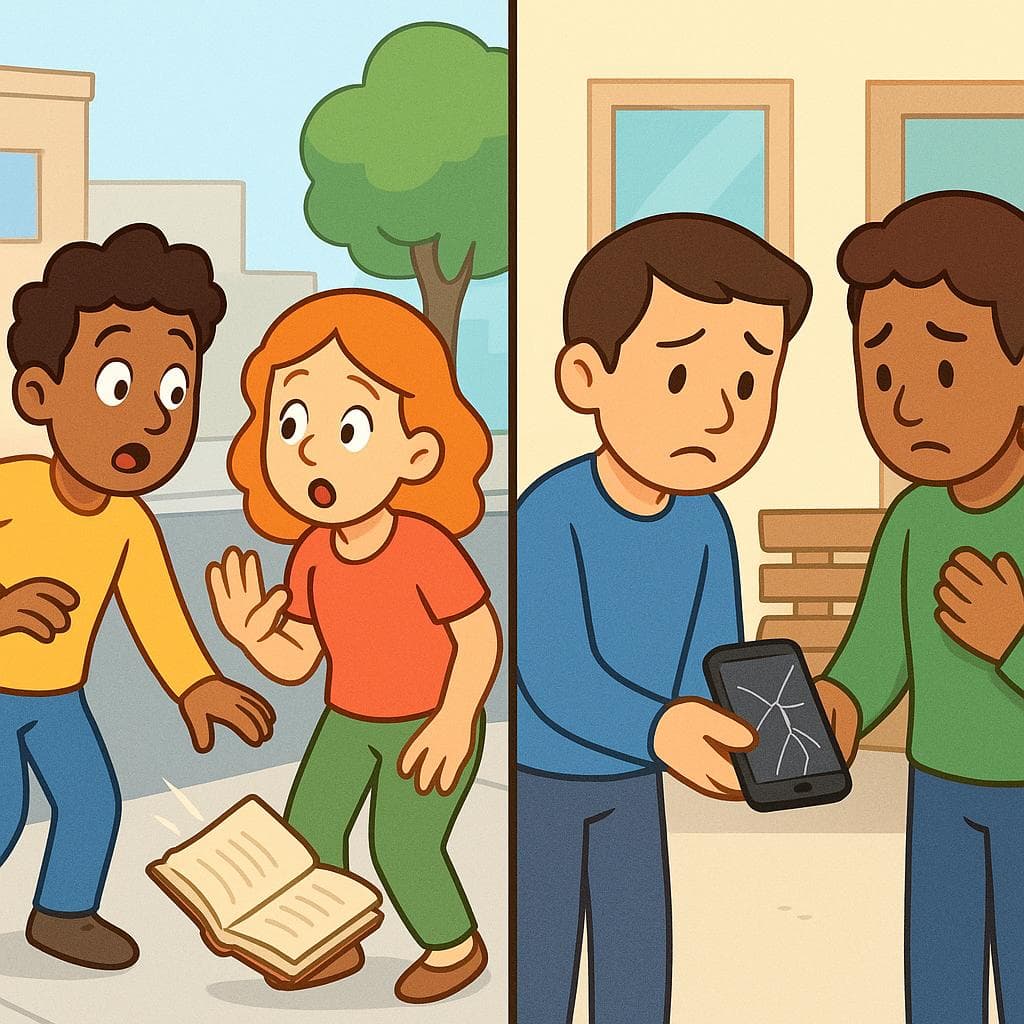
Disculpar = Excuse me (for a small oops). Perdonar = Forgive me (for a real hurt).
disculpar
To excuse or apologize for a minor inconvenience, interruption, or social mistake.
dees-cool-PARperdonar
To forgive or pardon someone for a more significant offense, wrongdoing, or emotional hurt.
pehr-doh-NARQuick Rule
Disculpar = Excuse me (for a small oops). Perdonar = Forgive me (for a real hurt).
Think: Disculpar is for an 'interruption.' Perdonar is for an 'infraction.'
- The short noun 'perdón' is very commonly used for small things, just like 'disculpe' (e.g., 'Perdón, ¿qué hora es?').
- Both can be used to get someone's attention, but 'disculpe' is slightly more common for that purpose.
Comparison Table
| Context | disculpar | perdonar | Why? |
|---|---|---|---|
| Severity | Disculpa por llegar cinco minutos tarde. | Perdóname por olvidar nuestro aniversario. | Disculpar for a minor inconvenience, perdonar for a significant, hurtful mistake. |
| Getting Attention | Disculpe, ¿esta es la fila para el cine? | Perdón, ¿me dejas pasar? | Both work. 'Disculpe' is very common and polite. 'Perdón' is also very common and slightly more informal. |
| Physical Accident | ¡Disculpa! Te pisé sin querer. | Perdóname por haberte empujado. | Use 'disculpa' for a small, unintentional accident. Use 'perdóname' if the action was intentional or caused real harm. |
| The Request | Pido una disculpa por el error. | Te pido perdón de todo corazón. | 'Pedir disculpas' is often a formal apology. 'Pedir perdón' implies seeking true, heartfelt forgiveness. |
When to Use "disculpar / perdonar"
disculpar
To excuse or apologize for a minor inconvenience, interruption, or social mistake.
dees-cool-PAR
Getting someone's attention
Disculpe, señor, ¿sabe dónde está el metro?
Excuse me, sir, do you know where the subway is?
Apologizing for a small mistake
Disculpa el desorden, no esperaba visitas.
Excuse the mess, I wasn't expecting visitors.
Accidentally bumping into someone
¡Uy, disculpa! No te vi.
Oops, excuse me! I didn't see you.
Interrupting politely
Disculpa que te interrumpa, pero tengo una llamada.
Sorry to interrupt you, but I have a call.
perdonar
To forgive or pardon someone for a more significant offense, wrongdoing, or emotional hurt.
pehr-doh-NAR
Forgiving a serious offense
Es difícil perdonar una traición.
It's difficult to forgive a betrayal.
Asking for deep forgiveness
Por favor, perdóname. No quise herirte.
Please, forgive me. I didn't mean to hurt you.
As a common, short apology (overlap)
Perdón, no entendí. ¿Puedes repetir?
Sorry, I didn't understand. Can you repeat?
Granting a pardon (formal)
El gobernador perdonó al prisionero.
The governor pardoned the prisoner.
Contrast Examples
With "disculpar":
Disculpa, creo que tomé tu bolígrafo por error.
Excuse me, I think I took your pen by mistake.
With "perdonar":
Por favor, perdóname por no haber estado allí para ti.
Please, forgive me for not having been there for you.
The Difference: Disculpar is for correcting a minor, impersonal mistake. Perdonar is for mending an emotional hurt or a serious failure.
With "disculpar":
Disculpe, profesor, ¿puedo hacer una pregunta?
Excuse me, professor, may I ask a question?
With "perdonar":
Perdón que te moleste, pero es algo urgente.
Sorry to bother you, but it's something urgent.
The Difference: In this context, they are almost interchangeable. 'Disculpe' is a standard polite way to get attention. 'Perdón' works just as well and is extremely common in everyday speech.
Common Mistakes
Me disculpas por haberte mentido sobre algo tan importante.
Me perdonas por haberte mentido sobre algo tan importante.
A serious lie requires forgiveness ('perdonar'), not just an excuse ('disculpar'). The emotional weight is much higher.
Quiero perdonar por el ruido.
Quiero disculparme por el ruido. / Disculpen el ruido.
Noise is a minor annoyance. Use 'disculpar' to apologize for it. 'Perdonar' would sound overly dramatic.
Quick Practice
Quick Quiz: Disculpar vs Perdonar
Question 1 of 2
You accidentally bump into someone on a crowded bus. What do you say?
Related Grammar
Want to understand the grammar behind this pair? Explore these lessons for a deep dive:
Key Words



Tags
Build the instinct, not just the rule
Rules help you get it right; context makes it automatic. Read 200+ illustrated and narrated Spanish stories to see confusing pairs chosen correctly — over and over — until you stop thinking about it.
Frequently Asked Questions
What about 'lo siento'?
Great question! 'Lo siento' (I'm sorry) is used to express sympathy or regret, especially for bad news ('Lo siento por tu pérdida' - I'm sorry for your loss) or when you genuinely feel bad about something. While it can be used for apologies, 'disculpa/perdón' are more direct ways of saying 'excuse me' or 'forgive me'.
So 'perdón' can be used for small things too?
Yes, absolutely! This is a key point of confusion. While the verb 'perdonar' is for big things, the single word 'perdón' is extremely common for small interruptions, like getting past someone or asking them to repeat something. Think of it like the difference between 'forgive me' and 'pardon me'.
Is 'disculpe' more formal than 'perdón'?
When getting a stranger's attention, 'disculpe' (the 'usted' form) can feel a touch more formal and polite than just 'perdón'. However, both are completely acceptable. For friends, you'd use 'disculpa' (the 'tú' form) or 'perdón'.