
Extrañar vs Echar de Menos
Same meaning, different region. 'Extrañar' is Latin America's go-to. 'Echar de menos' is Spain's favorite.
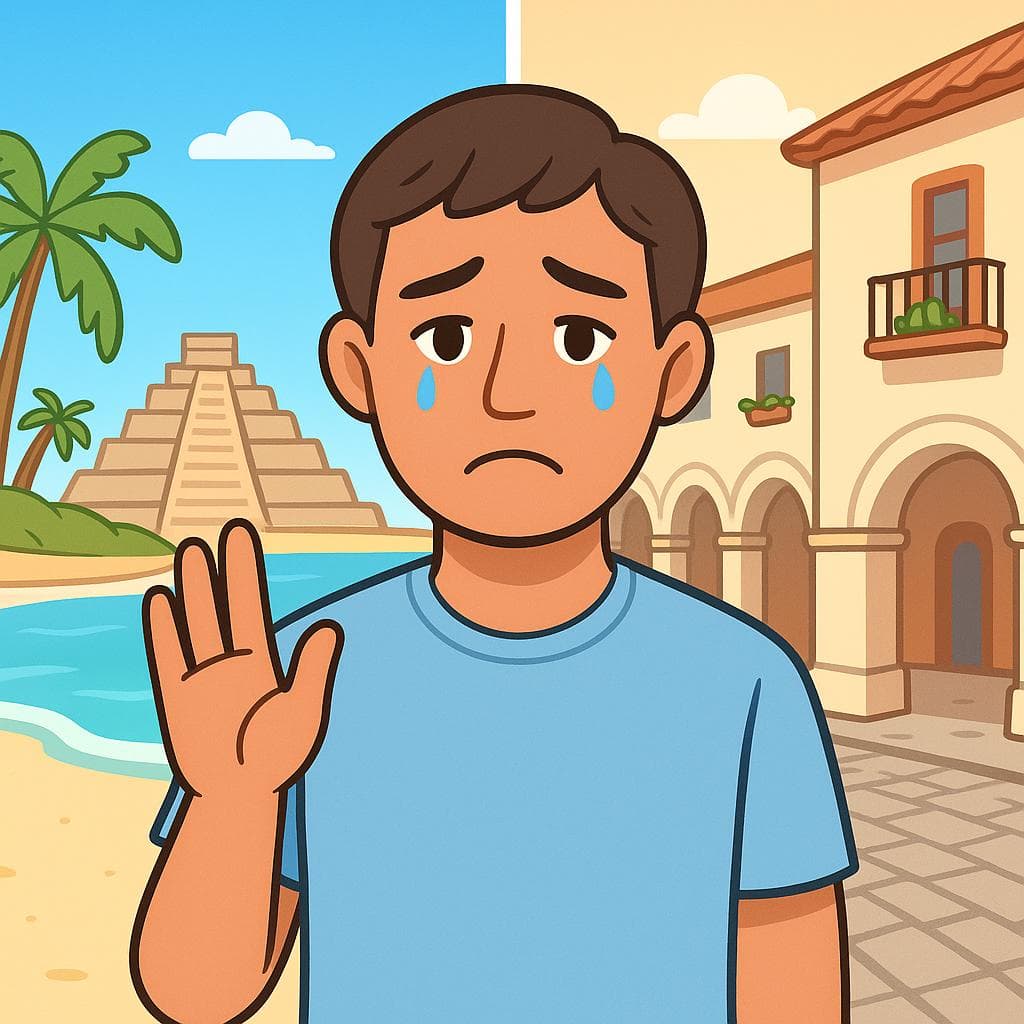
extrañar
To miss (someone/something); to feel the absence of. The most common choice in Latin America.
ex-trah-NYARechar de menos
To miss (someone/something); to feel the absence of. The most common choice in Spain.
eh-CHAR day MEH-nohsQuick Rule
Same meaning, different region. 'Extrañar' is Latin America's go-to. 'Echar de menos' is Spain's favorite.
Think: 'Echar de menos' and 'España' both start with 'E'.
- Both are understood everywhere, so you can't really be 'wrong'.
- Only 'extrañar' has a second meaning: 'to find something strange' or 'to surprise'.
Comparison Table
| Context | extrañar | echar de menos | Why? |
|---|---|---|---|
| Regional Preference | Te extraño. | Te echo de menos. | 'Extrañar' is dominant in Latin America. 'Echar de menos' is dominant in Spain. Both mean 'I miss you'. |
| Formality | Extraño nuestras conversaciones. | Echo de menos nuestras conversaciones. | Both are equally valid in any context. Neither is inherently more or less formal than the other. |
| Sentence Structure | Mi perro me extraña. | Mi perro me echa de menos. | The structure is identical. The object pronoun (me, te, lo, la, etc.) goes before the conjugated verb. |
When to Use "extrañar / echar de menos"
extrañar
To miss (someone/something); to feel the absence of. The most common choice in Latin America.
ex-trah-NYAR
Missing a person (LatAm)
Te extraño mucho, mamá.
I miss you a lot, mom.
Missing a place
Extraño mi país y su comida.
I miss my country and its food.
Missing an activity
Extraño salir con mis amigos.
I miss going out with my friends.
To find strange/surprise
Me extraña que no haya venido.
It surprises me that he hasn't come.
echar de menos
To miss (someone/something); to feel the absence of. The most common choice in Spain.
eh-CHAR day MEH-nohs
Missing a person (Spain)
Te echo de menos, abuela.
I miss you, grandma.
Missing a place
Echo de menos las playas de Cádiz.
I miss the beaches of Cadiz.
Missing a feeling
Echo de menos la vida sin preocupaciones.
I miss the worry-free life.
Cannot be used for surprise
No se puede usar para expresar sorpresa.
It cannot be used to express surprise.
Contrast Examples
With "extrañar":
Te extraño.
I miss you. (Common in Latin America)
With "echar de menos":
Te echo de menos.
I miss you. (Common in Spain)
The Difference: These mean exactly the same thing. The only difference is geography. Use the one that matches the region you're focused on to sound more natural.
With "extrañar":
Me extraña tu actitud.
Your attitude seems strange to me.
With "echar de menos":
(Inaplicable)
(Not applicable)
The Difference: This is the one key functional difference. Only 'extrañar' can be used to say that something surprises you or strikes you as odd. You can never use 'echar de menos' for this.
Common Mistakes
Te echo menos.
Te echo de menos.
The phrase is a fixed unit: 'echar de menos'. You can't remove the 'de'.
Yo extraño a tú.
Yo te extraño.
You need to use an indirect object pronoun (me, te, le) before the verb, not a subject pronoun (yo, tú, él) after.
Me echa de menos que no llames.
Me extraña que no llames.
To say something 'surprises you' or 'seems strange', you must use 'extrañar'. 'Echar de menos' only means 'to miss'.
Quick Practice
Quick Quiz: Extrañar vs Echar de Menos
Question 1 of 2
If you're talking to a friend from Madrid, which phrase would sound most natural?
Related Grammar
Want to understand the grammar behind this pair? Explore these lessons for a deep dive:
Key Words


Tags
Build the instinct, not just the rule
Rules help you get it right; context makes it automatic. Read 200+ illustrated and narrated Spanish stories to see confusing pairs chosen correctly — over and over — until you stop thinking about it.
Frequently Asked Questions
If I use 'extrañar' in Spain, will people understand me?
Yes, absolutely. Everyone will understand you perfectly. It's just not the phrase they would typically choose themselves. Using 'echar de menos' will simply make you sound a bit more like a local.
Is one more formal or romantic than the other?
No, not really. Both can be used with family, friends, and romantic partners with the same level of intensity and sincerity. The choice is almost entirely based on geography, not the situation.
Where does 'echar de menos' come from? It sounds strange.
It's an old phrase that likely comes from Portuguese ('achar de menos'). The verb 'echar' has many meanings, but here it's part of a fixed expression. Think of it as 'to cast a feeling of less' or 'to find less of' someone, which is a poetic way of saying you feel their absence.