
Frío vs Fresco
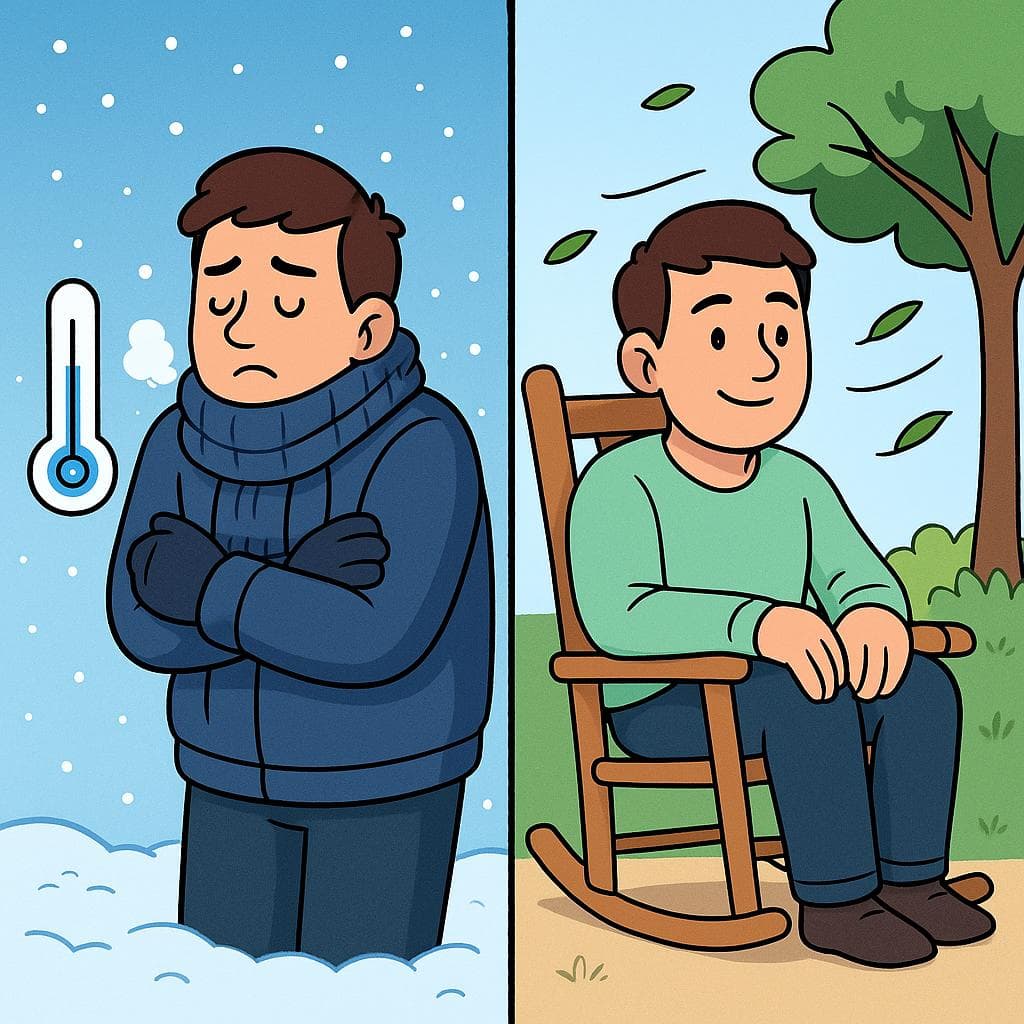
Frío is cold (often unpleasantly so). Fresco is cool or fresh (usually pleasant).
frío
Cold, chilly. Describes a low temperature that is often uncomfortable or intense.
FREE-ohfresco
Cool, crisp, fresh. Describes a mild and often pleasant low temperature, or the freshness of food.
FRESS-kohQuick Rule
Frío is cold (often unpleasantly so). Fresco is cool or fresh (usually pleasant).
Think: Frío is freezing, Fresco is fresh.
- To say 'I am cold', use 'Tengo frío', not 'Estoy frío'.
- For food, 'fresco' almost always means 'fresh', not 'cool'.
- 'Ser un fresco' means 'to be a shameless/cheeky person'.
Comparison Table
| Context | frío | fresco | Why? |
|---|---|---|---|
| Weather | En la Antártida hace mucho frío. | En otoño por la noche hace fresco. | Frío is for intense, often harsh cold. Fresco is for a mild, pleasant coolness. |
| Food | La pizza está fría. | La ensalada está fresca. | Frío describes temperature (the pizza should be hot). Fresco describes quality (the salad is fresh). |
| Air | El viento del norte es muy frío. | La brisa del mar es muy fresca. | Frío implies a biting, uncomfortable wind. Fresco implies a pleasant, refreshing breeze. |
| Drinks | Me gusta el café frío. | Quiero un refresco. | Frío means chilled to a low temperature. 'Refresco' is the noun for a 'cool drink' (soda/soft drink). |
When to Use "frío / fresco"
frío
Cold, chilly. Describes a low temperature that is often uncomfortable or intense.
FREE-oh
Unpleasant or intense cold weather
En enero hace mucho frío aquí.
It's very cold here in January.
Objects at a low temperature
La sopa se quedó fría.
The soup got cold.
Feeling cold (with 'tener')
Cierra la ventana, tengo frío.
Close the window, I'm cold.
Describing a person's personality
Es un hombre frío y distante.
He is a cold and distant man.
fresco
Cool, crisp, fresh. Describes a mild and often pleasant low temperature, or the freshness of food.
FRESS-koh
Pleasant, mild cold weather
Me encanta salir a caminar cuando hace fresco.
I love to go for a walk when it's cool.
Freshness of food
Compramos pescado fresco en el mercado.
We bought fresh fish at the market.
Refreshing air or breeze
Abre la ventana para que entre el aire fresco.
Open the window so the cool/fresh air comes in.
Describing a person's personality (slang)
No te preocupes por él, es un fresco.
Don't worry about him, he's shameless.
Contrast Examples
With "frío":
Ponte una chaqueta, que hace frío.
Put on a jacket, it's cold.
With "fresco":
¡Qué noche tan fresca para pasear!
What a cool night for a walk!
The Difference: 'Frío' is a warning about uncomfortable cold. 'Fresco' is an appreciation of a pleasant, cool temperature.
With "frío":
Saca los tomates del refrigerador, están muy fríos.
Take the tomatoes out of the fridge, they're very cold.
With "fresco":
Estos tomates de la huerta están muy frescos.
These tomatoes from the garden are very fresh.
The Difference: 'Frío' only refers to the low temperature of the tomatoes. 'Fresco' refers to their quality and how recently they were picked.
Common Mistakes
Hace fresco en Siberia durante el invierno.
Hace frío en Siberia durante el invierno.
Siberia is intensely cold, which is 'frío'. 'Fresco' would wrongly imply it's just pleasantly chilly.
Estoy frío.
Tengo frío.
To say you feel cold, always use 'tener frío'. 'Estoy frío' means your body is literally cold to the touch, which could imply you are sick or even dead.
Este pan no está frío.
Este pan no está fresco.
When talking about bread being stale, you mean it's not 'fresh' (fresco). 'Frío' only describes its temperature.
Quick Practice
Quick Quiz: Frío vs Fresco
Question 1 of 2
On a perfect autumn day, you might say: '¡Qué día tan ___!'
Related Grammar
Want to understand the grammar behind this pair? Explore these lessons for a deep dive:
Key Words


Tags
Build the instinct, not just the rule
Rules help you get it right; context makes it automatic. Read 200+ illustrated and narrated Spanish stories to see confusing pairs chosen correctly — over and over — until you stop thinking about it.
Frequently Asked Questions
Can 'fresco' ever have a negative meaning?
Yes, but it's a personality trait. If you say someone 'es un fresco' (using the verb 'ser'), it means they are shameless, cheeky, or insolent. It's a completely different meaning from the weather.
What's the difference between 'hace frío' and 'está frío'?
You use 'hace frío' to talk about the weather in general ('It's cold'). You use 'está frío/a' to describe the state of a specific object or place ('The water is cold', 'The room is cold').