temperatura
“temperatura” means “temperature” in Spanish. It has 2 different meanings depending on context:
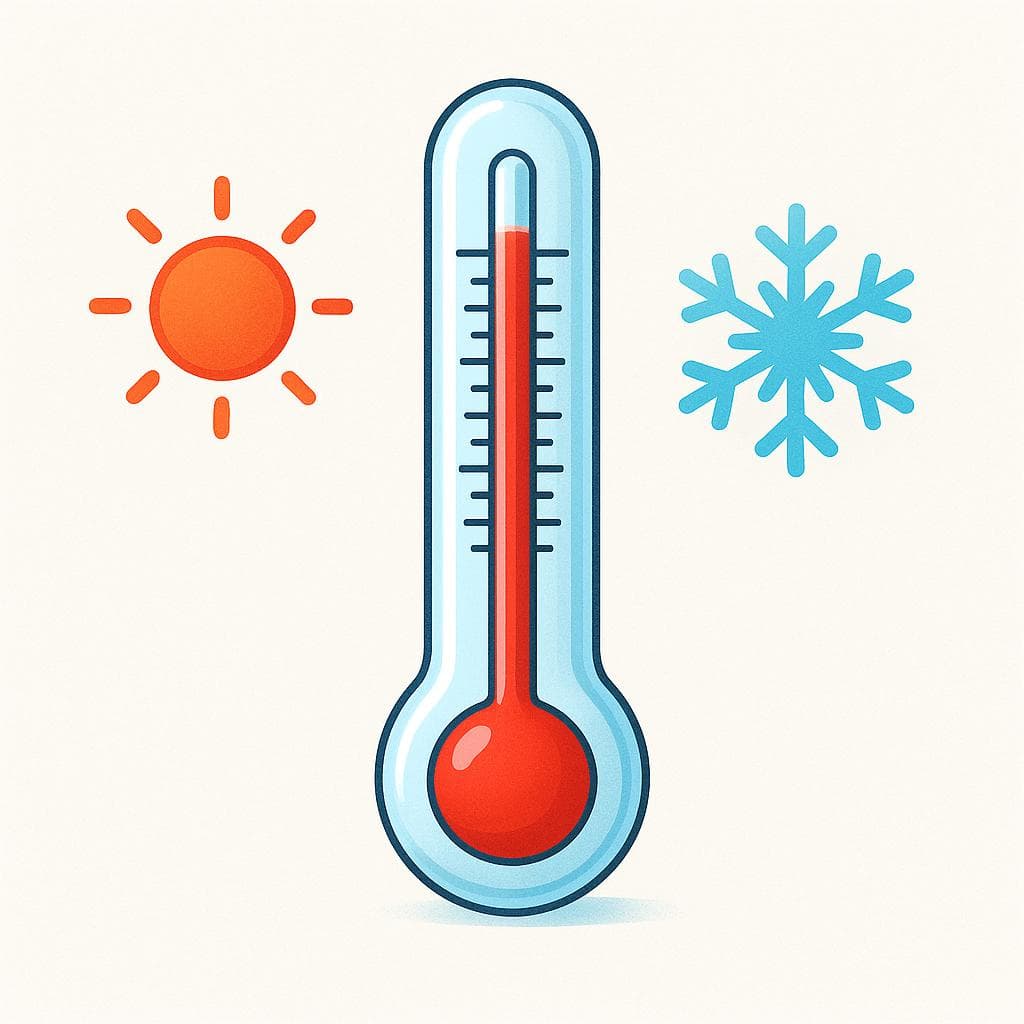

temperature
📝 In Action
La temperatura del agua está perfecta para nadar.
A1The water temperature is perfect for swimming.
La temperatura bajó diez grados esta noche.
A2The temperature dropped ten degrees tonight.
Word Connections
feverAlso: body temperature

📝 In Action
Creo que tengo temperatura, me siento muy caliente.
A2I think I have a fever; I feel very hot.
Le di medicina para bajarle la temperatura.
B1I gave him medicine to bring down his fever.
Word Connections
Translate to Spanish
Words that translate to "temperatura" in Spanish:
✏️ Quick Practice
Quick Quiz: temperatura
Question 1 of 1
Which sentence uses 'temperatura' in the sense of 'fever'?
📚 More Resources
👥 Word Family
📚 Etymology
Comes directly from the Latin word *temperātūra*, which originally meant 'a proper mixture or proportion.' Over time, this concept of 'balance' came to refer specifically to the balance between hot and cold, giving us the modern meaning of measurement.
First recorded: 15th century (in Spanish)
Cognates (Related words)
💡 Master Spanish
Take your Spanish to the next level. Read 200+ illustrated and narrated Spanish stories tailored to your level with the Inklingo app!
Frequently Asked Questions
Why is 'temperatura' feminine if it ends in '-a'?
'Temperatura' is a feminine noun, which is easy to remember since most nouns ending in '-a' are feminine. You must always use 'la' or 'una' before it, and make sure any describing words (adjectives) are also feminine.
How do I say 'room temperature' in Spanish?
You say 'temperatura ambiente.' This phrase is used for foods, liquids, or general air conditions inside a building.