
Gastar vs Pasar (time)
Use gastar for resources you 'use up' (like money or energy). Use pasar for time that simply 'passes by'.
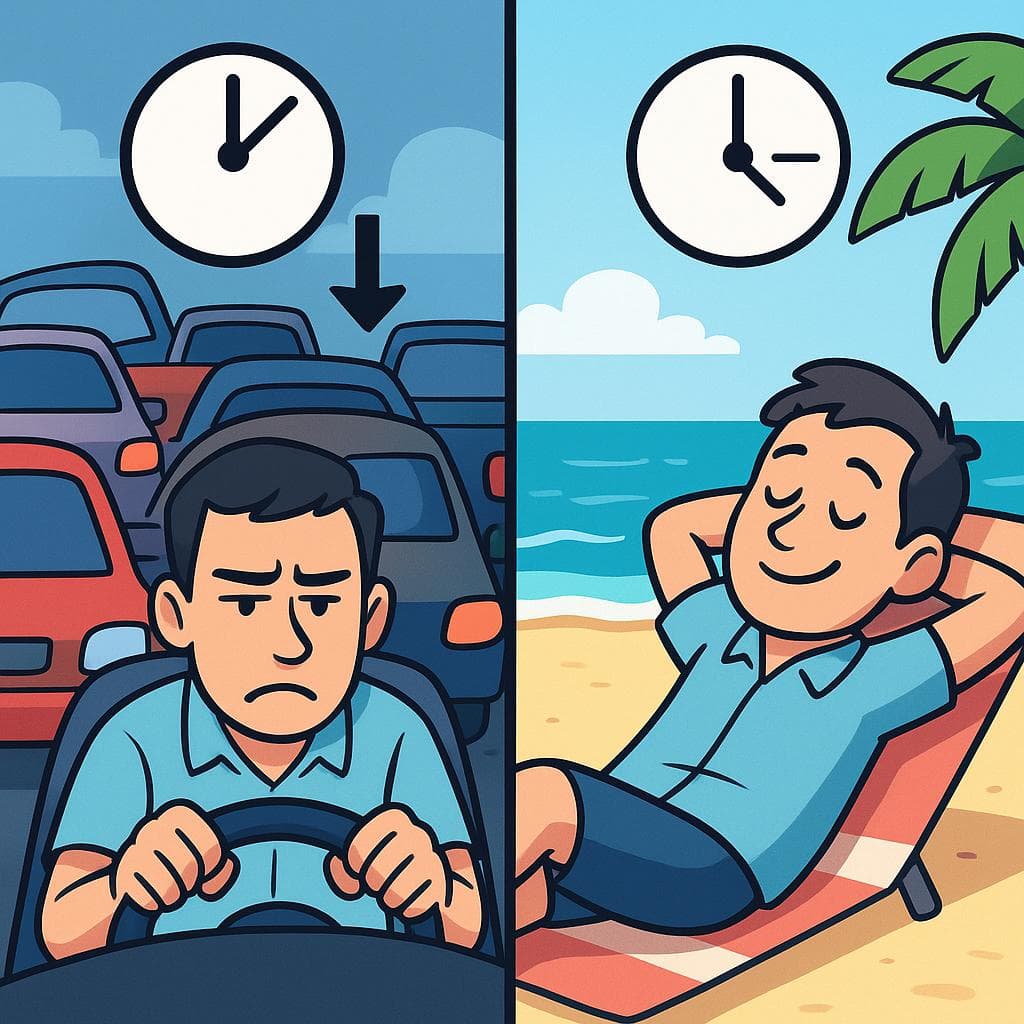
gastar
To spend or use up a resource (time, money, energy), often with a sense of consumption or even waste.
gahs-TARpasar
To spend time, for time to pass, or to go through an experience. It's the general, neutral verb for time.
pah-SARQuick Rule
Use gastar for resources you 'use up' (like money or energy). Use pasar for time that simply 'passes by'.
Think: Gastar = 'gas tank' (you use it up). Pasar = time 'passes by'.
- While 'gastar tiempo' often means 'to waste time', it can sometimes neutrally mean 'to spend time' on a task, focusing on the time as a consumed resource.
Comparison Table
| Context | gastar | pasar | Why? |
|---|---|---|---|
| Weekend Activities | Gasté todo el sábado limpiando. | Pasé todo el sábado en la playa. | Gastar implies the time was consumed by a chore. Pasar describes a more leisurely experience. |
| Vacation | Gastamos una fortuna en ese viaje. | Pasamos dos semanas en Italia. | Use gastar for the resource (money). Use pasar for the experience (time). |
| Giving Advice | No gastes tu vida preocupándote. | Pasa más tiempo haciendo lo que amas. | Gastar is used to warn against wasting time. Pasar is used to encourage spending time well. |
When to Use "gastar / pasar"
gastar
To spend or use up a resource (time, money, energy), often with a sense of consumption or even waste.
gahs-TAR
Spending money
Gasto demasiado dinero en café.
I spend too much money on coffee.
Using up energy or supplies
Gasté toda mi energía en el gimnasio.
I used up all my energy at the gym.
Spending/wasting time on something
No gastes tu tiempo en videojuegos.
Don't waste your time on video games.
pasar
To spend time, for time to pass, or to go through an experience. It's the general, neutral verb for time.
pah-SAR
Spending time (neutral or positive)
Paso mucho tiempo con mi familia.
I spend a lot of time with my family.
For time that goes by
El tiempo pasa muy rápido.
Time passes very quickly.
Describing an experience (e.g., having fun)
La pasé muy bien en la fiesta.
I had a great time at the party.
Contrast Examples
With "gastar":
Gasté toda la tarde esperando en el banco.
I wasted the whole afternoon waiting at the bank.
With "pasar":
Pasé toda la tarde leyendo en el parque.
I spent the whole afternoon reading in the park.
The Difference: 'Gastar' implies the time was consumed unproductively or frustratingly. 'Pasar' describes how the time was spent, usually in a neutral or positive way.
With "gastar":
Gastó tres años en una novela que nunca publicó.
He spent/wasted three years on a novel he never published.
With "pasar":
Pasó tres años escribiendo su primera novela.
He spent three years writing his first novel.
The Difference: 'Gastar' focuses on the consumption of time, often with a negative or fruitless outcome. 'Pasar' simply states the duration of the experience.
Common Mistakes
Gasté un buen rato con mis amigos.
Pasé un buen rato con mis amigos.
For spending quality time with people, 'pasar' is the natural choice. 'Gastar' makes it sound like your friends were a chore or a resource you used up.
Paso mucho dinero en libros.
Gasto mucho dinero en libros.
When talking about spending money, 'gastar' is the correct verb. 'Pasar' is not used for financial spending.
Quick Practice
Quick Quiz: Gastar vs Pasar (time)
Question 1 of 2
Ayer ___ un día increíble en la montaña.
Related Grammar
Want to understand the grammar behind this pair? Explore these lessons for a deep dive:
Key Words




Tags
Build the instinct, not just the rule
Rules help you get it right; context makes it automatic. Read 200+ illustrated and narrated Spanish stories to see confusing pairs chosen correctly — over and over — until you stop thinking about it.
Frequently Asked Questions
Can 'gastar tiempo' ever be neutral?
Rarely. It almost always carries a connotation of using up a limited resource. Even in a context like 'gasté dos horas en el informe' (I spent two hours on the report), it focuses on the consumption of time, whereas 'pasé dos horas...' would be more common and neutral.
What about the phrase '¿Qué pasa?' Does that relate to 'pasar tiempo'?
Yes! 'Pasar' is a very versatile verb meaning 'to pass,' 'to happen,' or 'to go.' So '¿Qué pasa?' means 'What's happening?' or 'What's going on?' It's all related to the core idea of things moving or passing through time and space.