
Hacia vs Hasta
Hacia = towards a destination. Hasta = until a limit.
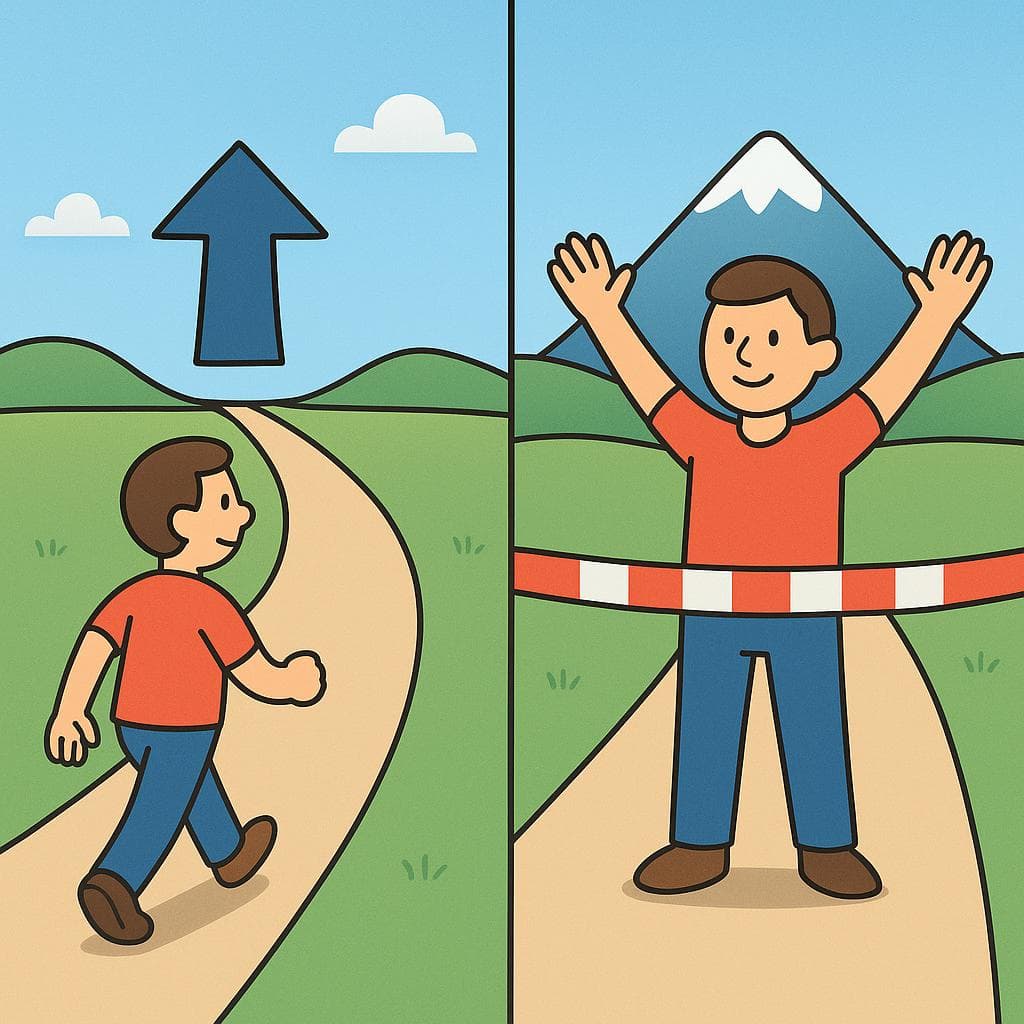
hacia
Towards, to (indicates direction of movement or approximate time/location)
AH-syahhasta
Until, up to, as far as (indicates a limit or endpoint in time, space, or quantity)
AHS-tahQuick Rule
Hacia = towards a destination. Hasta = until a limit.
Hacia has a 'C' for 'Course' (direction). Hasta has a 'T' for 'Terminal' (end point).
- Hasta can also mean 'even', as in 'Hasta un niño lo sabe' (Even a child knows it).
- Hacia can mean 'around' or 'approximately' when talking about time, e.g., 'hacia las tres' (around three o'clock).
Comparison Table
| Context | hacia | hasta | Why? |
|---|---|---|---|
| Movement & Destination | Voy hacia el centro. | Voy hasta el centro. | Hacia means you're going in the direction of downtown. Hasta means downtown is your final stop. |
| Time | Nos vemos hacia las 8. | No te veré hasta las 8. | Hacia means 'around 8 o'clock'. Hasta means 'not until 8 o'clock'. |
| Giving Directions | Mira hacia la torre. | Camina hasta la torre. | Hacia indicates the direction to look. Hasta indicates the point to walk to. |
When to Use "hacia / hasta"
hacia
Towards, to (indicates direction of movement or approximate time/location)
AH-syah
Direction of movement
Caminamos hacia la playa.
We are walking towards the beach.
Approximate time
Llegaré hacia las cinco de la tarde.
I will arrive around five in the afternoon.
Approximate location
El baño está hacia el fondo del pasillo.
The bathroom is towards the back of the hallway.
hasta
Until, up to, as far as (indicates a limit or endpoint in time, space, or quantity)
AHS-tah
Endpoint of a journey
Conduje hasta Madrid sin parar.
I drove all the way to Madrid without stopping.
Limit of time
La biblioteca está abierta hasta las ocho.
The library is open until eight.
Limit of quantity
La sala tiene espacio para hasta 50 personas.
The room has space for up to 50 people.
Meaning 'even'
¡Hasta mi abuela usa un smartphone!
Even my grandmother uses a smartphone!
Contrast Examples
With "hacia":
Camino hacia el parque.
I am walking towards the park. (In that general direction.)
With "hasta":
Camino hasta el parque.
I am walking all the way to the park. (It's my final destination.)
The Difference: Hacia tells you the direction of travel, but maybe you'll stop before you get there. Hasta tells you the final endpoint of the journey.
With "hacia":
El paquete llegará hacia el viernes.
The package will arrive around Friday.
With "hasta":
El paquete no llegará hasta el viernes.
The package will not arrive until Friday.
The Difference: Hacia gives an approximation, a general timeframe. Hasta gives a specific limit; it won't happen before that point.
Common Mistakes
Trabajo hacia las cinco.
Trabajo hasta las cinco.
To say you work UNTIL a certain time, you need 'hasta'. 'Hacia las cinco' means you work AROUND five, which is confusing.
Tienes que leer hacia la página 20.
Tienes que leer hasta la página 20.
Use 'hasta' to indicate a limit or endpoint. 'Hacia' would mean 'read in the direction of page 20', which doesn't make sense.
Quick Practice
Quick Quiz: Hacia vs Hasta
Question 1 of 2
Which word means 'towards'? 'El perro corre ___ mí.'
Related Grammar
Want to understand the grammar behind this pair? Explore these lessons for a deep dive:
Key Words


Tags
Build the instinct, not just the rule
Rules help you get it right; context makes it automatic. Read 200+ illustrated and narrated Spanish stories to see confusing pairs chosen correctly — over and over — until you stop thinking about it.
Frequently Asked Questions
Can 'hasta' really mean 'even'?
Yes, absolutely! It's a very common use that often surprises learners. For example, 'Todos vinieron a la fiesta, ¡hasta el jefe!' means 'Everyone came to the party, even the boss!'
What's the difference between 'Voy hacia la tienda' and 'Voy a la tienda'?
They are very similar. 'Voy a la tienda' is more direct and simply states your destination. 'Voy hacia la tienda' emphasizes the direction you are heading, leaving open the possibility that you might not go all the way there. In many everyday situations, they can be used interchangeably.