
Junto a vs Al lado de
`Al lado de` = beside. `Junto a` = right beside / together.
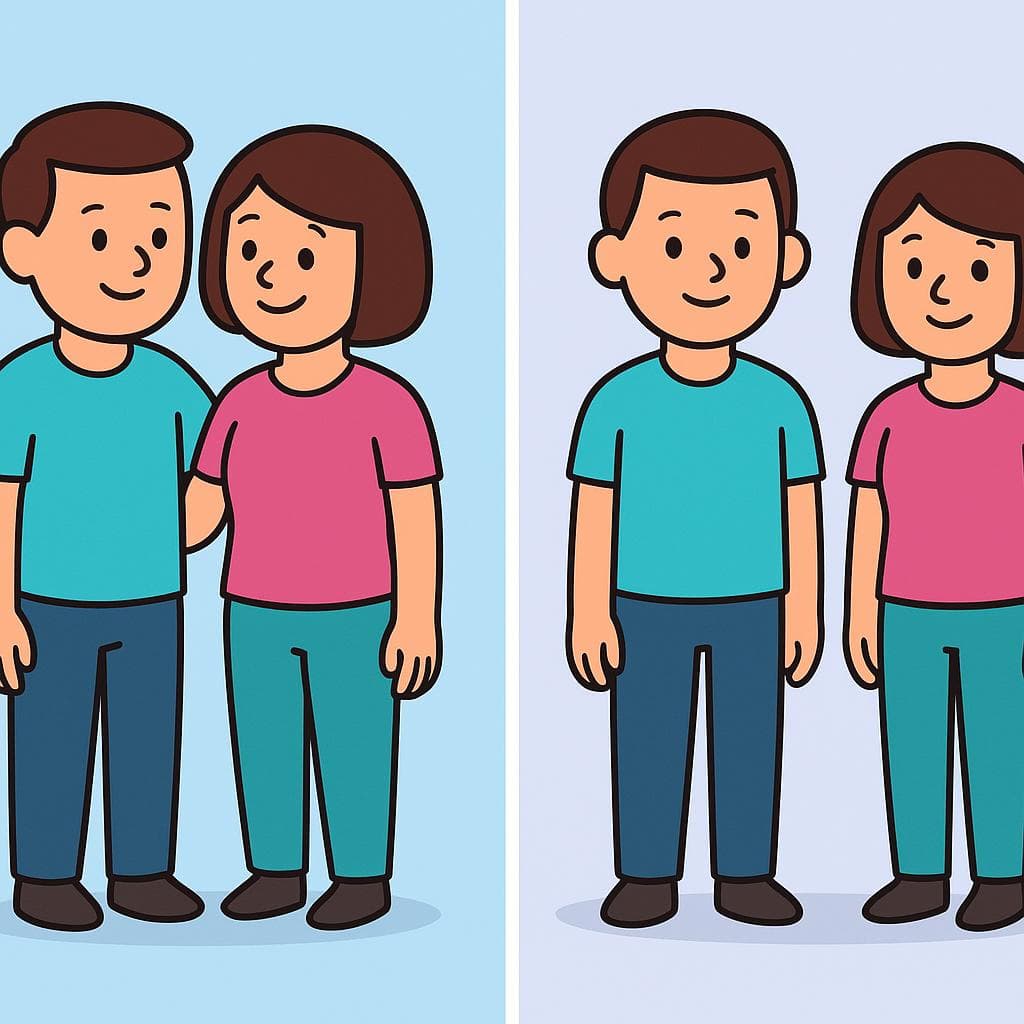
junto a
Right next to, close up against, together with. Emphasizes very close proximity or collaboration.
HOON-toh ahal lado de
Next to, beside, alongside. A general-purpose preposition for things that are side-by-side.
ahl LAH-doh dehQuick Rule
`Al lado de` = beside. `Junto a` = right beside / together.
Think: 'Junto' sounds like 'joined', so 'junto a' means joined together. 'Lado' means 'side', so 'al lado de' means on the side of.
- In many casual situations, they can be used interchangeably, but 'junto a' always implies a closer proximity or a sense of unity.
Comparison Table
| Context | junto a | al lado de | Why? |
|---|---|---|---|
| Objects | Deja las llaves junto al móvil. | La silla está al lado de la mesa. | 'Junto a' implies the keys should be touching or almost touching the phone. 'Al lado de' is a more general location. |
| People Walking | El niño caminaba junto a su padre. | Vi a un hombre caminando al lado de un perro. | 'Junto a' suggests closeness and connection. 'Al lado de' simply describes their relative positions. |
| Collaboration | Trabajo junto a mi equipo. | Mi escritorio está al lado del de mi jefe. | 'Junto a' means 'together with' for collaboration. 'Al lado de' describes physical location. |
When to Use "junto a / al lado de"
junto a
Right next to, close up against, together with. Emphasizes very close proximity or collaboration.
HOON-toh ah
Emphasizing very close proximity
El perro duerme junto a la chimenea.
The dog sleeps right by the fireplace.
Expressing 'together with' (collaboration)
Lucharemos junto a ustedes por esta causa.
We will fight together with you for this cause.
Figurative closeness or support
Estuve junto a ti en los momentos difíciles.
I was by your side (supporting you) in the difficult moments.
al lado de
Next to, beside, alongside. A general-purpose preposition for things that are side-by-side.
ahl LAH-doh deh
General location (next to)
La farmacia está al lado del supermercado.
The pharmacy is next to the supermarket.
Sitting or standing beside someone
¿Puedo sentarme al lado de ti?
Can I sit next to you?
Describing adjacent properties
Mis abuelos viven en la casa de al lado.
My grandparents live in the house next door.
Contrast Examples
With "junto a":
Se sentó junto a mí y me tomó la mano.
She sat right next to me and took my hand.
With "al lado de":
Había un espacio libre y me senté al lado de él.
There was a free space and I sat down next to him.
The Difference: 'Junto a' implies intentional closeness, often with an emotional component. 'Al lado de' is a neutral description of filling an adjacent space.
With "junto a":
Vivimos en casas juntas.
We live in attached/adjoining houses.
With "al lado de":
Vivimos uno al lado del otro.
We live next door to each other.
The Difference: Using 'junto/a/s' often implies the buildings are physically connected, like a duplex. 'Al lado de' describes separate buildings that are neighbors.
Common Mistakes
Voy a luchar al lado de ti.
Voy a luchar junto a ti.
For figurative support or fighting 'together with' someone, 'junto a' is the correct choice. 'Al lado de' sounds like you'll just be physically standing next to them during the fight.
El banco está junto a la oficina de correos.
El banco está al lado de la oficina de correos.
While not strictly wrong, 'al lado de' is much more common and natural for describing two separate buildings that are next to each other. 'Junto a' would imply they are physically joined.
Quick Practice
Quick Quiz: Junto a vs Al lado de
Question 1 of 2
If you want to say 'we work together to solve problems', which is better? 'Trabajamos ___ para resolver problemas.'
Related Grammar
Want to understand the grammar behind this pair? Explore these lessons for a deep dive:
Key Words

Tags
Build the instinct, not just the rule
Rules help you get it right; context makes it automatic. Read 200+ illustrated and narrated Spanish stories to see confusing pairs chosen correctly — over and over — until you stop thinking about it.
Frequently Asked Questions
Can I just always use 'al lado de' and ignore 'junto a'?
For physical locations, 'al lado de' is a safe, common choice. However, you would miss the nuance of 'junto a', which is essential for expressing collaboration ('together with') or a very close, almost touching proximity.
What's the difference between 'junto a' and 'cerca de'?
Good question! 'Cerca de' means 'near' or 'close to'. 'Junto a' is even closer, meaning 'right next to'. If the post office is on your street, it's 'cerca de' your house. If it's the very next building, it's 'junto a' or 'al lado de' your house.