
Lo + Adjective vs El/La + Adjective
Use 'lo' for the abstract idea or 'the ... part'. Use 'el/la' for the specific one.
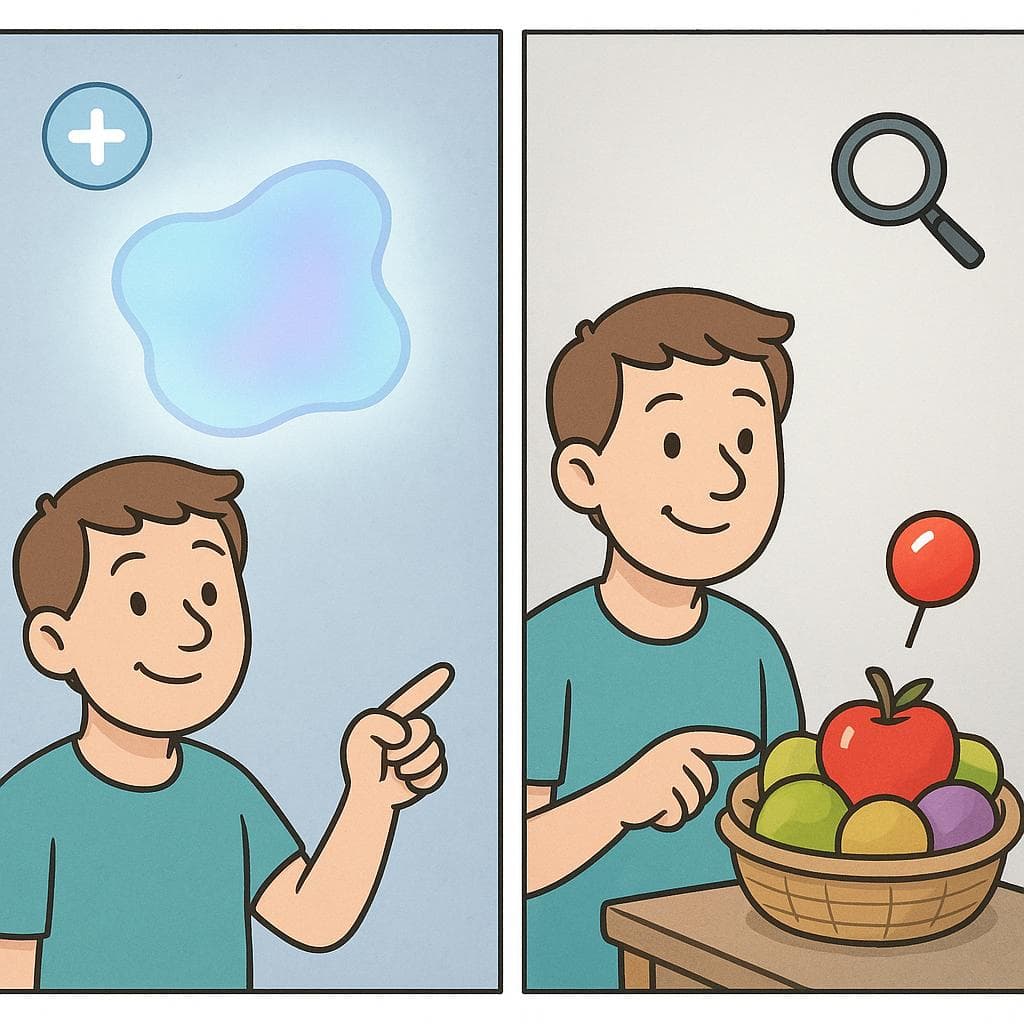
lo + adjective
Refers to an abstract quality, concept, or 'the ... part' of something. It turns an adjective into a noun representing an idea.
lohel/la + adjective
Refers to a specific noun that is understood from context, meaning 'the ... one'. The adjective must agree with the implied noun.
el / laQuick Rule
Use 'lo' for the abstract idea or 'the ... part'. Use 'el/la' for the specific one.
Think: Lo = Concept, El/La = Object.
- The structure 'lo + adjective + que' means 'how...' (e.g., 'No sabes lo cansado que estoy' -> 'You don't know how tired I am').
- Don't confuse the neuter article 'lo' with the direct object pronoun 'lo' (him/it).
Comparison Table
| Context | lo + adjective | el/la + adjective | Why? |
|---|---|---|---|
| General vs. Specific | Lo difícil es empezar. | El examen difícil ya pasó. | 'Lo' refers to the abstract concept of difficulty. 'El' refers to a specific difficult thing (the exam). |
| Expressing a preference | Prefiero lo simple. | Prefiero el vestido simple. | 'Lo' means you prefer the concept of simplicity. 'El' specifies you prefer a particular simple dress. |
| Talking about 'the best' | Lo mejor fue la sorpresa. | El mejor regalo fue el libro. | 'Lo mejor' means 'the best part' or 'the best thing' in general. 'El mejor' means 'the best one' of a specific group (gifts). |
| Making a choice | Quiero lo barato. | Quiero el barato. | 'Lo' means 'I want whatever is cheap' (a general desire). 'El' means 'I want the cheap one' (from a specific set of options). |
When to Use "lo + adjective / el/la + adjective"
lo + adjective
Refers to an abstract quality, concept, or 'the ... part' of something. It turns an adjective into a noun representing an idea.
LOH + [adjective]
Talking about an abstract idea
Lo importante es ser feliz.
The important thing is to be happy.
Referring to 'the ... part' of something
Lo bueno de la película fue la música.
The good part of the movie was the music.
Expressing 'how...' something is
No te imaginas lo difícil que fue.
You can't imagine how difficult it was.
Generalizing about a quality
A ella le atrae lo misterioso.
She is attracted to the mysterious / mysterious things.
el/la + adjective
Refers to a specific noun that is understood from context, meaning 'the ... one'. The adjective must agree with the implied noun.
EL / LA + [adjective]
Choosing a specific item
¿Qué camisa quieres? La azul.
Which shirt do you want? The blue one.
Referring to a specific person
Mi hermano es el alto.
My brother is the tall one.
Avoiding repetition of a noun
Vi dos coches. El rojo era más rápido.
I saw two cars. The red one was faster.
Distinguishing between options
Hay dos caminos, toma el corto.
There are two paths, take the short one.
Contrast Examples
With "lo + adjective":
Lo bello del arte es que nos hace sentir.
The beautiful thing about art is that it makes us feel.
With "el/la + adjective":
¿Cuál cuadro te gusta más? El bello.
Which painting do you like more? The beautiful one.
The Difference: 'Lo bello' refers to the abstract concept of beauty. 'El bello' points to a specific beautiful object (the painting).
With "lo + adjective":
Lo nuevo siempre es emocionante.
The new (what is new) is always exciting.
With "el/la + adjective":
Mi teléfono es el nuevo.
My phone is the new one.
The Difference: 'Lo nuevo' is a generalization about new things or the concept of novelty. 'El nuevo' refers to a specific new object.
With "lo + adjective":
Lo malo es que va a llover.
The bad part / thing is that it's going to rain.
With "el/la + adjective":
De los dos, este es el malo.
Of the two, this is the bad one.
The Difference: 'Lo malo' introduces a negative fact or concept. 'El malo' identifies a specific item as being the bad one from a set.
Common Mistakes
La importante es la familia.
Lo importante es la familia.
We are talking about 'the important thing' as an abstract concept, not a specific feminine object. Use 'lo' for abstract ideas.
¿Cuál coche te gusta? Me gusta lo rojo.
Me gusta el rojo.
You are referring to a specific car ('el coche'), which is a masculine noun. Use 'el' to mean 'the red one'.
El bueno es que tenemos salud.
Lo bueno es que tenemos salud.
You're not pointing to a specific 'good one'. You're talking about 'the good thing' or 'the good part', which is an abstract idea requiring 'lo'.
Quick Practice
Quick Quiz: Lo + Adjective vs El/La + Adjective
Question 1 of 3
Choose the correct option: '___ peor de la situación es que no hay solución.'
Related Grammar
Want to understand the grammar behind this pair? Explore these lessons for a deep dive:
Key Words



Tags
Build the instinct, not just the rule
Rules help you get it right; context makes it automatic. Read 200+ illustrated and narrated Spanish stories to see confusing pairs chosen correctly — over and over — until you stop thinking about it.
Frequently Asked Questions
Why is 'lo' always followed by a masculine singular adjective?
Because 'lo' is a neuter article, meaning it doesn't have a gender. By convention in Spanish, when there's no specific gender to agree with, the masculine singular form is used as the default or neutral form.
Can I say 'lo' by itself?
Not in this structure. The power of 'lo' here comes from pairing it with an adjective to create a new noun-like concept. However, you will see 'lo' alone as a direct object pronoun, meaning 'him' or 'it', as in 'Lo vi ayer' (I saw him yesterday). It's important not to confuse these two uses!