
Oír vs Escuchar
Oír is to hear (passive). Escuchar is to listen (active).
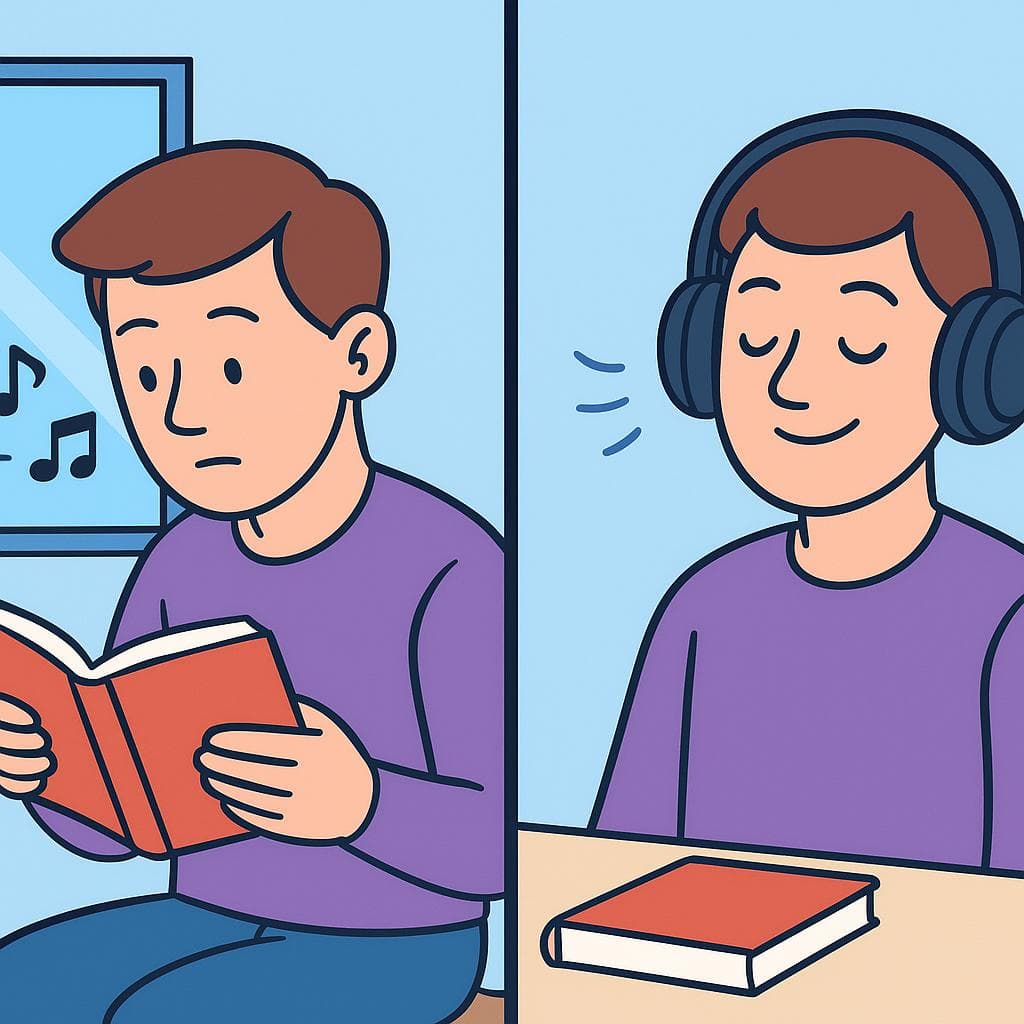
oír
To hear; the physical act of perceiving a sound with your ears, often without trying.
oh-EERescuchar
To listen; the intentional act of paying attention to a sound or what someone is saying.
ehs-koo-CHARQuick Rule
Oír is to hear (passive). Escuchar is to listen (active).
Think: Oír = Open ears (sound comes in). Escuchar = Eagerly Concentrating.
- The command '¡Oye!' means 'Hey, listen up!', which feels active but uses oír.
Comparison Table
| Context | oír | escuchar | Why? |
|---|---|---|---|
| Music | Oigo la música del vecino. | Escucho mi canción favorita. | Oír for background noise you notice vs. escuchar for music you choose to focus on. |
| People talking | Oí voces en el pasillo. | Escuché la historia con atención. | Oír for perceiving the sound of voices vs. escuchar for understanding the content. |
| A sudden noise | ¿Oíste ese trueno? | Escucha, creo que vuelve a sonar. | Oír is for the involuntary act of hearing a sudden sound. Escuchar is for the intentional act of waiting for it. |
When to Use "oír / escuchar"
oír
To hear; the physical act of perceiving a sound with your ears, often without trying.
oh-EER
Perceiving any sound
Oigo un ruido extraño en la cocina.
I hear a strange noise in the kitchen.
Overhearing something by chance
Oí que te mudas a otra ciudad.
I heard you're moving to another city.
Asking if a sound is audible
¿Oyes eso? Parece un gato.
Do you hear that? It sounds like a cat.
escuchar
To listen; the intentional act of paying attention to a sound or what someone is saying.
ehs-koo-CHAR
Paying attention to music, podcasts, etc.
Me gusta escuchar música mientras trabajo.
I like to listen to music while I work.
Paying attention to a person
El niño no escucha a sus padres.
The child doesn't listen to his parents.
Following advice
Si me hubieras escuchado, no tendrías este problema.
If you had listened to me, you wouldn't have this problem.
Contrast Examples
With "oír":
Con esta música, casi no te oigo.
With this music, I can barely hear you.
With "escuchar":
Habla más alto, intento escucharte pero no puedo.
Speak louder, I'm trying to listen to you but I can't.
The Difference: Oír refers to the physical ability to perceive the sound. Escuchar refers to the mental effort of paying attention to the words.
With "oír":
Perdón, no oí la última parte.
Sorry, I didn't hear the last part.
With "escuchar":
Sé que me oyes, pero no me estás escuchando.
I know you can hear me, but you're not listening to me.
The Difference: This is the classic distinction. 'No oír' means the sound didn't register. 'No escuchar' means you heard the sound but chose not to pay attention to its meaning.
With "oír":
Oigo que los vecinos tienen una fiesta.
I hear that the neighbors are having a party.
With "escuchar":
¡Me encanta esta canción! Vamos a escuchar.
I love this song! Let's listen.
The Difference: Oír is the passive reception of the party noise. Escuchar is the active decision to focus on and enjoy the music.
Common Mistakes
Oigo un podcast todos los días.
Escucho un podcast todos los días.
You intentionally pay attention to a podcast, so you 'listen' (escuchar) to it. 'Oír un podcast' would mean you accidentally overheard a piece of it.
¿Me estás oyendo? ¡Te estoy dando un consejo!
¿Me estás escuchando? ¡Te estoy dando un consejo!
You're not asking if the person can physically hear you, but if they are paying attention. That's 'escuchar'.
Quick Practice
Quick Quiz: Oír vs Escuchar
Question 1 of 3
If you are enjoying your favorite album, you say: 'Estoy ___ mi álbum favorito.'
Related Grammar
Want to understand the grammar behind this pair? Explore these lessons for a deep dive:
Key Words



Tags
Build the instinct, not just the rule
Rules help you get it right; context makes it automatic. Read 200+ illustrated and narrated Spanish stories to see confusing pairs chosen correctly — over and over — until you stop thinking about it.
Frequently Asked Questions
Is there a similar distinction in English?
Yes, it's almost exactly the same as 'to hear' (oír) vs. 'to listen' (escuchar). If you wouldn't say 'I'm listening a noise outside', you probably shouldn't say 'Escucho un ruido afuera'. The key difference is that Spanish speakers are more strict about the distinction.
Can I ever use 'escuchar un ruido'?
Yes, but it's less common. It implies you were actively listening for a noise. For example, if a mechanic says 'Escuche el motor' ('Listen to the engine'), they are asking you to pay close attention to the sound it makes.
What about the verb 'ver' vs 'mirar'?
It's a very similar concept! 'Ver' is like 'oír' but for your eyes (to see, passive), while 'mirar' is like 'escuchar' (to look at/watch, active). You 'ves' something that enters your field of vision, but you 'miras' something you intentionally focus your eyes on.