
Traer vs Llevar
Traer is to bring HERE. Llevar is to take THERE.
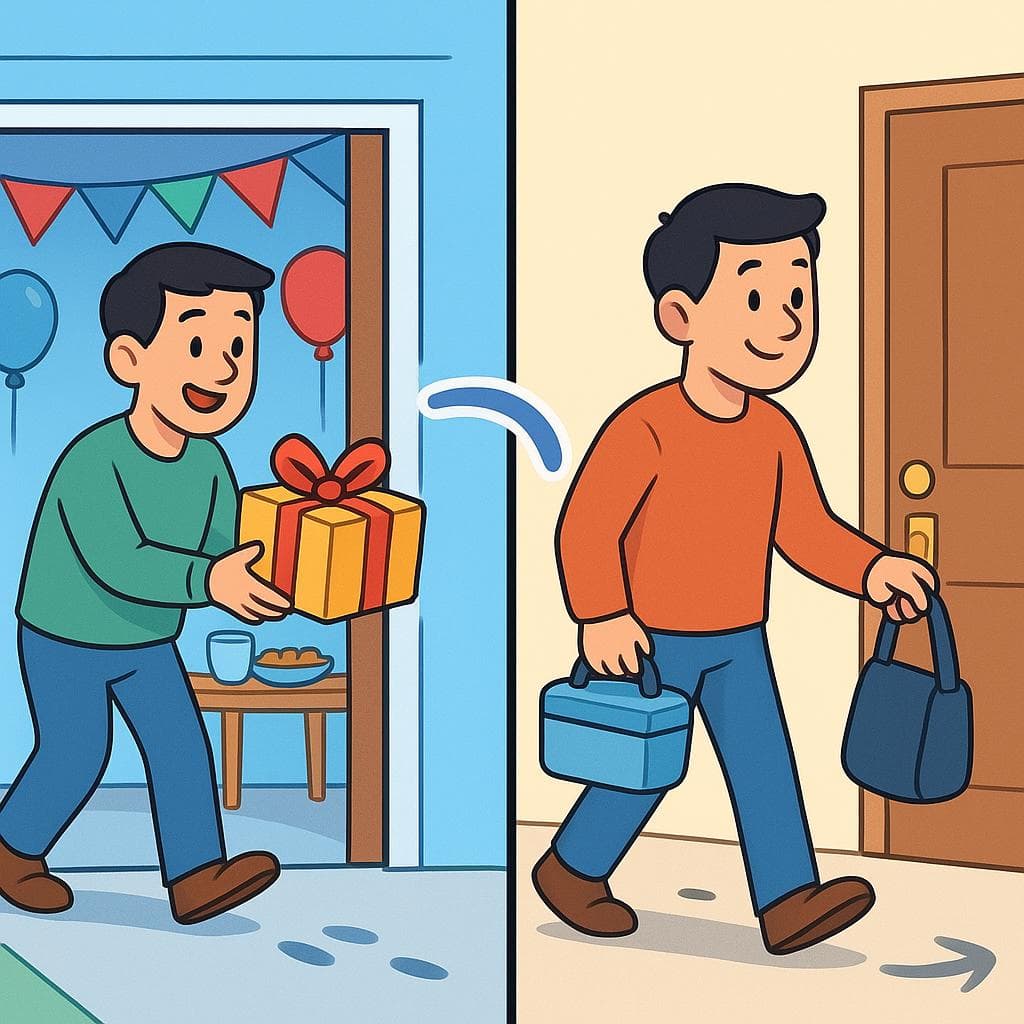
traer
To bring (movement towards the speaker or their current location)
trah-EHRllevar
To take, to carry (movement away from the speaker or to another location)
yeh-VARQuick Rule
Traer is to bring HERE. Llevar is to take THERE.
Think of the speaker as 'home base'. Traer is movement TO home base. Llevar is movement AWAY from home base.
- The meaning of 'llevar' can change to 'to wear' (ropa), 'to have been doing something' (tiempo), or 'to get along with' (llevarse bien).
Comparison Table
| Context | traer | llevar | Why? |
|---|---|---|---|
| Moving an object | Trae el libro aquí. | Lleva el libro allá. | Traer is for movement TOWARDS the speaker ('here'). Llevar is for movement AWAY ('there'). |
| Party contributions | ¿Puedes traer vino a mi fiesta? | ¿Puedes llevar vino a la fiesta de Juan? | Use traer when the destination is your location. Use llevar when the destination is somewhere else. |
| Restaurant context | El mesero nos trae la comida. | Me llevo las sobras a casa. | Traer is for things coming TO your table. Llevar is for things you take AWAY with you. |
| Carrying vs. Wearing | Traigo una chaqueta por si hace frío. | Llevo una chaqueta azul. | Traer means to bring an item with you. Llevar can mean to be wearing an item of clothing. |
When to Use "traer / llevar"
traer
To bring (movement towards the speaker or their current location)
trah-EHR
Bringing something to where you are
¿Puedes traer las bebidas a mi casa?
Can you bring the drinks to my house?
Asking for something to be brought to you
Mesero, ¿nos trae la cuenta, por favor?
Waiter, can you bring us the check, please?
Bringing something along with you (to your destination)
No te olvides de traer tu pasaporte al aeropuerto.
Don't forget to bring your passport to the airport.
Referring to consequences (abstract)
Esa decisión puede traer problemas.
That decision could bring problems.
llevar
To take, to carry (movement away from the speaker or to another location)
yeh-VAR
Taking something to another place
Voy a llevar este paquete a la oficina de correos.
I'm going to take this package to the post office.
Giving someone a ride
¿Te llevo al aeropuerto mañana?
Can I take you (give you a ride) to the airport tomorrow?
Wearing clothes or accessories
Ella siempre lleva un sombrero.
She always wears a hat.
To talk about how long you've been doing something
Llevo dos años aprendiendo español.
I've been learning Spanish for two years.
Contrast Examples
With "traer":
Todos los días traigo a mis hijos a la escuela.
Every day I bring my children to school. (Said by a teacher who works at the school.)
With "llevar":
Todos los días llevo a mis hijos a la escuela.
Every day I take my children to school. (Said by a parent at home before leaving.)
The Difference: The correct verb depends entirely on the speaker's location. If the school is 'here' for you (because you work there), use traer. If the school is 'there' (away from home), use llevar.
With "traer":
¡Qué bueno que trajiste la guitarra!
It's great that you brought the guitar! (Said to the person who just arrived with it.)
With "llevar":
No te olvides de llevar la guitarra cuando nos vayamos.
Don't forget to take the guitar when we leave.
The Difference: Traer is used for the action of bringing something TO the current location. Llevar is for the action of taking it AWAY from the current location.
Common Mistakes
Cuando voy a la casa de mi amigo, siempre le traigo un regalo.
Cuando voy a la casa de mi amigo, siempre le llevo un regalo.
Since you are taking the gift 'there' (to your friend's house, away from your starting point), you should use llevar. Your friend would say '¡Gracias por traer el regalo!' when you arrive.
¿Me llevas un vaso de agua, por favor?
¿Me traes un vaso de agua, por favor?
You are asking someone to bring the water TO YOU. The movement is towards the speaker, so traer is correct.
Quick Practice
Quick Quiz: Traer vs Llevar
Question 1 of 3
You are at home talking to your friend on the phone. You want them to bring a movie to your house tonight. You say: '¿Puedes ___ una película esta noche?'
Related Grammar
Want to understand the grammar behind this pair? Explore these lessons for a deep dive:
Key Words



Tags
Build the instinct, not just the rule
Rules help you get it right; context makes it automatic. Read 200+ illustrated and narrated Spanish stories to see confusing pairs chosen correctly — over and over — until you stop thinking about it.
Frequently Asked Questions
Is the 'traer vs llevar' distinction similar to 'ir vs venir'?
Yes, it's almost exactly the same concept! 'Venir' (to come) is movement towards the speaker, just like 'traer'. 'Ir' (to go) is movement away from the speaker, just like 'llevar'. If you understand one pair, it will help you master the other.
What if the speaker is moving too? If I'm driving to a party, do I 'traer' or 'llevar' the gift?
Great question! You still use 'llevar'. Think about your starting point. You are taking the gift FROM your home and carrying it TO the party. So you say, 'Voy a llevar un regalo.' Once you arrive, the host will thank you by saying, '¡Gracias por traer el regalo!'
I've heard 'llevar' used for time. How does that work?
That's a very common and important use of 'llevar'. It's used to talk about the duration of an activity that continues into the present. For example, 'Llevo tres años viviendo aquí' means 'I have been living here for three years.' It's a great alternative to using the present perfect tense.