
Parar vs Detenerse
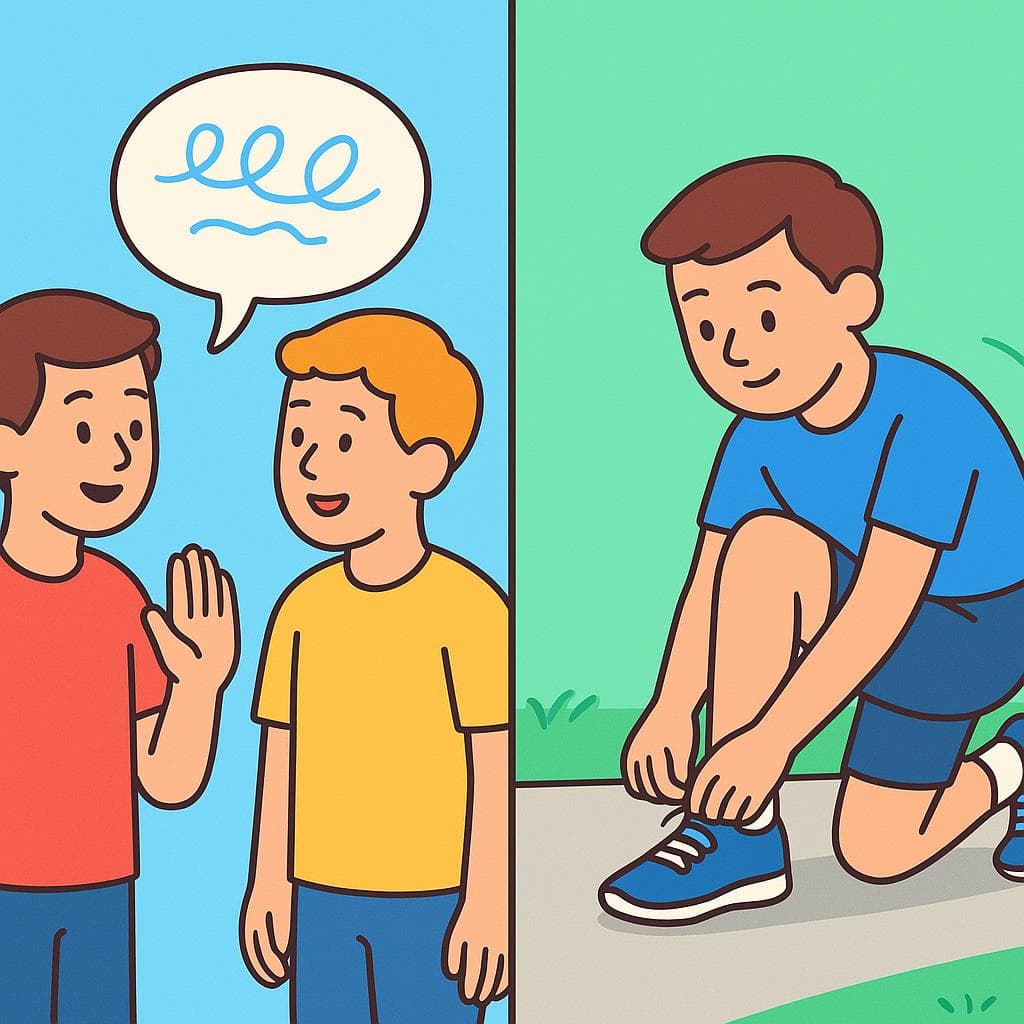
Parar = stop an activity. Detenerse = stop moving.
parar
To stop (an action, a process, or a machine); to make a scheduled stop.
pah-RAHRdetenerse
To stop moving; to come to a halt (often used for people or vehicles in motion).
deh-teh-NEHR-sehQuick Rule
Parar = stop an activity. Detenerse = stop moving.
Think: 'Parar' a party (stop an action), 'Detener' a car (stop its movement).
- For vehicles like buses and cars, they can often be used interchangeably.
- In some parts of Latin America, 'pararse' means 'to stand up', a completely different meaning.
Comparison Table
| Context | parar | detenerse | Why? |
|---|---|---|---|
| Giving Commands | ¡Para de hablar! | ¡Deténgase ahí! | Use 'parar' to command someone to stop an action. Use 'detenerse' (often in the formal command form) to command someone to stop moving. |
| Vehicles | Voy a parar en la gasolinera. | El tráfico se detuvo por completo. | 'Parar' often implies a planned stop with a purpose. 'Detenerse' describes the physical act of coming to a halt, which can be planned or unplanned. |
| Personal Movement | Me paré para saludarlo. (Common, but less precise) | Me detuve para saludarlo. | When you stop your own forward motion (walking, running), 'detenerse' is more precise and common. 'Pararse' can also be used but can mean 'to stand up' in some regions. |
| Machines | El motor paró de repente. | N/A | When a machine or its parts stop functioning, 'parar' or 'pararse' is the correct verb. 'Detenerse' is not used in this context. |
When to Use "parar / detenerse"
parar
To stop (an action, a process, or a machine); to make a scheduled stop.
pah-RAHR
Stopping an ongoing action
¡Para de hacer ruido!
Stop making noise!
When a machine stops working
Mi reloj se paró.
My watch stopped.
Scheduled stops (like public transport)
El autobús para en la siguiente esquina.
The bus stops at the next corner.
Ending a process
Tuvieron que parar la producción.
They had to stop production.
detenerse
To stop moving; to come to a halt (often used for people or vehicles in motion).
deh-teh-NEHR-seh
Stopping one's own movement
Me detuve para admirar la vista.
I stopped to admire the view.
A vehicle coming to a halt
El coche se detuvo en el semáforo.
The car stopped at the traffic light.
Pausing briefly
Se detuvo un momento a pensar.
He paused for a moment to think.
Being detained or arrested (non-reflexive 'detener')
La policía detuvo al sospechoso.
The police arrested the suspect.
Contrast Examples
With "parar":
El conductor paró el coche para hacer una llamada.
The driver stopped the car to make a call.
With "detenerse":
El coche se detuvo bruscamente en la intersección.
The car stopped abruptly at the intersection.
The Difference: 'Parar' implies the driver's intention and action to stop the car for a reason. 'Detenerse' focuses on the physical event of the car ceasing motion, often without mentioning the cause.
With "parar":
No podemos parar ahora, vamos a llegar tarde.
We can't stop now, we're going to be late.
With "detenerse":
Me detuve en seco cuando vi el accidente.
I stopped dead in my tracks when I saw the accident.
The Difference: 'Parar' here is more general, meaning to cease the activity of walking towards our goal. 'Detenerse' is more descriptive, painting a picture of physically halting one's movement.
Common Mistakes
Detente de llorar.
Para de llorar.
Crying is an action, not physical movement from one place to another. To tell someone to stop an action, use 'parar'.
El proyecto se detuvo.
El proyecto se paró.
For abstract things like projects or processes, 'parar' is used to mean 'to stop' or 'to be halted'. 'Detenerse' is reserved for physical motion.
Quick Practice
Quick Quiz: Parar vs Detenerse
Question 1 of 3
Mi amigo no ___ de hablar en toda la noche.
Related Grammar
Want to understand the grammar behind this pair? Explore these lessons for a deep dive:
Key Words

Tags
Build the instinct, not just the rule
Rules help you get it right; context makes it automatic. Read 200+ illustrated and narrated Spanish stories to see confusing pairs chosen correctly — over and over — until you stop thinking about it.
Frequently Asked Questions
Can I ever use 'parar' for a person stopping their movement?
Yes, absolutely. You can say 'Paré para tomar una foto'. It's very common. However, 'detenerse' is often seen as slightly more formal or descriptive for this action. The key is that you almost never use 'detenerse' to stop an action like talking or raining.
I heard 'pararse' means 'to stand up'. Is that true?
Yes, in many countries in Latin America, 'pararse' is the most common way to say 'to stand up'. For example, 'Párate, por favor' means 'Stand up, please'. In Spain, they typically use 'ponerse de pie'. This is a regional difference to be aware of!