detener
“detener” means “to stop” in Spanish. It has 3 different meanings depending on context:

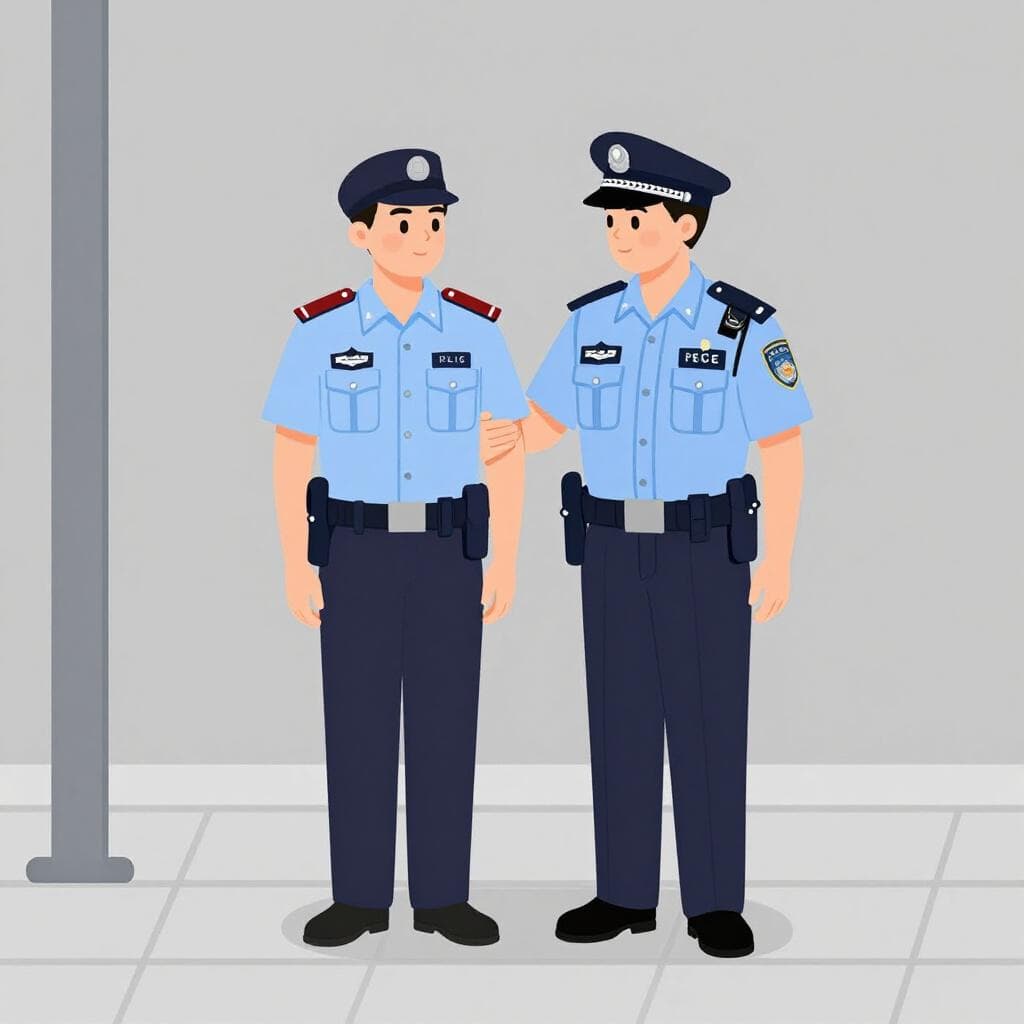

to stop, to hold back
Also: to interrupt
📝 In Action
El guardia detuvo el tráfico para que cruzáramos.
A2The guard stopped the traffic so we could cross.
Detuvimos la producción por falta de material.
B1We halted the production due to lack of material.
Este muro detiene el viento frío.
B1This wall holds back the cold wind.
to detain, to arrest
Also: to apprehend
📝 In Action
La policía detuvo a dos sospechosos anoche.
B1The police detained two suspects last night.
El juez ordenó detener al acusado.
C1The judge ordered the accused to be arrested.
to stop (oneself), to pause
Also: to reflect
📝 In Action
Me detuve a mirar el escaparate.
A2I stopped myself to look at the shop window.
El coche se detuvo de repente.
A2The car stopped suddenly.
Detente, necesito hablar contigo.
B1Stop, I need to talk to you.
Subjunctive
Imperfect Subjunctive
Present Subjunctive
Indicative
Preterite
Imperfect
Present
Translate to Spanish
Words that translate to "detener" in Spanish:
stopped→to apprehend→to arrest→to detain→to interrupt→to pause→to reflect→to stop→✏️ Quick Practice
Quick Quiz: detener
Question 1 of 2
Which sentence correctly uses the reflexive form of 'detener'?
📚 More Resources
👥 Word Family▼
📚 Etymology▼
Comes from the Latin verb *detinere*, which means 'to hold off' or 'to keep away.' It’s formed by combining the prefix *de-* (down/away) and *tenere* (to hold). This origin explains why it means both 'to stop' and 'to hold someone legally.'
First recorded: Medieval Spanish
Cognates (Related words)
💡 Master Spanish
Take your Spanish to the next level. Read 200+ illustrated and narrated Spanish stories tailored to your level with the Inklingo app!
Frequently Asked Questions
What is the difference between 'detener' and 'parar'?
Both mean 'to stop.' 'Parar' is more common and general (e.g., 'Paré de llover' - It stopped raining). 'Detener' is often used for physically halting a moving object (a car, traffic) or in a formal context (legal detention). The reflexive 'detenerse' (to stop oneself) is very common.
Why does 'detener' have so many irregular forms?
'Detener' is irregular because it is a compound verb built on 'tener' (to have/to hold), which is one of the most common irregular verbs in Spanish. Whenever 'tener' changes, 'detener' changes too (e.g., 'tengo' -> 'detengo'; 'tuve' -> 'detuve').