
Quejar vs Quejarse
Always use `quejarse` for 'to complain'. `Quejar` is a rare, literary verb meaning 'to afflict' or 'to cause grief'.
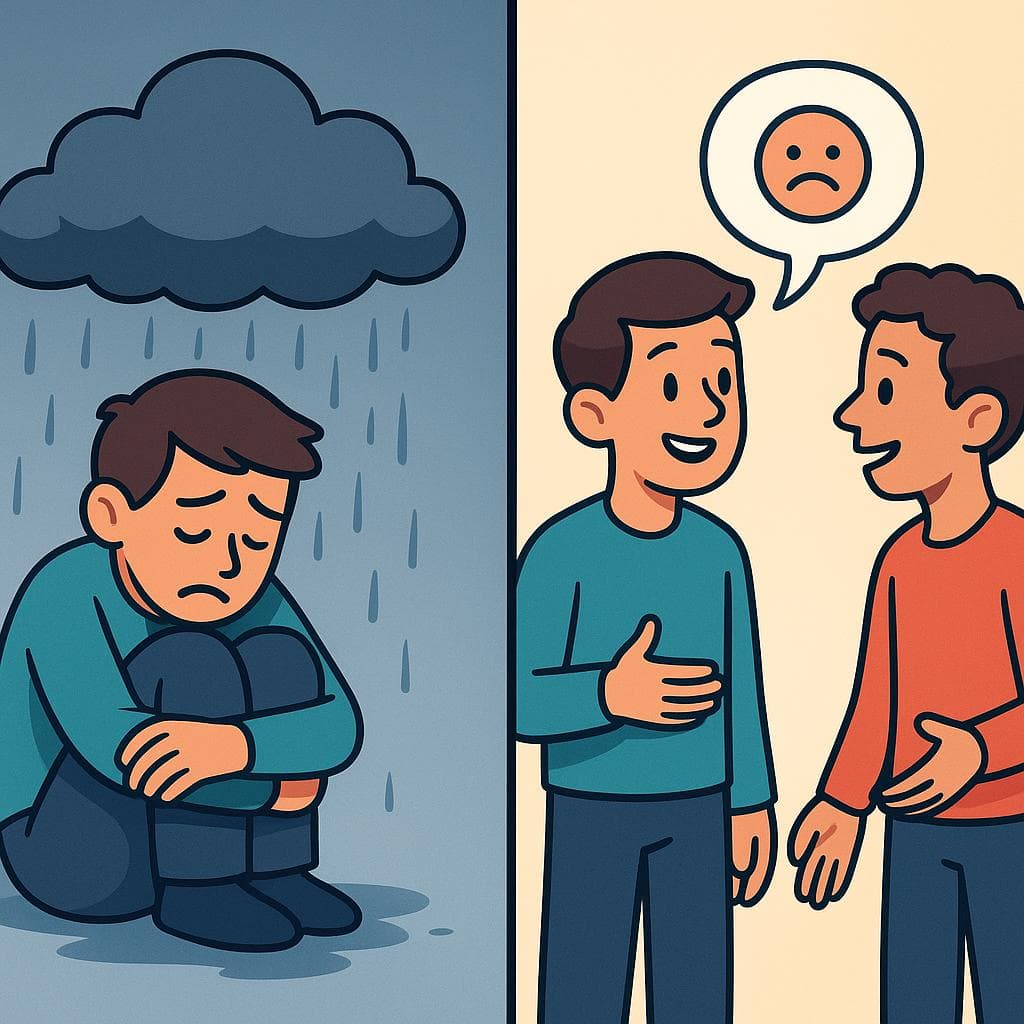
quejar
To cause grief, to afflict, to trouble (rare, literary)
keh-HARquejarse
To complain, to grumble, to express dissatisfaction
keh-HAR-sehQuick Rule
Always use `quejarse` for 'to complain'. `Quejar` is a rare, literary verb meaning 'to afflict' or 'to cause grief'.
When you complain, the feeling comes from yourself, so you need the `se`.
- You might see `quejar` in classic literature or poetry, but in 99.9% of modern conversations, `quejarse` is the word you need.
Comparison Table
| Context | quejar | quejarse | Why? |
|---|---|---|---|
| Focus of the Action | La injusticia queja al pueblo. | El pueblo se queja de la injusticia. | `quejar` (rare): The injustice *causes grief* to the people. `quejarse`: The people *express their grief* (complain). |
| Who is Doing What? | Su ausencia me queja. | Me quejo de su ausencia. | `quejar`: An external thing (her absence) acts on me. `quejarse`: I am the one performing the action of complaining. |
| Modern vs. Literary | (Used in poetry/old texts) | ¡Deja de quejarte por todo! | `quejar` is almost never used in speech. `quejarse` is the everyday, common verb for 'to complain'. |
When to Use "quejar / quejarse"
quejar
To cause grief, to afflict, to trouble (rare, literary)
keh-HAR
To describe something causing pain (literary)
El dolor que queja su alma.
The pain that afflicts his soul.
As a non-reflexive verb (something troubles someone)
Las penas lo quejan.
Sorrows trouble him.
Almost exclusively found in formal writing
Es un mal que queja a la sociedad.
It is an evil that afflicts society.
quejarse
To complain, to grumble, to express dissatisfaction
keh-HAR-seh
To express dissatisfaction or annoyance
Mi vecino siempre se queja del ruido.
My neighbor always complains about the noise.
To complain about a physical pain
Me quejo de un dolor de cabeza.
I'm complaining of a headache.
To file a formal complaint
Voy a quejarme con el gerente.
I'm going to complain to the manager.
Used with the preposition 'de' to specify the reason
Los niños se quejan de la tarea.
The children complain about the homework.
Contrast Examples
With "quejar":
La pobreza queja a la nación.
Poverty afflicts the nation. (Literary)
With "quejarse":
La gente se queja de la pobreza.
The people complain about poverty. (Everyday use)
The Difference: `Quejar` describes what the problem *does* to people (causes grief). `Quejarse` describes what people *do* in response (complain).
With "quejar":
Una profunda tristeza lo queja.
A deep sadness troubles him. (Formal/Literary)
With "quejarse":
Él se queja de una profunda tristeza.
He complains of a deep sadness. (He is vocalizing his feeling)
The Difference: `Quejar` implies an internal state of being afflicted. `Quejarse` implies the external action of expressing that feeling to others.
Common Mistakes
Yo quejo del servicio.
Yo me quejo del servicio.
Complaining is a reflexive action in Spanish. You must include the pronoun that matches the subject (`me`, `te`, `se`, `nos`, etc.). Without 'me', the sentence is incomplete.
Él siempre queja.
Él siempre se queja.
This is the most common error. The verb 'to complain' is `quejarse`, not `quejar`. The `se` is a required part of the verb.
Quick Practice
Quick Quiz: Quejar vs Quejarse
Question 1 of 2
My brother complains about his job all the time. 'Mi hermano ___ de su trabajo todo el tiempo.'
Related Grammar
Want to understand the grammar behind this pair? Explore these lessons for a deep dive:
Key Words


Tags
Build the instinct, not just the rule
Rules help you get it right; context makes it automatic. Read 200+ illustrated and narrated Spanish stories to see confusing pairs chosen correctly — over and over — until you stop thinking about it.
Frequently Asked Questions
So I should just never use 'quejar' without 'se'?
For speaking and modern writing, that's a very safe rule. 99.9% of the time you mean 'to complain', you need 'quejarse'. You will only encounter 'quejar' in very formal or old texts, so you should be able to recognize it, but you likely won't ever need to use it yourself.
Is 'una queja' related to this?
Yes, absolutely! 'Una queja' is the noun form, meaning 'a complaint'. So you can say 'Tengo una queja' (I have a complaint), which comes from the same root as the verb 'quejarse'.
Are there other verbs like this that change meaning when you add 'se'?
Yes, many! This is a common pattern in Spanish. For example, 'ir' means 'to go', but 'irse' means 'to leave'. 'Dormir' is 'to sleep', but 'dormirse' is 'to fall asleep'. Learning to spot these is a key step to sounding more natural.