
Ser Cansado vs Estar Cansado
Ser cansado = to BE a tiring person/thing. Estar cansado = to FEEL tired.
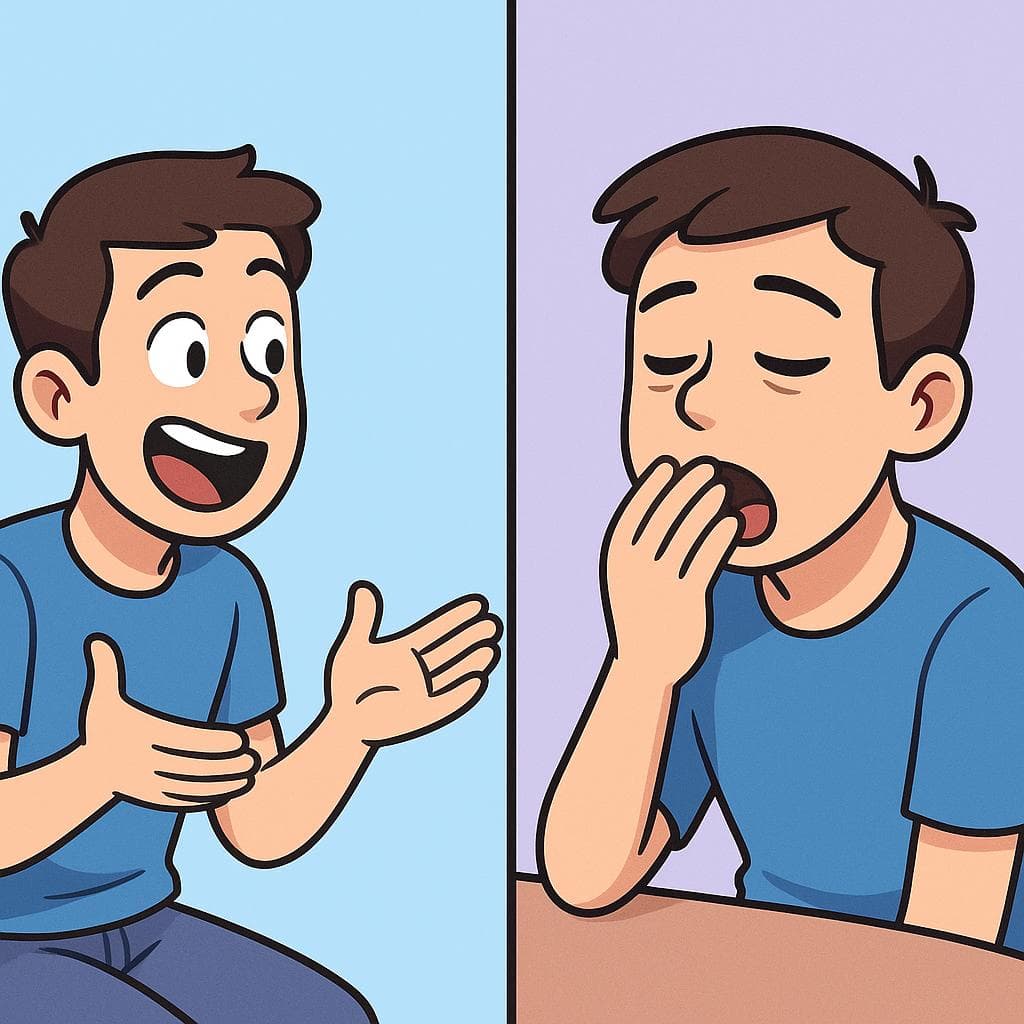
ser cansado
To be tiring, exhausting, or wearying. Describes an inherent characteristic of a person, activity, or thing that causes fatigue in others.
SEHR kahn-SAH-dohestar cansado
To feel tired or be tired. Describes a temporary physical or mental state of a person or animal.
ehs-TAR kahn-SAH-dohQuick Rule
Ser cansado = to BE a tiring person/thing. Estar cansado = to FEEL tired.
Think: Ser = Source of tiredness. Estar = Experiencing tiredness.
- This is a direct application of the 'ser for characteristics, estar for states' rule, so there are no true exceptions.
- This pattern applies to many other adjectives, like 'aburrido' (boring vs. bored) and 'listo' (clever vs. ready).
Comparison Table
| Context | ser cansado | estar cansado | Why? |
|---|---|---|---|
| Describing a Person | Él es cansado. | Él está cansado. | Ser: He is a tiring person (his personality drains others). Estar: He feels tired right now. |
| Talking About a Job | El trabajo es cansado. | Estoy cansado del trabajo. | Ser: The job itself is inherently tiring. Estar: I feel tired because of my job. |
| Referring to a Conversation | Esa conversación fue cansada. | Estaba cansado durante la conversación. | Ser: The conversation itself was draining. Estar: I felt tired while the conversation was happening. |
When to Use "ser cansado / estar cansado"
ser cansado
To be tiring, exhausting, or wearying. Describes an inherent characteristic of a person, activity, or thing that causes fatigue in others.
SEHR kahn-SAH-doh
Describing a person's personality
Mi jefe es muy cansado; siempre se queja de todo.
My boss is very tiring; he always complains about everything.
Describing an activity or job
Este trabajo es muy cansado, pero paga bien.
This job is very tiring, but it pays well.
Describing a situation
La discusión fue larga y cansada.
The discussion was long and tiring.
estar cansado
To feel tired or be tired. Describes a temporary physical or mental state of a person or animal.
ehs-TAR kahn-SAH-doh
Expressing physical tiredness
Después de correr, estoy muy cansado.
After running, I am very tired.
Expressing mental fatigue or being 'sick of' something
Estoy cansada de tus excusas.
I'm tired of your excuses.
Describing a temporary state
Los niños jugaron todo el día y ahora están cansados.
The kids played all day and now they are tired.
Contrast Examples
With "ser cansado":
A veces, Pablo es un poco cansado.
Sometimes, Pablo is a bit of a tiring person.
With "estar cansado":
Pablo parece que está un poco cansado hoy.
Pablo seems like he is a little tired today.
The Difference: Using 'ser' is a judgment about Pablo's personality—that he can be draining to be around. Using 'estar' is a simple observation of his current physical state.
With "ser cansado":
La película es cansada, dura tres horas.
The movie is tiring, it lasts three hours.
With "estar cansado":
Estoy cansado, no quiero ver una película.
I'm tired, I don't want to watch a movie.
The Difference: 'Ser' describes a quality of the movie itself that makes it exhausting to watch. 'Estar' describes your personal feeling that makes you not want to do an activity.
Common Mistakes
¡Hola! Soy muy cansado hoy.
¡Hola! Estoy muy cansado hoy.
To express how you feel, always use 'estar'. Saying 'soy cansado' means 'I am a tiring person', which is a comment on your personality, not your energy level.
El viaje estuvo cansado.
El viaje fue cansado.
When describing the inherent nature of an event or thing (like a trip), use 'ser'. The trip itself was tiring, so it's a characteristic of the trip.
Quick Practice
Quick Quiz: Ser Cansado vs Estar Cansado
Question 1 of 3
My job is very demanding. It ___ very tiring.
Related Grammar
Want to understand the grammar behind this pair? Explore these lessons for a deep dive:
Key Words




Tags
Build the instinct, not just the rule
Rules help you get it right; context makes it automatic. Read 200+ illustrated and narrated Spanish stories to see confusing pairs chosen correctly — over and over — until you stop thinking about it.
Frequently Asked Questions
So if I say 'Soy cansado,' is it always wrong?
It's not grammatically wrong, but it's probably not what you mean. It means 'I am a tiring person.' It's a very negative self-assessment! 99% of the time, when you want to talk about your own tiredness, you will use 'Estoy cansado/a'.
Can I say 'estoy cansado de mi trabajo'?
Yes, absolutely! This is a very common phrase. 'Ser cansado' describes the job itself ('El trabajo es cansado'). 'Estar cansado de...' describes your emotional state about it ('Estoy cansado de mi trabajo' - I'm tired/sick of my job).
Does this ser/estar rule apply to other adjectives?
Yes! This is a key concept in Spanish. The same pattern works for many adjectives, most famously 'aburrido'. 'Ser aburrido' means 'to be boring', while 'estar aburrido' means 'to feel bored'. Mastering this pattern will make your Spanish sound much more natural.