
Valer vs Costar
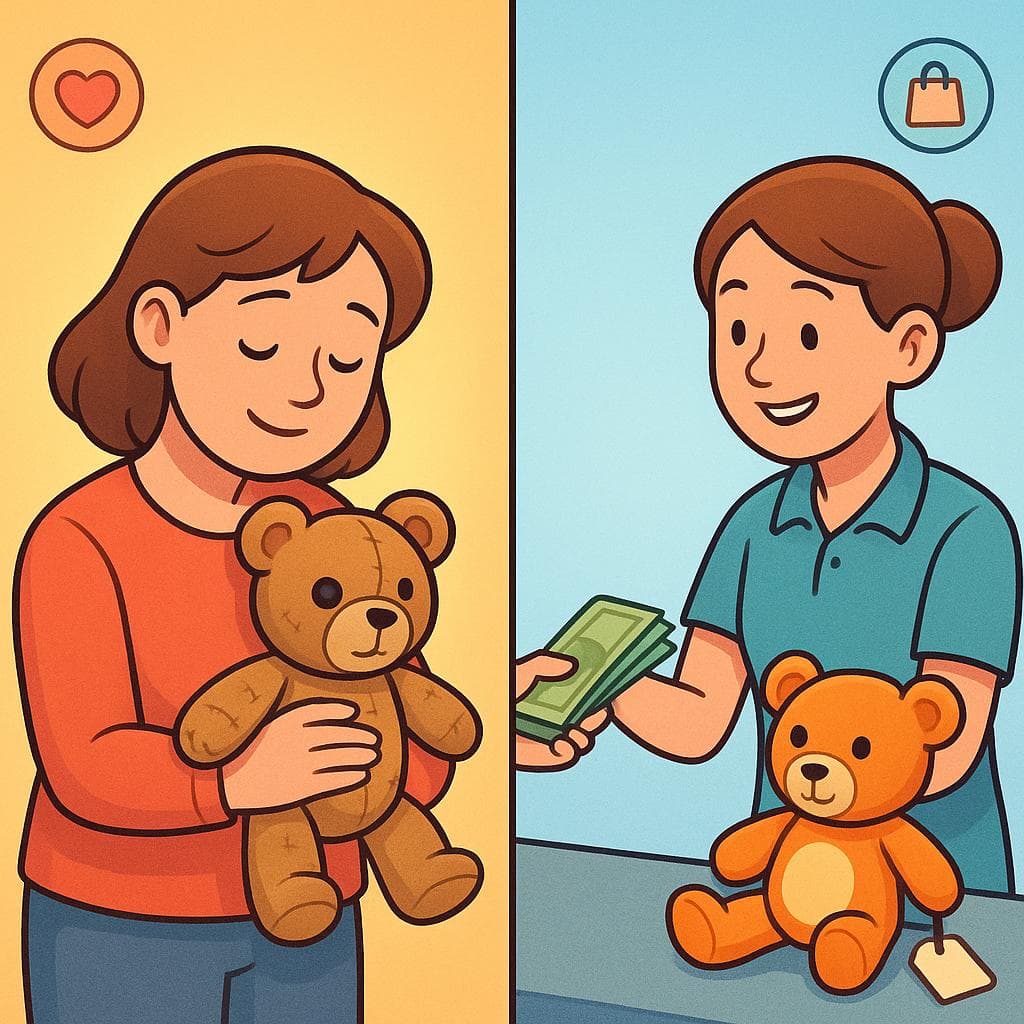
Costar = price tag (money or effort). Valer = inherent worth or value.
valer
To be worth, to have value, to be valid
bah-LEHRcostar
To cost (in money, effort, or difficulty)
kohs-TARQuick Rule
Costar = price tag (money or effort). Valer = inherent worth or value.
Costar has a 'C' like Cash. Valer has a 'V' like Value.
- The phrase 'vale la pena' means 'it's worth the effort'.
- You can sometimes use '¿Cuánto vale?' to ask for a price, but '¿Cuánto cuesta?' is more common.
Comparison Table
| Context | valer | costar | Why? |
|---|---|---|---|
| Asking for Price | ¿Cuánto vale? | ¿Cuánto cuesta? | 'Cuesta' is the most common way to ask for a price. 'Vale' is also used, but it can lean more towards asking about value. |
| Talking About Money | Vale mucho dinero. | Cuesta mucho dinero. | 'Vale' refers to its inherent worth or resale value. 'Cuesta' refers to its purchase price. |
| Figurative Meaning | ¡No vale hacer trampa! | Me cuesta creerlo. | 'Valer' can mean 'to be valid/allowed'. 'Costar' can mean 'to be difficult' (it costs me effort to believe it). |
| Effort | Vale la pena intentarlo. | Cuesta mucho esfuerzo. | 'Vale la pena' means the result is worth the effort. 'Cuesta' describes the effort itself as a high cost. |
When to Use "valer / costar"
valer
To be worth, to have value, to be valid
bah-LEHR
Expressing worth or value
Este cuadro vale mucho.
This painting is worth a lot.
Expressing usefulness or validity
Este billete ya no vale.
This ticket is no longer valid.
In the phrase 'vale la pena' (it's worth it)
Estudiar español vale la pena.
Studying Spanish is worth it.
To say 'okay' or 'deal' (Spain)
¿Nos vemos a las ocho? ¡Vale!
See you at eight? Okay!
costar
To cost (in money, effort, or difficulty)
kohs-TAR
Asking for a monetary price
¿Cuánto cuesta el café?
How much does the coffee cost?
Stating a monetary price
La entrada cuesta diez euros.
The ticket costs ten euros.
Expressing difficulty (figurative cost)
Me cuesta mucho levantarme temprano.
It's very hard for me to get up early.
Expressing an emotional or social cost
Esa mentira le costó la amistad.
That lie cost him the friendship.
Contrast Examples
With "valer":
Este reloj vale mucho para mí.
This watch is worth a lot to me.
With "costar":
Este reloj me costó mucho.
This watch cost me a lot.
The Difference: 'Valer' expresses sentimental or emotional value. 'Costar' expresses the monetary price you paid for it.
With "valer":
Vale la pena terminar el proyecto.
It's worth the effort to finish the project.
With "costar":
Cuesta mucho terminar el proyecto.
It's very difficult to finish the project.
The Difference: 'Vale la pena' focuses on the positive outcome that justifies the effort. 'Cuesta' focuses only on the difficulty or 'cost' of the effort itself.
Common Mistakes
Me vale mucho entender la lección.
Me cuesta mucho entender la lección.
To express that something is difficult for you, use 'costar'. 'Valer' is about worth, not the 'cost' of effort.
Este anillo de mi abuela me costó mucho.
Este anillo de mi abuela vale mucho para mí.
If you're talking about sentimental value, not the price you paid, use 'valer'. 'Costar' would imply you bought it for a high price.
Quick Practice
Quick Quiz: Valer vs Costar
Question 1 of 2
At a market, what's the most common way to ask for the price? '¿Cuánto ___?'
Related Grammar
Want to understand the grammar behind this pair? Explore these lessons for a deep dive:
Key Words




Tags
Build the instinct, not just the rule
Rules help you get it right; context makes it automatic. Read 200+ illustrated and narrated Spanish stories to see confusing pairs chosen correctly — over and over — until you stop thinking about it.
Frequently Asked Questions
Can I use 'vale' to ask for a price?
Yes, you can, and you'll be understood. '¿Cuánto vale?' is common in some regions. However, '¿Cuánto cuesta?' is more universally used for asking about a specific price tag, while 'vale' leans more towards 'what is its value'.
What's the difference between 'vale la pena' and 'merece la pena'?
They mean the exact same thing: 'it's worth it' or 'it's worthwhile'. 'Vale la pena' is generally more common in everyday conversation, but both are perfectly correct and interchangeable.