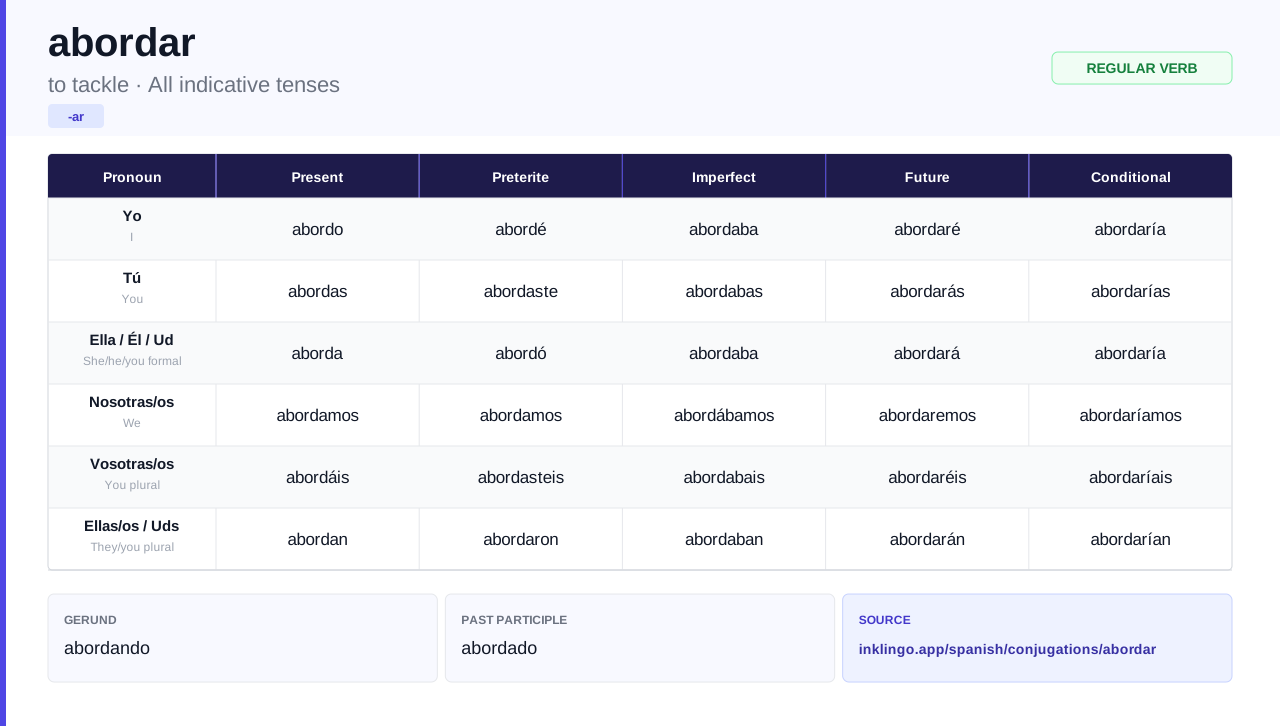
abordarConjugation
abordar means to tackle.
Complete Conjugation Tables
Reference all tenses and moods
Subjunctive
Imperfect Subjunctive
Past subjunctive: If I tackled..., if you would tackle... (abordara, abordaras, abordáramos, etc.).
Present Subjunctive
Present subjunctive: I hope you tackle, it's unlikely they tackle (aborde, abordes, abordemos, etc.).
Imperative
Negative Imperative
Negative commands use the present subjunctive: no abordes (tú), no aborde (usted), no abordemos (nosotros), no aborden (ustedes), no abordeis (vosotros).
Imperative
Commands: aborda (tú), aborde (usted), abordemos (nosotros), aborden (ustedes), abordad (vosotros).
Indicative
Conditional
Hypothetical 'would': abordaría, abordarías, abordaría, abordaríamos, abordaríais, abordarían.
Preterite
Completed past actions: abordé, abordaste, abordó, abordamos, abordasteis, abordaron.
Imperfect
Ongoing or habitual past actions: abordaba, abordabas, abordaba, abordábamos, abordabais, abordaban.
Present
Habitual or current actions: abordo, abordas, aborda, abordamos, abordáis, abordan.
Future
Future actions: abordaré, abordarás, abordará, abordaremos, abordaréis, abordarán.
Practice Conjugations
Test your knowledge with interactive exercises
Take abordar from tables to real Spanish
Conjugation tables are the start. Read 200+ illustrated and narrated Spanish stories to see 'abordar' in action across real sentences — and build the instinct that native speakers have.
Frequently Asked Questions
What does abordar mean in Spanish?
abordar means "to tackle".
Is abordar a regular or irregular verb?
abordar is a regular -ar verb in Spanish.
How do you conjugate abordar in the present tense?
The present tense of abordar is: yo abordo, tú abordas, él/ella/usted aborda, nosotros abordamos, vosotros abordáis, ellos/ellas/ustedes abordan.
How do you conjugate abordar in the preterite (past tense)?
The preterite of abordar is: yo abordé, tú abordaste, él/ella/usted abordó, nosotros abordamos, vosotros abordasteis, ellos/ellas/ustedes abordaron.
abordar conjugation cheat sheet