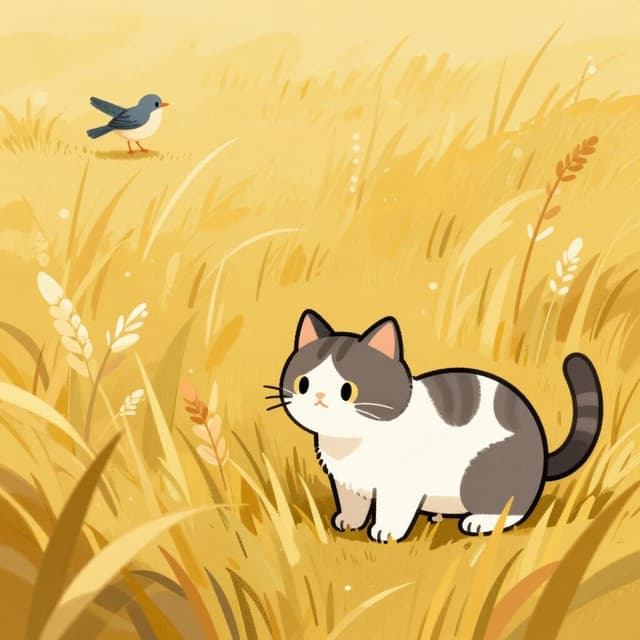
acechar Present Conjugation
acechar — to stalk
The present indicative (acecho, acechas, acecha, acechamos, acecháis, acechan) describes current actions, habits, or general truths.
acechar Present Forms
When to Use the Present
Use this tense for actions happening right now ('I am stalking'), habitual actions ('He often stalks'), or general truths ('Cats stalk mice').
Notes on acechar in the Present
Acechar is a regular -ar verb in the present indicative. All forms follow the standard conjugation pattern.
Example Sentences
Yo acecho a los pájaros en el jardín para fotografiarlos.
I stalk the birds in the garden to photograph them.
yo
El gato acecha en las sombras antes de saltar.
The cat stalks in the shadows before jumping.
él/ella/usted
¿Acechas a menudo en el bosque?
Do you often stalk in the forest?
tú
Ellos acechan desde lejos para no ser vistos.
They stalk from afar so as not to be seen.
ellos/ellas/ustedes
Common Mistakes
Mistake: Using the present indicative for actions that started in the past and continue.
Correct: For actions that began in the past and continue, consider using 'llevar + gerund' (e.g., 'Llevo acechando dos horas') or other constructions.
Why: The simple present usually describes actions happening now or habitually, not duration from the past.
Mistake: Confusing 'acechamos' (present) with 'acechamos' (preterite).
Correct: Context is key! 'Acechamos' can mean 'we stalk' (habitual/now) or 'we stalked' (completed past).
Why: The identical forms require the surrounding sentence to clarify the timeframe.
Master Spanish verbs in context
Memorizing tables only gets you so far. Read 200+ illustrated and narrated Spanish stories to see verbs like 'acechar' used naturally — in the tenses you're learning.
Related Tenses
Preterite
yo: aceché
The preterite of acechar is regular: aceché, acechaste, acechó, acechamos, acechasteis, acecharon.
Imperfect
yo: acechaba
The imperfect (acechaba, acechabas, etc.) describes ongoing or habitual past actions, and background settings.
Future
yo: acecharé
The future tense (acecharé, acecharás, etc.) indicates actions that will happen or expresses probability.
Conditional
yo: acecharía
The conditional (acecharía, acecharías, etc.) is used for hypotheticals ('would stalk'), polite requests, and future-in-the-past.
Present Subjunctive
yo: aceche
The present subjunctive (aceche, aceches, etc.) follows expressions of doubt, desire, emotion, or uncertainty.
Imperfect Subjunctive
yo: acechara
The imperfect subjunctive (acechara/acechase) expresses past hypotheticals, wishes, or doubts.
Affirmative Imperative
yo: acecha
Use 'acecha' for tú commands, 'aceche' for usted, 'acechemos' for nosotros, 'acechad' for vosotros, and 'acechen' for ustedes.
Negative Imperative
yo: no aceches
Negative commands use 'no' plus the present subjunctive: no aceches (tú), no aceche (usted), no acechemos (nosotros), no acechéis (vosotros), no acechen (ustedes).