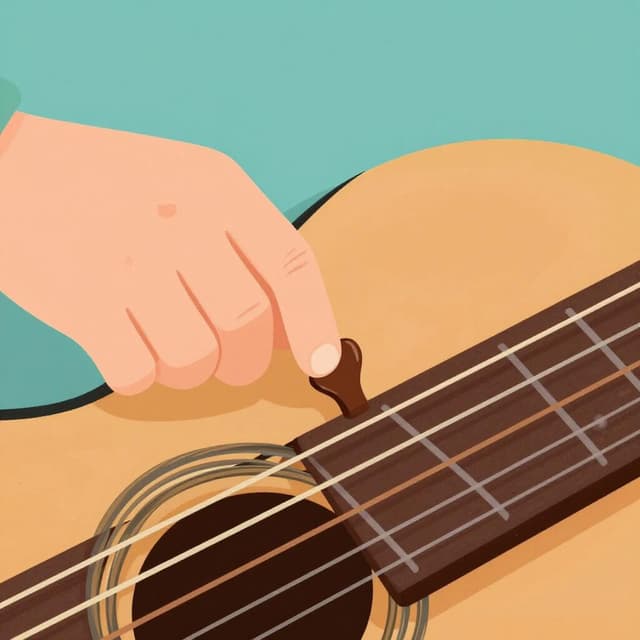
afinar Imperfect Conjugation
afinar — to tune
Use 'afinaba', 'afinabas', 'afinaba', 'afinábamos', 'afinabais', 'afinaban' for ongoing or habitual past tuning.
afinar Imperfect Forms
When to Use the Imperfect
The imperfect tense of 'afinar' describes actions of tuning that were ongoing or habitual in the past. For example, 'Cuando era niño, afinaba el piano de mi abuela' (When I was a child, I used to tune my grandmother's piano) or 'El coche afinaba el motor mientras esperaba' (The car was tuning its engine while it waited).
Notes on afinar in the Imperfect
Afinar is regular in the imperfect tense. All forms follow the standard -ar imperfect endings.
Example Sentences
Yo afinaba la guitarra todos los días antes de practicar.
I used to tune the guitar every day before practicing.
yo
Tú afinabas la radio para encontrar la estación.
You used to tune the radio to find the station.
tú
Él afinaba los detalles del motor.
He was fine-tuning the engine's details.
él/ella/usted
Ellos afinaban sus instrumentos durante la prueba de sonido.
They were tuning their instruments during the soundcheck.
ellos/ellas/ustedes
Common Mistakes
Mistake: Using the imperfect for a single, completed tuning action.
Correct: For a specific, finished act of tuning, use the preterite: 'Afiné la trompeta' (I tuned the trumpet), not 'Afinaba la trompeta'.
Why: The preterite marks completed actions, while the imperfect describes ongoing or habitual past actions.
Mistake: Confusing the yo and él/ella/usted forms.
Correct: Both 'yo afinaba' and 'él/ella/usted afinaba' use the same form. Context is key.
Why: This is a feature of the imperfect tense for -ar verbs; the subject pronoun clarifies who is performing the action.
Master Spanish verbs in context
Memorizing tables only gets you so far. Read 200+ illustrated and narrated Spanish stories to see verbs like 'afinar' used naturally — in the tenses you're learning.
Related Tenses
Present
yo: afino
Use 'afino', 'afinas', 'afina', 'afinamos', 'afináis', 'afinan' for current, habitual, or general tuning actions.
Preterite
yo: afiné
Use 'afiné', 'afinaste', 'afino', 'afinamos', 'afinasteis', 'afinaron' for completed past tuning actions.
Future
yo: afinaré
Use 'afinaré', 'afinarás', 'afinará', 'afinaremos', 'afinaréis', 'afinarán' for future tuning actions.
Conditional
yo: afinaría
Use 'afinaría', 'afinarías', 'afinaría', 'afinaríamos', 'afinaríais', 'afinarían' for hypothetical or polite tuning.
Present Subjunctive
yo: afine
Use 'afine' (él/ella/usted) and 'afinen' (ellos/ellas/ustedes) for wishes, doubts, or emotions about tuning.
Imperfect Subjunctive
yo: afinara
Use 'afinara' or 'afinara' for past hypothetical or uncertain actions, like 'if I tuned...'.
Affirmative Imperative
yo: afina
Use 'afina' (tú) and 'afinen' (ustedes) for direct commands to tune something.
Negative Imperative
yo: no afines
Use 'no afines' (tú) and 'no afinen' (ustedes) for negative commands to not tune something.