afinar Present Subjunctive Conjugation
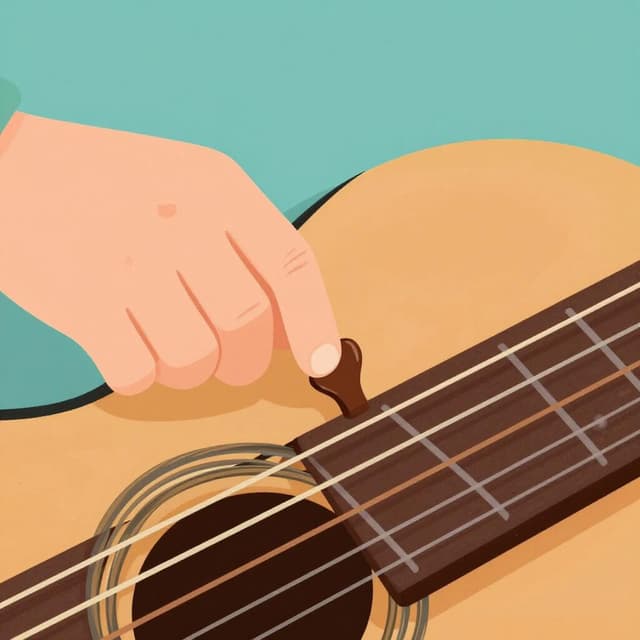
afinar — to tune
Use 'afine' (él/ella/usted) and 'afinen' (ellos/ellas/ustedes) for wishes, doubts, or emotions about tuning.
afinar Present Subjunctive Forms
When to Use the Present Subjunctive
The present subjunctive of 'afinar' is used after expressions of desire, doubt, emotion, or uncertainty. For example, 'Espero que afines la guitarra' (I hope you tune the guitar) or 'Dudo que afinen bien' (I doubt they tune well). It's about uncertainty or subjectivity regarding the act of tuning.
Notes on afinar in the Present Subjunctive
Afinar is regular in the present subjunctive.
Example Sentences
Espero que afines el violín antes del concierto.
I hope you tune the violin before the concert.
tú
Quiero que afine la melodía correctamente.
I want him/her/you (formal) to tune the melody correctly.
él/ella/usted
Dudamos que afinemos las cuerdas a tiempo.
We doubt that we will tune the strings on time.
nosotros
Me alegra que afinen sus motores.
I'm glad they are tuning their engines.
ellos/ellas/ustedes
Common Mistakes
Mistake: Using the indicative present instead of the present subjunctive.
Correct: After verbs expressing hope, doubt, or emotion, use the subjunctive: 'Espero que afines', not 'Espero que afinas'.
Why: These specific expressions trigger the subjunctive mood in Spanish.
Mistake: Forgetting the 's' in the tú form.
Correct: The correct tú form is 'afines', not 'afine'.
Why: The '-es' ending is characteristic of the present subjunctive for -ar verbs in the tú form.
Master Spanish verbs in context
Memorizing tables only gets you so far. Read 200+ illustrated and narrated Spanish stories to see verbs like 'afinar' used naturally — in the tenses you're learning.
Related Tenses
Present
yo: afino
Use 'afino', 'afinas', 'afina', 'afinamos', 'afináis', 'afinan' for current, habitual, or general tuning actions.
Preterite
yo: afiné
Use 'afiné', 'afinaste', 'afino', 'afinamos', 'afinasteis', 'afinaron' for completed past tuning actions.
Imperfect
yo: afinaba
Use 'afinaba', 'afinabas', 'afinaba', 'afinábamos', 'afinabais', 'afinaban' for ongoing or habitual past tuning.
Future
yo: afinaré
Use 'afinaré', 'afinarás', 'afinará', 'afinaremos', 'afinaréis', 'afinarán' for future tuning actions.
Conditional
yo: afinaría
Use 'afinaría', 'afinarías', 'afinaría', 'afinaríamos', 'afinaríais', 'afinarían' for hypothetical or polite tuning.
Imperfect Subjunctive
yo: afinara
Use 'afinara' or 'afinara' for past hypothetical or uncertain actions, like 'if I tuned...'.
Affirmative Imperative
yo: afina
Use 'afina' (tú) and 'afinen' (ustedes) for direct commands to tune something.
Negative Imperative
yo: no afines
Use 'no afines' (tú) and 'no afinen' (ustedes) for negative commands to not tune something.