amarrar Imperfect Subjunctive Conjugation
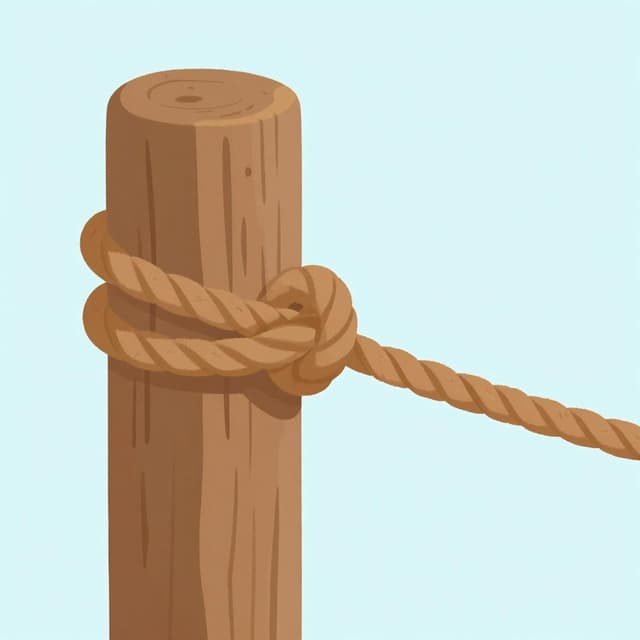
amarrar — to tie
The imperfect subjunctive of amarrar has two forms (amarrara/amarrase) used for past hypotheticals and wishes.
amarrar Imperfect Subjunctive Forms
When to Use the Imperfect Subjunctive
This tense is often used in 'if' clauses referring to hypothetical situations in the past or present, or after expressions of doubt, desire, or emotion in the past.
Notes on amarrar in the Imperfect Subjunctive
Amarra is regular in the imperfect subjunctive. Both the -ra and -se endings are correct, though -ra is more common.
Example Sentences
Si yo amarrara el barco correctamente, no se habría soltado.
If I had tied the boat correctly, it wouldn't have come loose.
yo
Me pidió que amarrara los zapatos de su hijo.
He asked me to tie his son's shoes.
yo
Ojalá él amara más la música.
I wish he loved music more.
él/ella/usted
Te sugerí que amarraras la carga con más cuidado.
I suggested you tie the load more carefully.
tú
Common Mistakes
Mistake: Using the preterite instead of the imperfect subjunctive.
Correct: For hypothetical past conditions, use forms like 'amara' or 'amarrara'.
Why: The preterite indicates completed actions, while the imperfect subjunctive deals with unreal or hypothetical situations.
Mistake: Confusing the -ra and -se endings.
Correct: Both 'amarrara' and 'amarrase' are correct imperfect subjunctive forms.
Why: Learners sometimes think only one ending is acceptable, but both are valid.
Master Spanish verbs in context
Memorizing tables only gets you so far. Read 200+ illustrated and narrated Spanish stories to see verbs like 'amarrar' used naturally — in the tenses you're learning.
Related Tenses
Present
yo: amarro
The present indicative of amarrar is amarro, amarras, amarra, amarrámos, amarráis, amarran, used for current or habitual actions.
Preterite
yo: amarré
The preterite of amarrar is regular: amarré, amarraste, amarró, amarraron, used for completed past actions.
Imperfect
yo: amarraba
The imperfect of amarrar is amarraba, amarrabas, amarraba, amarrábamos, amarrabais, amarraban, used for ongoing or habitual past actions.
Future
yo: amarraré
The future of amarrar is amarraré, amarrarás, amarrará, amarraremos, amarraréis, amarrarán, used for actions that will happen.
Conditional
yo: amarraría
The conditional of amarrar is amarraría, amarrarías, amarraría, amarraríamos, amarraríais, amarrarían, used for hypotheticals and polite requests.
Present Subjunctive
yo: amarre
The present subjunctive of amarrar is amarre, amarres, amarre, amarremos, amarréis, amarren, used after wishes, doubts, and emotions.
Affirmative Imperative
yo: amarra
The imperative of amarrar uses regular -ar endings: amarra, amarre, amarremos, amarrad, amarren.
Negative Imperative
yo: no amarres
Negative commands for amarrar use 'no' plus the present subjunctive: no amarres, no amarre, no amarremos, no amarréis, no amarren.