amarrar Present Subjunctive Conjugation
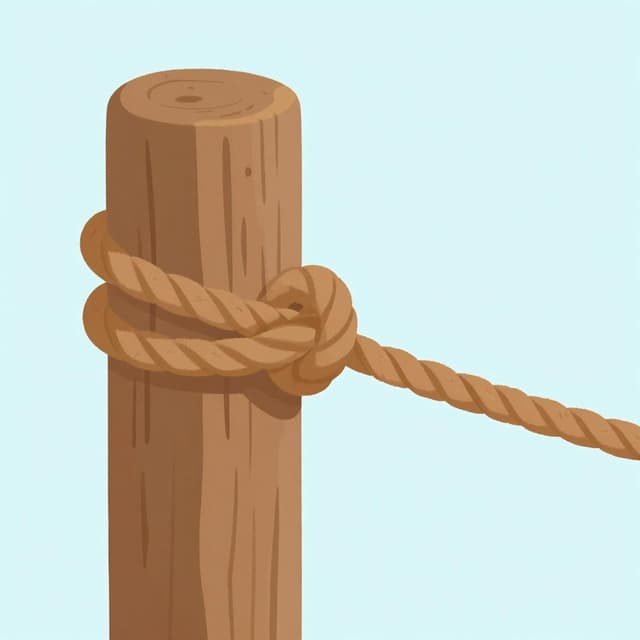
amarrar — to tie
The present subjunctive of amarrar is amarre, amarres, amarre, amarremos, amarréis, amarren, used after wishes, doubts, and emotions.
amarrar Present Subjunctive Forms
When to Use the Present Subjunctive
Use the present subjunctive when expressing wishes, desires, doubts, emotions, or giving commands indirectly. It's triggered by phrases like 'Quiero que...', 'Espero que...', 'Dudo que...'.
Notes on amarrar in the Present Subjunctive
Amarra is regular in the present subjunctive. The forms are the same as the negative imperative and some imperative forms.
Example Sentences
Espero que amarres bien el nudo.
I hope you tie the knot well.
tú
Quiero que amarremos la vela antes de que llueva.
I want us to tie the sail before it rains.
nosotros
Dudo que amarren el barco a tiempo.
I doubt they will tie up the boat on time.
ellos/ellas/ustedes
Te pido que amarre la corbata correctamente.
I ask you to tie the tie correctly.
Common Mistakes
Mistake: Using the present indicative instead of the present subjunctive.
Correct: After expressions of doubt or desire, use the subjunctive: 'Espero que amarres' not 'Espero que amarras'.
Why: The indicative states facts, while the subjunctive expresses uncertainty, emotion, or volition.
Mistake: Confusing 'amarre' (usted imperative) with 'amarre' (yo/él/ella/usted present subjunctive).
Correct: Understand that 'amarre' can serve multiple functions; context is key.
Why: Form overlap requires careful attention to the surrounding sentence structure.
Master Spanish verbs in context
Memorizing tables only gets you so far. Read 200+ illustrated and narrated Spanish stories to see verbs like 'amarrar' used naturally — in the tenses you're learning.
Related Tenses
Present
yo: amarro
The present indicative of amarrar is amarro, amarras, amarra, amarrámos, amarráis, amarran, used for current or habitual actions.
Preterite
yo: amarré
The preterite of amarrar is regular: amarré, amarraste, amarró, amarraron, used for completed past actions.
Imperfect
yo: amarraba
The imperfect of amarrar is amarraba, amarrabas, amarraba, amarrábamos, amarrabais, amarraban, used for ongoing or habitual past actions.
Future
yo: amarraré
The future of amarrar is amarraré, amarrarás, amarrará, amarraremos, amarraréis, amarrarán, used for actions that will happen.
Conditional
yo: amarraría
The conditional of amarrar is amarraría, amarrarías, amarraría, amarraríamos, amarraríais, amarrarían, used for hypotheticals and polite requests.
Imperfect Subjunctive
yo: amarrara
The imperfect subjunctive of amarrar has two forms (amarrara/amarrase) used for past hypotheticals and wishes.
Affirmative Imperative
yo: amarra
The imperative of amarrar uses regular -ar endings: amarra, amarre, amarremos, amarrad, amarren.
Negative Imperative
yo: no amarres
Negative commands for amarrar use 'no' plus the present subjunctive: no amarres, no amarre, no amarremos, no amarréis, no amarren.