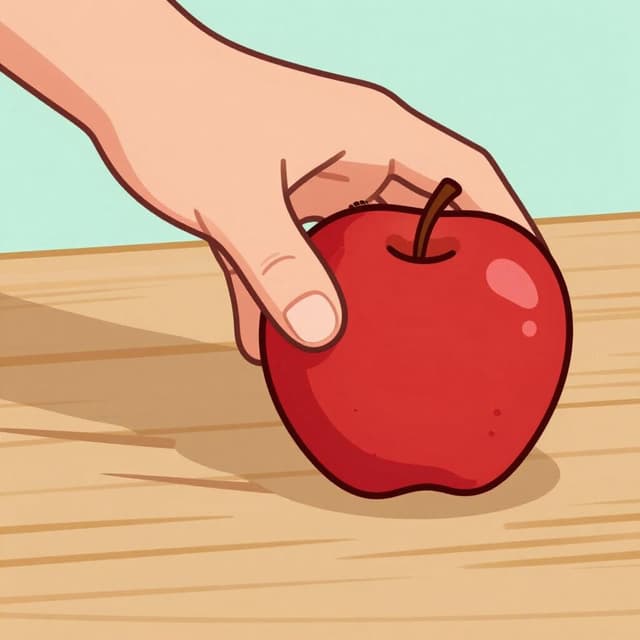
arrebatar Imperfect Conjugation
arrebatar — to snatch
Use imperfect forms like 'arrebataba' and 'arrebataban' for ongoing or habitual past actions.
arrebatar Imperfect Forms
When to Use the Imperfect
The imperfect describes actions that were happening over a period in the past, habitual actions, or background settings. For example, 'Cuando era niño, yo arrebataba dulces de la tienda' (When I was a child, I used to snatch candy from the store).
Notes on arrebatar in the Imperfect
Arrebatar is regular in the imperfect tense. The endings are standard for -ar verbs.
Example Sentences
Él arrebataba los bocadillos de la mesa.
He used to snatch the snacks from the table.
él/ella/usted
Nosotros arrebatábamos las flores del jardín.
We used to snatch the flowers from the garden.
nosotros
Tú siempre arrebatabas mi atención.
You always snatched my attention.
tú
Ellos arrebataban la pelota mientras jugaban.
They were snatching the ball while they played.
ellos/ellas/ustedes
Common Mistakes
Mistake: Using the preterite instead of the imperfect for habitual past actions.
Correct: Use the imperfect ('arrebataba') for repeated or ongoing actions in the past.
Why: The preterite ('arrebató') describes a single, completed event.
Mistake: Confusing the nosotros imperfect 'arrebatábamos' with the preterite 'arrebatamos'.
Correct: The imperfect has the '-aba-' stem and the accent on the 'a' before the ending: 'arrebatábamos'. The preterite is 'arrebatamos'.
Why: These forms sound similar but refer to different time frames (ongoing/habitual vs. completed).
Master Spanish verbs in context
Memorizing tables only gets you so far. Read 200+ illustrated and narrated Spanish stories to see verbs like 'arrebatar' used naturally — in the tenses you're learning.
Related Tenses
Present
yo: arrebato
Use present forms like 'arrebato' and 'arrebatan' for habitual actions or things happening now.
Preterite
yo: arrebaté
Use preterite forms like 'arrebaté' and 'arrebataron' for completed actions in the past.
Future
yo: arrebataré
Use future forms like 'arrebataré' and 'arrebatarán' for actions that will happen.
Conditional
yo: arrebataría
Use conditional forms like 'arrebataría' and 'arrebatarían' for hypothetical situations ('would').
Present Subjunctive
yo: arrebate
Use present subjunctive forms like 'arrebate' and 'arrebaten' after expressions of doubt, desire, or emotion.
Imperfect Subjunctive
yo: arrebatara
Use imperfect subjunctive forms like 'arrebatara' or 'arrebatase' for past hypotheticals or wishes.
Affirmative Imperative
yo: arrebata
Use imperative forms like 'arrebata' and 'arrebatad' for direct commands.
Negative Imperative
yo: no arrebates
Use negative commands like 'no arrebates' and 'no arrebaten' with the present subjunctive.