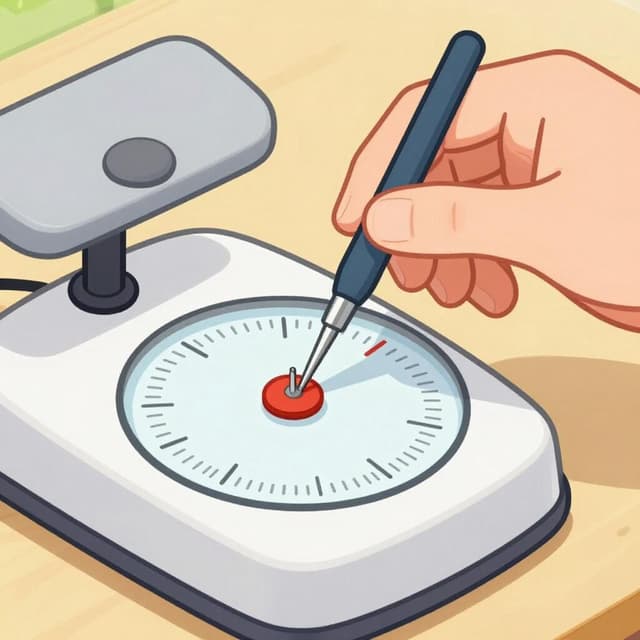
calibrar Negative Imperative Conjugation
calibrar — to calibrate
Negative commands for 'calibrar' use the present subjunctive: no calibras (tú), no calibre (usted), no calibremos (nosotros), no calibren (ustedes), no calibréis (vosotros).
calibrar Negative Imperative Forms
When to Use the Negative Imperative
Use the negative imperative to tell someone *not* to do something. For 'calibrar', it means instructing someone not to calibrate something.
Notes on calibrar in the Negative Imperative
All negative commands in Spanish are formed using the present subjunctive. Therefore, 'calibrar' follows the standard present subjunctive conjugation for negative commands.
Example Sentences
No calibras el termómetro si no estás seguro.
Don't calibrate the thermometer if you're not sure.
tú
No calibre el dispositivo sin leer el manual.
Do not calibrate the device without reading the manual.
usted
No calibremos el motor hasta que esté listo.
Let's not calibrate the engine until it's ready.
nosotros
No calibréis la impresora ahora.
Don't calibrate the printer now.
vosotros
Ustedes, no calibren las mediciones dos veces.
You all, do not calibrate the measurements twice.
ustedes
Common Mistakes
Mistake: Using the indicative present tense instead of the subjunctive for negative commands.
Correct: For negative commands, use the present subjunctive: 'no calibras' (tú), not 'no calibras' (indicative).
Why: Spanish grammar requires the present subjunctive after 'no' for negative commands.
Mistake: Confusing the 'vosotros' form, saying 'no calibren' instead of 'no calibréis'.
Correct: The correct 'vosotros' negative command is 'no calibréis'.
Why: The 'vosotros' form of the present subjunctive ends in -éis for -ar verbs.
Master Spanish verbs in context
Memorizing tables only gets you so far. Read 200+ illustrated and narrated Spanish stories to see verbs like 'calibrar' used naturally — in the tenses you're learning.
Related Tenses
Present
yo: calibro
The present tense of calibrar (calibro, calibras, etc.) describes current actions, habits, or general truths.
Preterite
yo: calibré
Calibrar is regular in the preterite: calibré, calibraste, calibró, calibrámos, calibrásteis, calibráron.
Imperfect
yo: calibraba
The imperfect of calibrar (calibraba, calibrabas, etc.) describes ongoing or habitual past actions.
Future
yo: calibraré
The future tense of calibrar (calibraré, calibrarás, etc.) indicates actions that will happen.
Conditional
yo: calibraría
The conditional of calibrar (calibraría, calibrarías, etc.) expresses hypothetical actions ('would calibrate') or polite requests.
Present Subjunctive
yo: calibre
The present subjunctive of calibrar (calibre, calibres, etc.) is used for wishes, doubts, emotions, and uncertainty.
Imperfect Subjunctive
yo: calibrara
The imperfect subjunctive of calibrar (e.g., calibrara, calibraras) is used for past hypotheticals, wishes, or doubts.
Affirmative Imperative
yo: calibra
Calibrar's imperative forms are mostly regular, with a few exceptions: calibra (tú), calibre (usted), calibremos (nosotros), calibren (ustedes), calibrad (vosotros).