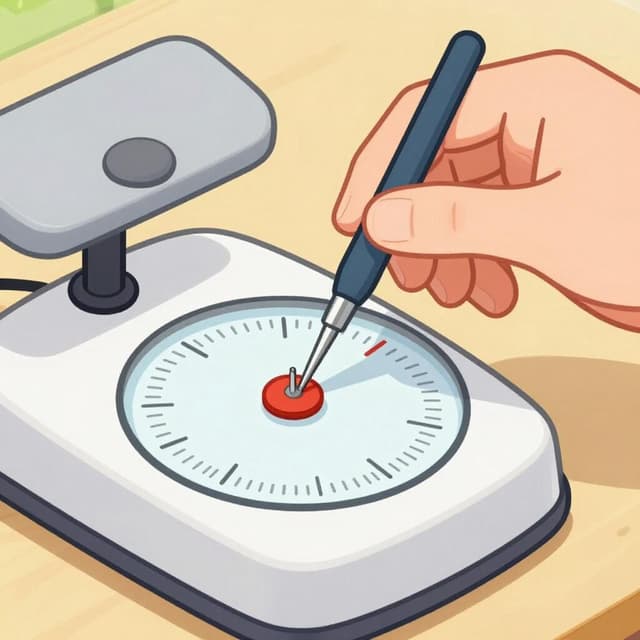
calibrar Preterite Conjugation
calibrar — to calibrate
Calibrar is regular in the preterite: calibré, calibraste, calibró, calibrámos, calibrásteis, calibráron.
calibrar Preterite Forms
When to Use the Preterite
Use the preterite tense for 'calibrar' to talk about a specific, completed action of calibrating in the past. Think of it as hitting a precise moment when the calibration was done.
Notes on calibrar in the Preterite
'Calibrar' is a regular -ar verb and has no irregularities in the preterite tense. All forms follow the standard conjugation pattern.
Example Sentences
Ayer calibré mi nuevo telescopio.
Yesterday I calibrated my new telescope.
yo
¿Calibraste la temperatura del horno?
Did you calibrate the oven temperature?
tú
El técnico calibró el equipo de medición.
The technician calibrated the measuring equipment.
él/ella/usted
Nosotros calibrámos las llantas la semana pasada.
We calibrated the tires last week.
nosotros
Ellos calibráron el sistema de riego por goteo.
They calibrated the drip irrigation system.
ellos/ellas/ustedes
Common Mistakes
Mistake: Using the imperfect 'calibraba' instead of the preterite 'calibré' for a single, finished action.
Correct: For a specific completed action like 'I calibrated yesterday', use the preterite: 'Ayer calibré'.
Why: The preterite marks definite completed actions, while the imperfect describes ongoing or habitual past actions.
Mistake: Forgetting the accent on 'calibró' and 'calibré'.
Correct: The forms are 'calibró' and 'calibré', with accents on the final 'o' and 'é' respectively.
Why: These accents are crucial for pronunciation and distinguishing these forms.
Master Spanish verbs in context
Memorizing tables only gets you so far. Read 200+ illustrated and narrated Spanish stories to see verbs like 'calibrar' used naturally — in the tenses you're learning.
Related Tenses
Present
yo: calibro
The present tense of calibrar (calibro, calibras, etc.) describes current actions, habits, or general truths.
Imperfect
yo: calibraba
The imperfect of calibrar (calibraba, calibrabas, etc.) describes ongoing or habitual past actions.
Future
yo: calibraré
The future tense of calibrar (calibraré, calibrarás, etc.) indicates actions that will happen.
Conditional
yo: calibraría
The conditional of calibrar (calibraría, calibrarías, etc.) expresses hypothetical actions ('would calibrate') or polite requests.
Present Subjunctive
yo: calibre
The present subjunctive of calibrar (calibre, calibres, etc.) is used for wishes, doubts, emotions, and uncertainty.
Imperfect Subjunctive
yo: calibrara
The imperfect subjunctive of calibrar (e.g., calibrara, calibraras) is used for past hypotheticals, wishes, or doubts.
Affirmative Imperative
yo: calibra
Calibrar's imperative forms are mostly regular, with a few exceptions: calibra (tú), calibre (usted), calibremos (nosotros), calibren (ustedes), calibrad (vosotros).
Negative Imperative
yo: no calibres
Negative commands for 'calibrar' use the present subjunctive: no calibras (tú), no calibre (usted), no calibremos (nosotros), no calibren (ustedes), no calibréis (vosotros).