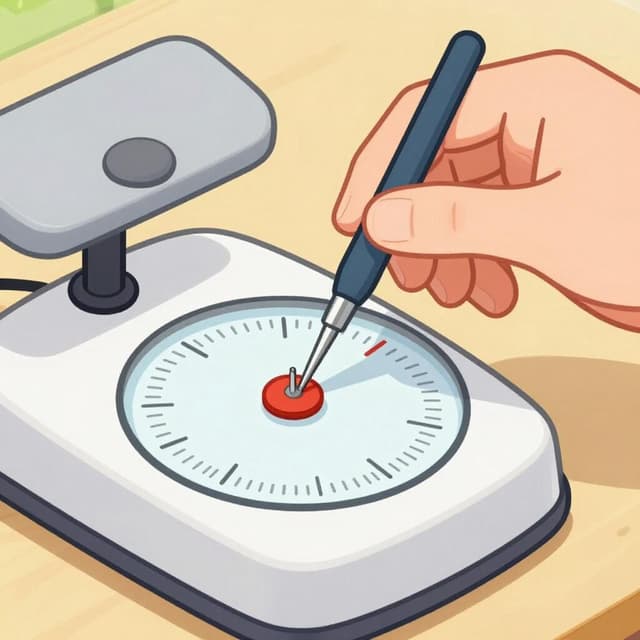
calibrar Present Conjugation
calibrar — to calibrate
The present tense of calibrar (calibro, calibras, etc.) describes current actions, habits, or general truths.
calibrar Present Forms
When to Use the Present
Use the present tense of 'calibrar' for actions happening right now, habitual actions (like calibrating something regularly), or general facts about calibration.
Notes on calibrar in the Present
'Calibrar' is a regular -ar verb in the present indicative tense. All its forms follow the standard conjugation pattern.
Example Sentences
Yo calibro mi báscula cada mes.
I calibrate my scale every month.
yo
¿Tú calibras el monitor de presión?
Do you calibrate the pressure monitor?
tú
El mecánico calibra el motor del coche.
The mechanic calibrates the car engine.
él/ella/usted
Nosotros calibrámos los instrumentos de laboratorio.
We calibrate the laboratory instruments.
nosotros
Ellos calibran los sensores de temperatura.
They calibrate the temperature sensors.
ellos/ellas/ustedes
Common Mistakes
Mistake: Using the present subjunctive ('calibre') when the indicative is needed for a statement of fact.
Correct: For habitual actions or facts, use the present indicative: 'Yo calibro', not 'Yo calibre'.
Why: The subjunctive is used for non-factual situations (wishes, doubts), while the indicative is for facts and routines.
Mistake: Confusing the 'vosotros' form, sometimes using 'calibran' instead of 'calibráis'.
Correct: The correct 'vosotros' form is 'calibráis'.
Why: The ending for 'vosotros' in the present indicative of -ar verbs is -áis.
Master Spanish verbs in context
Memorizing tables only gets you so far. Read 200+ illustrated and narrated Spanish stories to see verbs like 'calibrar' used naturally — in the tenses you're learning.
Related Tenses
Preterite
yo: calibré
Calibrar is regular in the preterite: calibré, calibraste, calibró, calibrámos, calibrásteis, calibráron.
Imperfect
yo: calibraba
The imperfect of calibrar (calibraba, calibrabas, etc.) describes ongoing or habitual past actions.
Future
yo: calibraré
The future tense of calibrar (calibraré, calibrarás, etc.) indicates actions that will happen.
Conditional
yo: calibraría
The conditional of calibrar (calibraría, calibrarías, etc.) expresses hypothetical actions ('would calibrate') or polite requests.
Present Subjunctive
yo: calibre
The present subjunctive of calibrar (calibre, calibres, etc.) is used for wishes, doubts, emotions, and uncertainty.
Imperfect Subjunctive
yo: calibrara
The imperfect subjunctive of calibrar (e.g., calibrara, calibraras) is used for past hypotheticals, wishes, or doubts.
Affirmative Imperative
yo: calibra
Calibrar's imperative forms are mostly regular, with a few exceptions: calibra (tú), calibre (usted), calibremos (nosotros), calibren (ustedes), calibrad (vosotros).
Negative Imperative
yo: no calibres
Negative commands for 'calibrar' use the present subjunctive: no calibras (tú), no calibre (usted), no calibremos (nosotros), no calibren (ustedes), no calibréis (vosotros).