casarse Preterite Conjugation
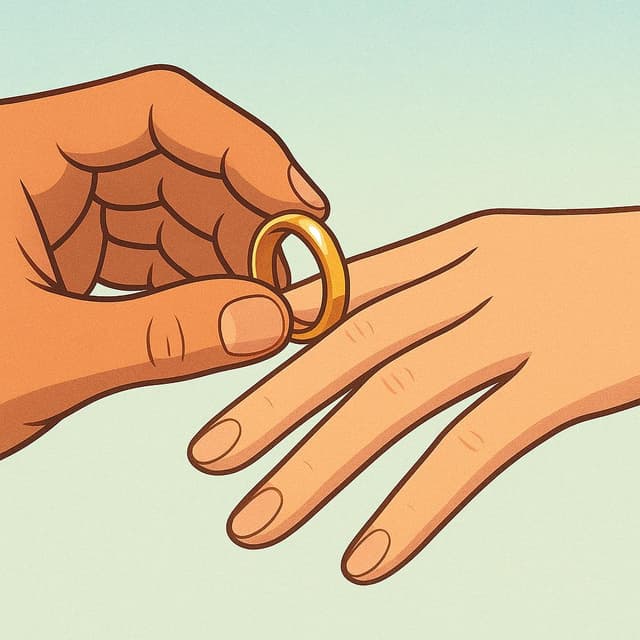
casarse — to get married
The preterite of casarse is regular: me casé, te casaste, se casó, nos casamos, os casasteis, se casaron.
casarse Preterite Forms
When to Use the Preterite
Use the preterite for the specific event of the wedding itself. Since a wedding is a completed action with a specific date, this is the most common tense for this verb.
Notes on casarse in the Preterite
The verb is regular. Note that 'nos casamos' is the same in both present and preterite; context will tell you if it happened today or years ago.
Example Sentences
Me casé con mi mejor amigo en 2010.
I married my best friend in 2010.
yo
Se casaron por lo civil el viernes pasado.
They had a civil wedding last Friday.
ellos/ellas/ustedes
¿Cuándo se casó tu hermana?
When did your sister get married?
él/ella/usted
Common Mistakes
Mistake: Saying 'Me casé con él' vs 'Me casé a él'.
Correct: Casarse con...
Why: In Spanish, you always marry 'with' (con) someone, never 'to' (a) someone like in English.
Master Spanish verbs in context
Memorizing tables only gets you so far. Read 200+ illustrated and narrated Spanish stories to see verbs like 'casarse' used naturally — in the tenses you're learning.
Related Tenses
Present
yo: me caso
The present tense of casarse is regular: me caso, te casas, se casa, nos casamos, os casáis, se casan.
Imperfect
yo: me casaba
The imperfect of casarse is regular and follows the -ar pattern: me casaba, te casabas, se casaba, nos casábamos, os casabais, se casaban.
Future
yo: me casaré
The future of casarse uses the infinitive as the stem: me casaré, te casarás, se casará, nos casaremos, os casaréis, se casarán.
Conditional
yo: me casaría
The conditional of casarse is regular: me casaría, te casarías, se casaría, nos casaríamos, os casaríais, se casarían.
Present Subjunctive
yo: me case
The present subjunctive of casarse is regular: me case, te cases, se case, nos casemos, os caséis, se casen.
Imperfect Subjunctive
yo: me casara
The imperfect subjunctive of casarse uses the -ra endings: me casara, te casaras, se casara, nos casáramos, os casarais, se casaran.
Affirmative Imperative
yo: cásate
The affirmative imperative of casarse attaches pronouns to the end: cásate, cásese, casémonos, casaos, cásense.
Negative Imperative
yo: no te cases
The negative imperative of casarse uses the present subjunctive: no te cases, no se case, no nos casemos, no os caséis, no se casen.