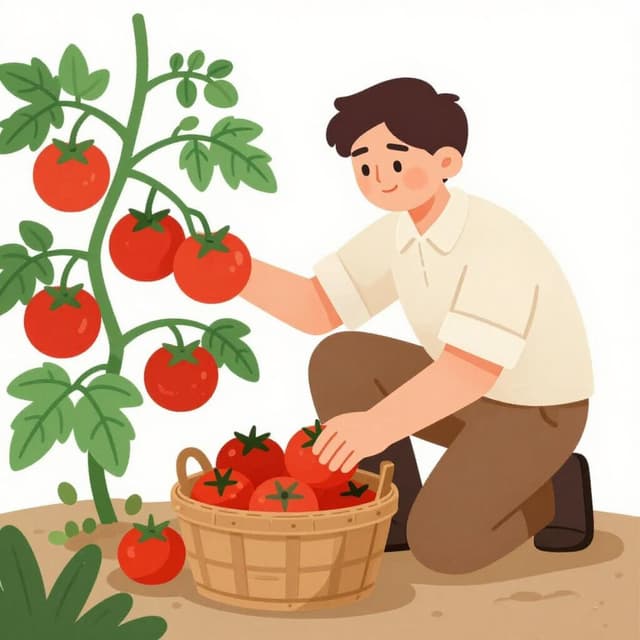
cosechar Preterite Conjugation
cosechar — to harvest
Use preterite for completed harvests, like 'coseché' (I harvested) or 'cosecharon' (they harvested).
cosechar Preterite Forms
When to Use the Preterite
The preterite is for completed actions in the past. If you harvested a specific field on a specific day, you'd use the preterite: 'Ayer, cosechamos el trigo' (Yesterday, we harvested the wheat). It focuses on the action as a whole, finished event.
Notes on cosechar in the Preterite
Cosechar is regular in the preterite. The endings are standard for -ar verbs: -é, -aste, -ó, -amos, -asteis, -aron.
Example Sentences
Yo coseché las uvas la semana pasada.
I harvested the grapes last week.
yo
¿Tú cosechaste todo el maíz?
Did you harvest all the corn?
tú
Él cosechó las patatas en otoño.
He harvested the potatoes in autumn.
él/ella/usted
Nosotros cosechamos las manzanas ayer.
We harvested the apples yesterday.
nosotros
Ellos cosecharon el trigo antes de la lluvia.
They harvested the wheat before the rain.
ellos/ellas/ustedes
Common Mistakes
Mistake: Using the imperfect instead of the preterite for a single, completed harvest.
Correct: Use 'coseché' for a specific past harvest, not 'cosechaba'.
Why: The preterite marks a finished action, while the imperfect describes ongoing or habitual past actions.
Mistake: Forgetting the accent on 'yo' and 'él/ella/usted' forms.
Correct: It should be 'coseché' and 'cosechó', not 'coseche'.
Why: The accent mark indicates the stressed syllable and distinguishes these forms.
Master Spanish verbs in context
Memorizing tables only gets you so far. Read 200+ illustrated and narrated Spanish stories to see verbs like 'cosechar' used naturally — in the tenses you're learning.
Related Tenses
Present
yo: cosecho
Use the present tense for habitual harvests or things happening now, like 'cosecho' (I harvest) or 'cosechan' (they harvest).
Imperfect
yo: cosechaba
Use imperfect for ongoing or habitual past harvests, like 'yo cosechaba' (I used to harvest) or 'ellos cosechaban' (they used to harvest).
Future
yo: cosecharé
Use the future tense for harvests that will happen, like 'cosecharé' (I will harvest) or 'cosecharán' (they will harvest).
Conditional
yo: cosecharía
Use conditional for hypothetical harvests ('I would harvest') or polite requests, like 'cosecharía' or 'cosecharían'.
Present Subjunctive
yo: coseche
Use present subjunctive after expressions of doubt, desire, or emotion, like 'Espero que coseches bien' (I hope you harvest well).
Imperfect Subjunctive
yo: cosechara
Use imperfect subjunctive for past hypotheticals or wishes, like 'si cosechara' (if I were to harvest).
Affirmative Imperative
yo: cosecha
Use the imperative to give direct commands like 'cosecha' (harvest!) or 'cosechad' (harvest!).
Negative Imperative
yo: no coseches
Use negative commands like 'no coseches' (don't harvest) based on the present subjunctive.