derribar Affirmative Imperative Conjugation
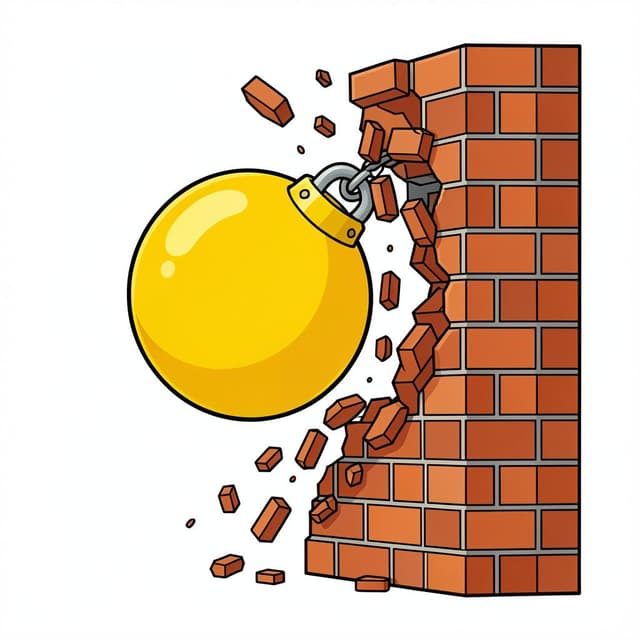
derribar — to knock down
Use imperative forms like 'derriba' (tú) for direct commands with 'derribar'.
derribar Affirmative Imperative Forms
When to Use the Affirmative Imperative
The imperative mood is for giving direct commands or instructions. For 'derribar', you'd use it to tell someone to knock something down, like '¡Derriba esa pared!' (Knock down that wall!).
Notes on derribar in the Affirmative Imperative
The verb 'derribar' is regular in the affirmative imperative, except for the 'vosotros' form which is formed by replacing the '-ar' with '-ad'.
Example Sentences
¡Derriba la torre de bloques!
Knock down the block tower!
tú
Derribad los obstáculos del camino.
Knock down the obstacles in the path.
vosotros
Derriben esa estructura vieja.
Knock down that old structure.
ustedes
Common Mistakes
Mistake: Using the present indicative 'derribas' for a command.
Correct: For a direct command to 'tú', use 'derriba'.
Why: The imperative mood has unique forms for commands, distinct from the indicative.
Mistake: Forgetting the 'd' in the vosotros form.
Correct: The correct form for 'vosotros' is 'derribad'.
Why: The '-ad' ending is standard for regular -ar verbs in the affirmative vosotros imperative.
Master Spanish verbs in context
Memorizing tables only gets you so far. Read 200+ illustrated and narrated Spanish stories to see verbs like 'derribar' used naturally — in the tenses you're learning.
Related Tenses
Present
yo: derribo
Present tense 'derribo', 'derribas', etc., describes current or habitual actions.
Preterite
yo: derribé
The preterite of 'derribar' is regular: derribé, derribaste, derribó, derribamos, derribasteis, derribaron.
Imperfect
yo: derribaba
Imperfect 'derribaba' describes ongoing or habitual past actions.
Future
yo: derribaré
Future tense 'derribaré', 'derribarás' etc., predicts or expresses probability.
Conditional
yo: derribaría
Conditional 'derribaría' expresses hypotheticals ('would') or polite requests.
Present Subjunctive
yo: derribe
Present subjunctive (e.g., 'derribe') is used for wishes, doubts, and emotions.
Imperfect Subjunctive
yo: derribara
The imperfect subjunctive (e.g., 'derribara', 'derribase') expresses past hypotheticals or wishes.
Negative Imperative
yo: no derribes
Negative commands use 'no' + present subjunctive forms, like 'no derribes' (tú).