derribar Imperfect Conjugation
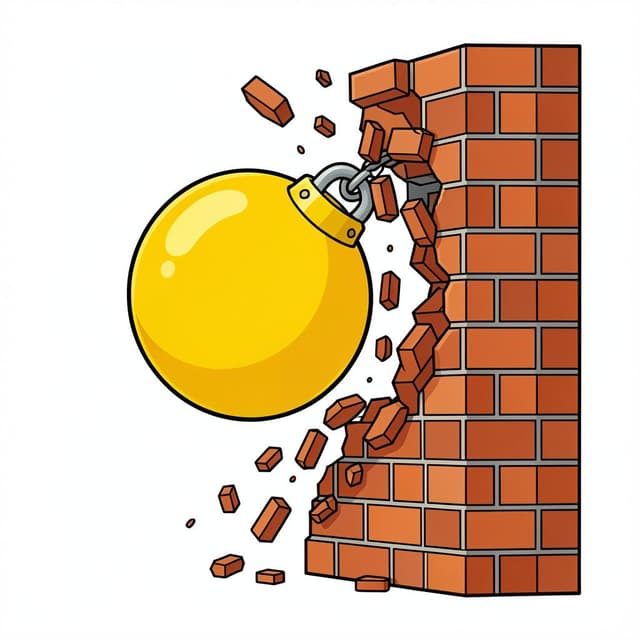
derribar — to knock down
Imperfect 'derribaba' describes ongoing or habitual past actions.
derribar Imperfect Forms
When to Use the Imperfect
Use the imperfect for descriptions in the past or actions that were happening repeatedly or continuously. For 'derribar', you might describe a scene: 'El viento derribaba los árboles' (The wind was knocking down the trees) or a habit: 'Antes derribaba torres de cartas' (I used to knock down card towers).
Notes on derribar in the Imperfect
'Derribar' is regular in the imperfect indicative tense.
Example Sentences
Cuando era niño, derribaba todas las construcciones de bloques.
When I was a child, I used to knock down all the block constructions.
yo
El camión derribaba postes de luz en la tormenta.
The truck was knocking down utility poles in the storm.
él/ella/usted
Los soldados derribaban las fortificaciones enemigas.
The soldiers were knocking down the enemy fortifications.
ellos/ellas/ustedes
Mientras jugábamos, derribábamos la casa de muñecas sin querer.
While we were playing, we were unintentionally knocking down the dollhouse.
nosotros
Common Mistakes
Mistake: Using the preterite 'derribó' for background description.
Correct: For ongoing or descriptive past actions, use the imperfect: 'derribaba' instead of 'derribó'.
Why: The imperfect sets the scene or describes continuous/habitual past actions, while the preterite marks single, completed events.
Mistake: Confusing the 'yo' and 'él/ella/usted' forms.
Correct: Both 'yo' and 'él/ella/usted' use 'derribaba', but context clarifies who is acting.
Why: This is a common feature of the imperfect tense for regular -ar verbs.
Master Spanish verbs in context
Memorizing tables only gets you so far. Read 200+ illustrated and narrated Spanish stories to see verbs like 'derribar' used naturally — in the tenses you're learning.
Related Tenses
Present
yo: derribo
Present tense 'derribo', 'derribas', etc., describes current or habitual actions.
Preterite
yo: derribé
The preterite of 'derribar' is regular: derribé, derribaste, derribó, derribamos, derribasteis, derribaron.
Future
yo: derribaré
Future tense 'derribaré', 'derribarás' etc., predicts or expresses probability.
Conditional
yo: derribaría
Conditional 'derribaría' expresses hypotheticals ('would') or polite requests.
Present Subjunctive
yo: derribe
Present subjunctive (e.g., 'derribe') is used for wishes, doubts, and emotions.
Imperfect Subjunctive
yo: derribara
The imperfect subjunctive (e.g., 'derribara', 'derribase') expresses past hypotheticals or wishes.
Affirmative Imperative
yo: derriba
Use imperative forms like 'derriba' (tú) for direct commands with 'derribar'.
Negative Imperative
yo: no derribes
Negative commands use 'no' + present subjunctive forms, like 'no derribes' (tú).