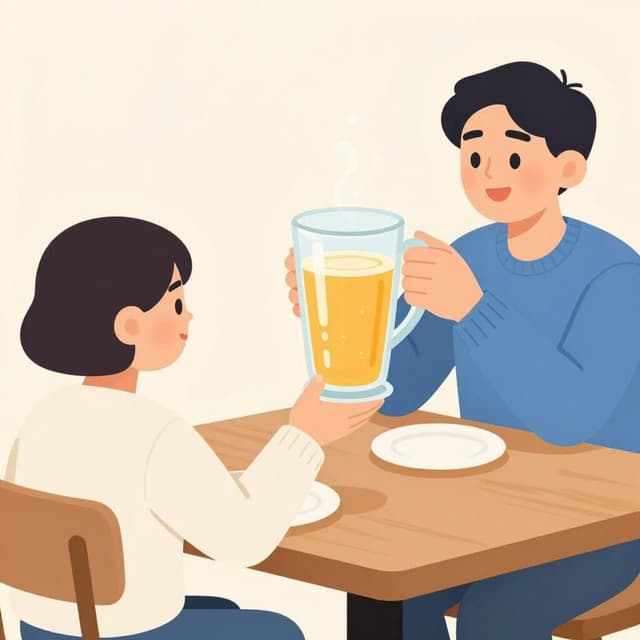
emborrachar Imperfect Conjugation
emborrachar — to make someone drunk
Use emborrachaba for ongoing or habitual past actions of getting drunk.
emborrachar Imperfect Forms
When to Use the Imperfect
The imperfect tense describes actions that were happening continuously in the past, or actions that were habitual. You could use it to say 'He used to get drunk every weekend' or 'They were getting drunk when the police arrived.'
Notes on emborrachar in the Imperfect
Emborrachar is a regular -ar verb, so its imperfect conjugations are straightforward.
Example Sentences
Cuando vivía en Madrid, me emborrachaba los sábados.
When I lived in Madrid, I used to get drunk on Saturdays.
yo
Ellos se emborrachaban con cerveza barata.
They used to get drunk on cheap beer.
ellos/ellas/ustedes
Mi hermano se emborrachaba cada vez que salía.
My brother would get drunk every time he went out.
él/ella/usted
Common Mistakes
Mistake: Using the preterite instead of the imperfect for background description.
Correct: 'Cuando llegué, todos se emborracharon' (implies they all got drunk at that moment) vs. 'Cuando llegué, todos se emborrachaban' (implies they were already in the process of getting drunk).
Why: The imperfect sets the scene or describes an ongoing state, while the preterite describes a completed event within that scene.
Mistake: Confusing the imperfect of 'emborrachar' with the imperfect of 'estar emborrachado'.
Correct: 'Él emborrachaba la fiesta' (He was making the party drunk - illogical) vs. 'Él estaba emborrachado' (He was drunk).
Why: 'Emborrachar' is an active verb (to make someone drunk), while 'estar emborrachado' is a state (to be drunk).
Master Spanish verbs in context
Memorizing tables only gets you so far. Read 200+ illustrated and narrated Spanish stories to see verbs like 'emborrachar' used naturally — in the tenses you're learning.
Related Tenses
Present
yo: emborracho
Use emborracho, emborrachas, emborracha etc. for habitual or current actions of getting drunk.
Preterite
yo: emborraché
Use emborraché, emborrachaste, emborrachó etc. for completed past actions of getting someone drunk.
Future
yo: emborracharé
Use emborracharé, emborracharás, emborrachará etc. for future actions or probability involving getting drunk.
Conditional
yo: emborracharía
Use emborracharía for hypothetical situations or polite requests about getting drunk.
Present Subjunctive
yo: emborrache
Use emborrache for wishes, doubts, or emotions about getting drunk.
Imperfect Subjunctive
yo: emborrachara
Use emborrachara/emborrachase for past hypotheticals or wishes related to getting drunk.
Affirmative Imperative
yo: emborracha
Use emborracha (tú) and emborracha (vosotros) for direct commands with emborrachar.
Negative Imperative
yo: no emborraches
Use 'no + present subjunctive' for negative commands with emborrachar.