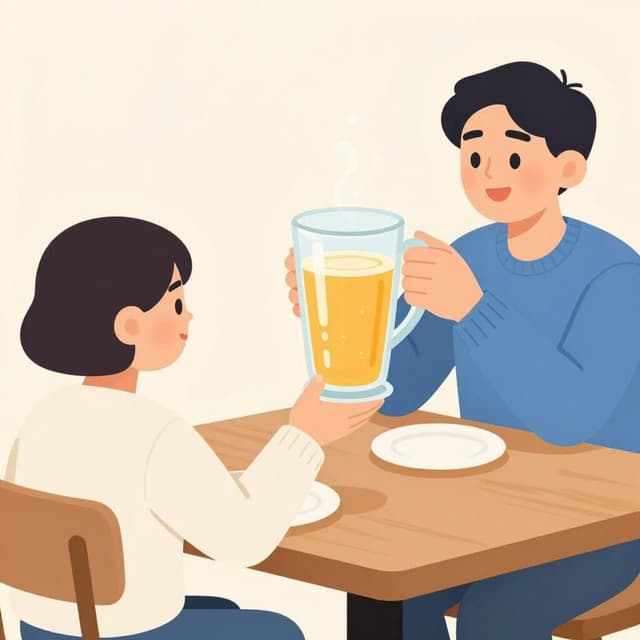
emborrachar Preterite Conjugation
emborrachar — to make someone drunk
Use emborraché, emborrachaste, emborrachó etc. for completed past actions of getting someone drunk.
emborrachar Preterite Forms
When to Use the Preterite
The preterite is used for actions that started and finished at a specific point in the past. If someone got another person drunk, or if someone got drunk themselves, and it's a completed event, use the preterite.
Notes on emborrachar in the Preterite
Emborrachar is a regular -ar verb, so its preterite conjugations are predictable.
Example Sentences
Ayer, mi amigo me emborrachó con tequila.
Yesterday, my friend got me drunk with tequila.
él/ella/usted
Nos emborrachamos con champán en la celebración.
We got ourselves drunk with champagne at the celebration.
nosotros
Ella se emborrachó en su propia fiesta.
She got herself drunk at her own party.
él/ella/usted
¿Te emborrachaste mucho anoche?
Did you get yourself very drunk last night?
tú
Common Mistakes
Mistake: Using the imperfect instead of the preterite for a single completed event.
Correct: 'Me emborrachaba con todos' (incorrect, implies habitual) vs. 'Me emborraché con todos' (correct, implies a specific instance).
Why: The preterite marks a completed action, while the imperfect describes ongoing or habitual past actions.
Mistake: Missing the accent on the 'yo' form.
Correct: It should be 'emborraché', not 'emborrache'.
Why: The accent on the final 'é' is crucial to indicate the preterite tense for the first-person singular.
Master Spanish verbs in context
Memorizing tables only gets you so far. Read 200+ illustrated and narrated Spanish stories to see verbs like 'emborrachar' used naturally — in the tenses you're learning.
Related Tenses
Present
yo: emborracho
Use emborracho, emborrachas, emborracha etc. for habitual or current actions of getting drunk.
Imperfect
yo: emborrachaba
Use emborrachaba for ongoing or habitual past actions of getting drunk.
Future
yo: emborracharé
Use emborracharé, emborracharás, emborrachará etc. for future actions or probability involving getting drunk.
Conditional
yo: emborracharía
Use emborracharía for hypothetical situations or polite requests about getting drunk.
Present Subjunctive
yo: emborrache
Use emborrache for wishes, doubts, or emotions about getting drunk.
Imperfect Subjunctive
yo: emborrachara
Use emborrachara/emborrachase for past hypotheticals or wishes related to getting drunk.
Affirmative Imperative
yo: emborracha
Use emborracha (tú) and emborracha (vosotros) for direct commands with emborrachar.
Negative Imperative
yo: no emborraches
Use 'no + present subjunctive' for negative commands with emborrachar.