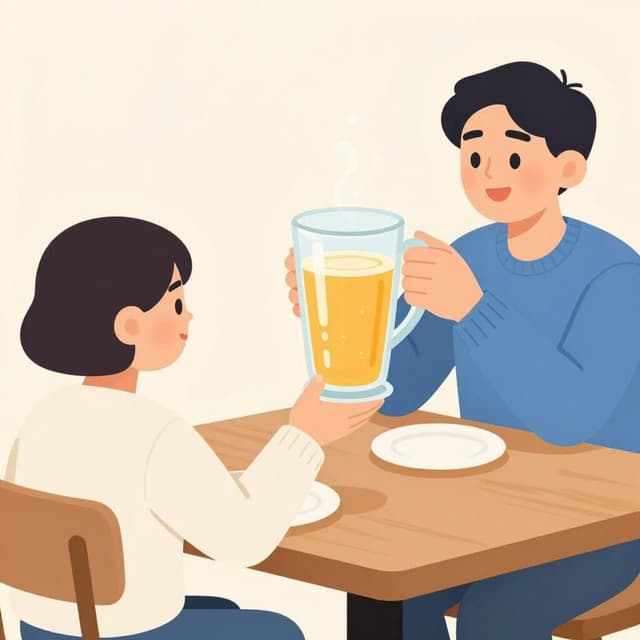
emborrachar Present Conjugation
emborrachar — to make someone drunk
Use emborracho, emborrachas, emborracha etc. for habitual or current actions of getting drunk.
emborrachar Present Forms
When to Use the Present
The present tense works for things that happen regularly, are happening right now, or are general truths. For 'emborrachar', it could describe someone's habit of getting others drunk, or the general idea that drinking too much makes you drunk.
Notes on emborrachar in the Present
Emborrachar is a regular -ar verb in the present indicative tense.
Example Sentences
Él siempre se emborracha los viernes.
He always gets himself drunk on Fridays.
él/ella/usted
No me emborracho fácilmente.
I don't get myself drunk easily.
yo
Ustedes se emborrachan muy rápido.
You all get yourselves drunk very quickly.
ellos/ellas/ustedes
Cuando beben mucho, se emborrachan.
When they drink a lot, they get themselves drunk.
ellos/ellas/ustedes
Common Mistakes
Mistake: Using the present tense for a past habitual action.
Correct: 'Cuando era joven, me emborracho a menudo' (incorrect) vs. 'Cuando era joven, me emborrachaba a menudo' (correct).
Why: The imperfect tense is used for habitual actions in the past.
Mistake: Confusing 'emborrachar' (to make drunk) with 'emborracharse' (to get drunk).
Correct: 'Yo emborracho a mi amigo' (I get my friend drunk) vs. 'Yo me emborracho' (I get drunk).
Why: The reflexive pronoun 'me', 'te', 'se', etc., is essential when the subject is performing the action on themselves.
Master Spanish verbs in context
Memorizing tables only gets you so far. Read 200+ illustrated and narrated Spanish stories to see verbs like 'emborrachar' used naturally — in the tenses you're learning.
Related Tenses
Preterite
yo: emborraché
Use emborraché, emborrachaste, emborrachó etc. for completed past actions of getting someone drunk.
Imperfect
yo: emborrachaba
Use emborrachaba for ongoing or habitual past actions of getting drunk.
Future
yo: emborracharé
Use emborracharé, emborracharás, emborrachará etc. for future actions or probability involving getting drunk.
Conditional
yo: emborracharía
Use emborracharía for hypothetical situations or polite requests about getting drunk.
Present Subjunctive
yo: emborrache
Use emborrache for wishes, doubts, or emotions about getting drunk.
Imperfect Subjunctive
yo: emborrachara
Use emborrachara/emborrachase for past hypotheticals or wishes related to getting drunk.
Affirmative Imperative
yo: emborracha
Use emborracha (tú) and emborracha (vosotros) for direct commands with emborrachar.
Negative Imperative
yo: no emborraches
Use 'no + present subjunctive' for negative commands with emborrachar.