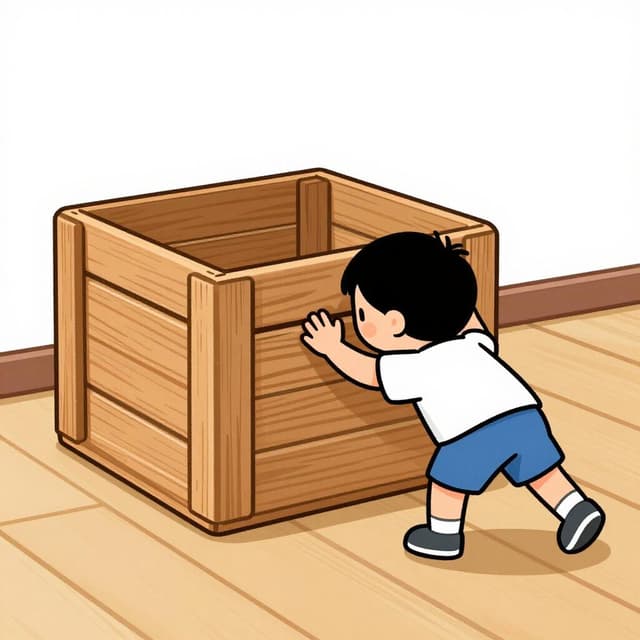
esforzar Present Subjunctive Conjugation
esforzar — to make an effort
The present subjunctive follows the stem change (o > ue) and the spelling change (z > c).
esforzar Present Subjunctive Forms
When to Use the Present Subjunctive
Use this after expressions of desire, doubt, or necessity, like 'Espero que te esfuerces' (I hope you try hard).
Notes on esforzar in the Present Subjunctive
Like the present indicative, it changes o > ue except for nosotros/vosotros. Additionally, all forms change 'z' to 'c' because of the 'e' in the subjunctive endings.
Example Sentences
Es importante que te esfuerces en el colegio.
It is important that you make an effort in school.
tú
Dudo que ellos se esfuercen lo suficiente.
I doubt that they are trying hard enough.
ellos/ellas/ustedes
El jefe quiere que nos esforcemos más.
The boss wants us to work harder.
nosotros
Common Mistakes
Mistake: Writing 'esfuerzes' with a 'z'.
Correct: esfuerces
Why: The 'z' must change to 'c' before the letter 'e'.
Master Spanish verbs in context
Memorizing tables only gets you so far. Read 200+ illustrated and narrated Spanish stories to see verbs like 'esforzar' used naturally — in the tenses you're learning.
Related Tenses
Present
yo: esfuerzo
Esforzar is a stem-changing verb (o > ue) in all forms except nosotros and vosotros.
Preterite
yo: esforcé
The preterite of esforzar features a spelling change (z > c) in the 'yo' form: esforcé.
Imperfect
yo: esforzaba
Esforzar is completely regular in the imperfect: esforzaba, esforzabas, esforzaba...
Future
yo: esforzaré
The future tense is regular: add endings to the full infinitive esforzar-.
Conditional
yo: esforzaría
The conditional is regular: esforzaría, esforzarías, esforzaría...
Imperfect Subjunctive
yo: esforzara
The imperfect subjunctive uses the preterite base: esforzara, esforzaras...
Affirmative Imperative
yo: esfuerza
The imperative uses 'esfuerza' for tú and 'esfuercen' for formal commands.
Negative Imperative
yo: no esfuerces
The negative imperative always uses the present subjunctive forms after 'no'.