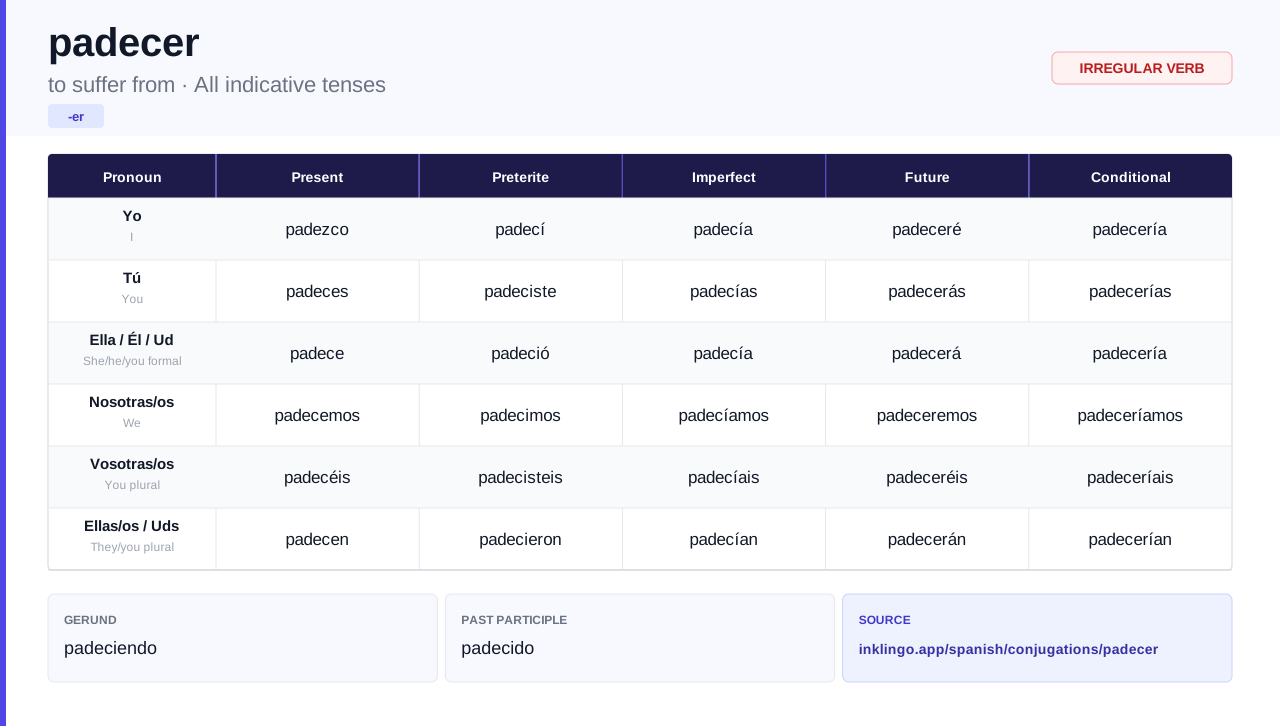
padecerConjugation
padecer means to suffer from.
Complete Conjugation Tables
Reference all tenses and moods
Subjunctive
Imperfect Subjunctive
Formed from the third-person plural preterite stem: padeciera, padecieras, padeciera.
Present Subjunctive
The 'zc' from the 'yo' form carries through all persons: padezca, padezcas, padezca, etc.
Imperative
Negative Imperative
All negative commands use the 'zc' stem from the present subjunctive: no padezcas, no padezca.
Imperative
The imperative forms for padecer are rarely used but follow standard -er rules and 'zc' for formal commands.
Indicative
Conditional
The conditional uses the full infinitive 'padecer' + ía endings: padecería, padecerías, etc.
Preterite
Padecer is completely regular in the preterite: padecí, padeciste, padeció, padecimos, padecisteis, padecieron.
Imperfect
Padecer is regular in the imperfect: padecía, padecías, padecía, padecíamos, padecíais, padecían.
Present
Padecer is irregular in the 'yo' form (padezco), while all other forms follow regular -er patterns.
Future
Padecer is regular in the future; simply add the endings to the infinitive: padeceré, padecerás, etc.
Practice Conjugations
Test your knowledge with interactive exercises
Take padecer from tables to real Spanish
Conjugation tables are the start. Read 200+ illustrated and narrated Spanish stories to see 'padecer' in action across real sentences — and build the instinct that native speakers have.
Frequently Asked Questions
What does padecer mean in Spanish?
padecer means "to suffer from".
Is padecer a regular or irregular verb?
padecer is a irregular -er verb in Spanish.
How do you conjugate padecer in the present tense?
The present tense of padecer is: yo padezco, tú padeces, él/ella/usted padece, nosotros padecemos, vosotros padecéis, ellos/ellas/ustedes padecen.
How do you conjugate padecer in the preterite (past tense)?
The preterite of padecer is: yo padecí, tú padeciste, él/ella/usted padeció, nosotros padecimos, vosotros padecisteis, ellos/ellas/ustedes padecieron.
padecer conjugation cheat sheet