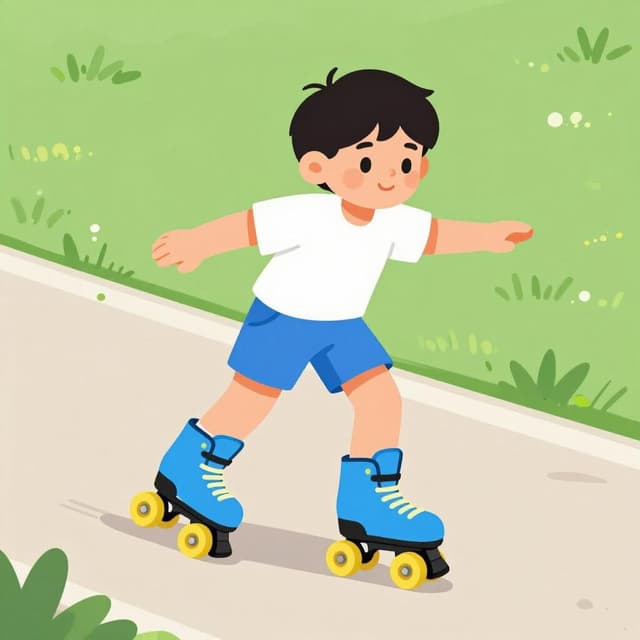
patinar Affirmative Imperative Conjugation
patinar — to skate
The imperative of patinar is: patina (tú), patine (usted), patinemos (nosotros), patinad (vosotros), patinen (ustedes).
patinar Affirmative Imperative Forms
When to Use the Affirmative Imperative
Use the affirmative imperative to give direct commands or instructions. For 'patinar', it's telling someone to skate, like 'Skate!' or 'Let's skate!'
Notes on patinar in the Affirmative Imperative
Patinar is regular in the affirmative imperative. Note that the 'usted' and 'él/ella/usted' forms in the present subjunctive are used here for the usted command.
Example Sentences
¡Patina con cuidado!
Skate carefully!
tú
Patinemos en el parque.
Let's skate in the park.
nosotros
¡Patinad con vuestros amigos!
Skate with your friends!
vosotros
Señora, patine por el carril derecho.
Ma'am, skate in the right lane.
usted
Common Mistakes
Mistake: Using the infinitive 'patinar' for a command.
Correct: Use the specific imperative form, like 'patina' for 'tú'.
Why: The infinitive is the base form of the verb and isn't used for direct commands.
Mistake: Confusing 'patina' (tú) with 'patine' (usted/subjunctive).
Correct: For an informal command to one person, use 'patina'. For a formal command, use 'patine'.
Why: These are distinct forms with different uses and pronunciations.
Master Spanish verbs in context
Memorizing tables only gets you so far. Read 200+ illustrated and narrated Spanish stories to see verbs like 'patinar' used naturally — in the tenses you're learning.
Related Tenses
Present
yo: patino
The present tense of patinar is: patino, patinas, patina, patinamos, patináis, patinan.
Preterite
yo: patiné
The preterite of patinar is regular: patiné, patinaste, patinó, patinamos, patinasteis, patinaron.
Imperfect
yo: patinaba
The imperfect tense of patinar is: patinaba, patinabas, patinaba, patinábamos, patinabais, patinaban.
Future
yo: patinaré
The future tense of patinar is: patinaré, patinarás, patinará, patinaremos, patinaréis, patinarán.
Conditional
yo: patinaría
The conditional tense of patinar is: patinaría, patinarías, patinaría, patinaríamos, patinaríais, patinarían.
Present Subjunctive
yo: patine
The present subjunctive of patinar is: patine (yo/él/ella/usted), patines (tú), patinemos (nosotros), patinéis (vosotros), patinen (ellos/ellas/ustedes).
Imperfect Subjunctive
yo: patinara
The imperfect subjunctive of patinar has two forms: patinara/patinaras/patinara/patináramos/patinarais/patinaran and patinase/patinases/patinase/patinásemos/patinaseis/patinasen.
Negative Imperative
yo: no patines
The negative imperative of patinar uses 'no' + present subjunctive: no patines (tú), no patine (usted), no patinemos (nosotros), no patinéis (vosotros), no patinen (ustedes).