poner Negative Imperative Conjugation
poner — to put
Negative commands use the present subjunctive: no pongas, no ponga, no pongamos...
poner Negative Imperative Forms
When to Use the Negative Imperative
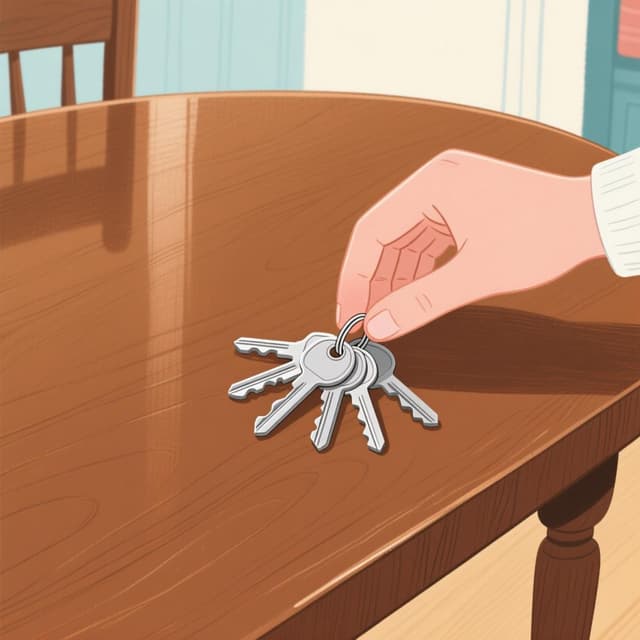
Use this to tell someone NOT to put something somewhere or NOT to turn something on.
Notes on poner in the Negative Imperative
Like all negative commands, these are identical to the present subjunctive forms preceded by 'no'.
Example Sentences
No pongas los pies sobre la mesa.
Don't put your feet on the table.
tú
No pongan la radio tan fuerte.
Don't put the radio on so loud.
ustedes
No nos pongamos nerviosos.
Let's not get (put ourselves) nervous.
nosotros
Common Mistakes
Mistake: Saying 'no pon'.
Correct: no pongas.
Why: Negative commands never use the short affirmative form; they always switch to the subjunctive.
Master Spanish verbs in context
Memorizing tables only gets you so far. Read 200+ illustrated and narrated Spanish stories to see verbs like 'poner' used naturally — in the tenses you're learning.
Related Tenses
Present
yo: pongo
Poner is regular in the present tense, except for the 'yo' form: pongo.
Preterite
yo: puse
The preterite of poner is highly irregular, using the 'pus-' stem: puse, pusiste, puso, pusimos, pusisteis, pusieron.
Imperfect
yo: ponía
Poner is completely regular in the imperfect: ponía, ponías, ponía...
Future
yo: pondré
The future of poner uses the irregular stem 'pondr-': pondré, pondrás, pondrá...
Conditional
yo: pondría
The conditional uses the irregular stem 'pondr-': pondría, pondrías, pondría...
Present Subjunctive
yo: ponga
The present subjunctive of poner follows the 'yo' form: ponga, pongas, ponga...
Imperfect Subjunctive
yo: pusiera
The imperfect subjunctive uses the 'pusier-' stem: pusiera, pusieras, pusiera...
Affirmative Imperative
yo: pon
The command for 'tú' is short and irregular: pon.