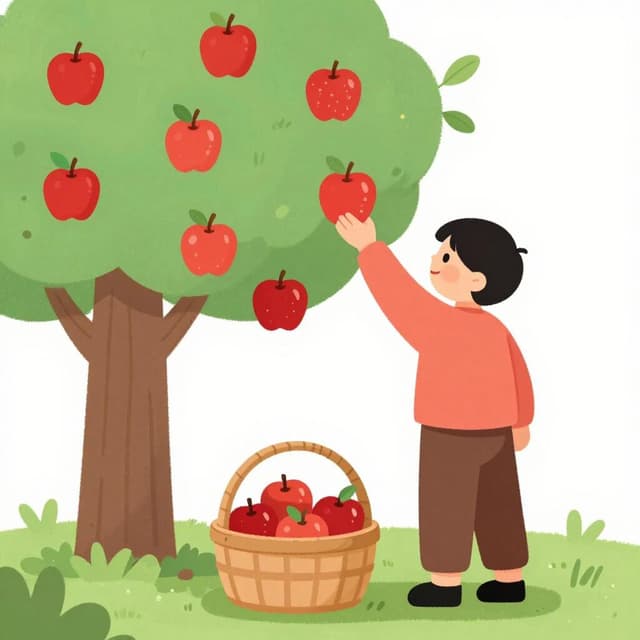
recolectar Present Conjugation
recolectar — to harvest
Present actions or habits, like 'Yo recolecto tomates cada verano' (I harvest tomatoes every summer).
recolectar Present Forms
When to Use the Present
Use the present tense for actions happening right now, habitual actions, or general truths. For 'recolectar', it's perfect for describing when and how often you or others harvest things.
Notes on recolectar in the Present
Recolectar is a regular -ar verb in the present tense. All its conjugations follow the standard pattern.
Example Sentences
Yo recolecto flores para hacer un ramo.
I gather flowers to make a bouquet.
yo
¿Tú recolectas miel de tus propias abejas?
Do you collect honey from your own bees?
tú
Mi abuela recolecta hierbas medicinales en el campo.
My grandmother gathers medicinal herbs in the countryside.
él/ella/usted
Nosotros recolectamos leña para el invierno.
We gather firewood for the winter.
nosotros
Ellos recolectan firmas para la petición.
They collect signatures for the petition.
ellos/ellas/ustedes
Common Mistakes
Mistake: Using 'estar' + gerund for habitual actions.
Correct: Use the simple present for habits: 'Recolecto bayas cada agosto' (I harvest berries every August).
Why: The simple present is for habitual actions, while 'estar' + gerund is for actions in progress right now.
Mistake: Confusing 'yo' and 'tú' forms.
Correct: Remember 'recolecto' for 'yo' and 'recolectas' for 'tú'.
Why: These are common points of confusion for learners.
Master Spanish verbs in context
Memorizing tables only gets you so far. Read 200+ illustrated and narrated Spanish stories to see verbs like 'recolectar' used naturally — in the tenses you're learning.
Related Tenses
Preterite
yo: recolecté
Completed past actions like 'recolecté las uvas ayer' (I harvested the grapes yesterday).
Imperfect
yo: recolectaba
Ongoing or habitual past actions, like 'Yo recolectaba manzanas todos los años' (I harvested apples every year).
Future
yo: recolectaré
Future actions: 'Recolectaremos el maíz en septiembre' (We will harvest the corn in September).
Conditional
yo: recolectaría
Hypotheticals ('would'), polite requests: 'Yo recolectaría más si tuviera tiempo'.
Present Subjunctive
yo: recolecte
Use present subjunctive for wishes, doubts, or emotions about current/future actions: 'Espero que recolectes pronto'.
Imperfect Subjunctive
yo: recolectara
The imperfect subjunctive of recolectar is used for past hypotheticals or wishes, e.g., 'Si recolectara más, tendría más dinero'.
Affirmative Imperative
yo: recolecta
Use the imperative to give direct commands with recolectar, like '¡recolecta manzanas!' (harvest apples!).
Negative Imperative
yo: no recolectes
Use negative commands with 'no' + present subjunctive, like 'no recolectes demasiado pronto'.