respirar Imperfect Subjunctive Conjugation
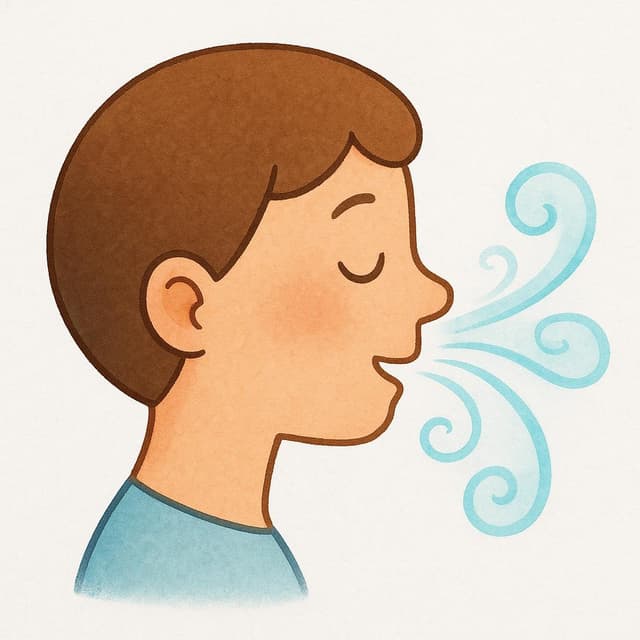
respirar — to breathe
The imperfect subjunctive of respirar (respirara/respirase) expresses past hypotheticals, wishes, or doubts.
respirar Imperfect Subjunctive Forms
When to Use the Imperfect Subjunctive
This tense is for hypothetical situations in the past, or when talking about wishes, doubts, or emotions that were happening or felt in the past. It's often used in 'if' clauses.
Notes on respirar in the Imperfect Subjunctive
Respirar is regular in the imperfect subjunctive. Both the -ra and -se forms are correct, e.g., 'respirara' and 'respirase' are interchangeable.
Example Sentences
Si respirara más aire puro, me sentiría mejor.
If I breathed more pure air, I would feel better.
yo
Quería que tú respiraras con calma.
I wanted you to breathe calmly.
tú
No creía que él respirara tan poco.
I didn't think he breathed so little.
él/ella/usted
Ojalá respiráramos más profundo en la montaña.
I wish we breathed deeper in the mountains.
nosotros
Dudaba que ellos respiraran sin ayuda.
I doubted they would breathe without help.
ellos/ellas/ustedes
Common Mistakes
Mistake: Using the imperfect indicative instead of the imperfect subjunctive.
Correct: For a past hypothetical, use 'Si yo respirara...' not 'Si yo respiraba...'.
Why: The imperfect indicative describes factual past actions, while the imperfect subjunctive is for unreal or hypothetical past situations.
Mistake: Confusing the -ra and -se endings.
Correct: Both 'respirara' and 'respirase' are correct for the yo form.
Why: Spanish offers two sets of endings for the imperfect subjunctive; both are valid.
Master Spanish verbs in context
Memorizing tables only gets you so far. Read 200+ illustrated and narrated Spanish stories to see verbs like 'respirar' used naturally — in the tenses you're learning.
Related Tenses
Present
yo: respiro
The present tense of respirar (respiro) describes habitual actions, things happening now, and general truths.
Preterite
yo: respiré
The preterite of respirar (respiré) indicates completed past actions.
Imperfect
yo: respiraba
The imperfect tense of respirar (respiraba) describes ongoing or habitual past actions and sets the scene.
Future
yo: respiraré
The future tense of respirar (respiraré) indicates actions that will happen or expresses probability.
Conditional
yo: respiraría
The conditional of respirar (respiraría) expresses hypotheticals ('would breathe'), polite requests, or future-in-the-past.
Present Subjunctive
yo: respire
The present subjunctive of respirar (respire) is used for wishes, doubts, emotions, and after certain conjunctions.
Affirmative Imperative
yo: respira
Use the imperative of respirar for direct commands: respira (tú), respire (usted), respiremos (nosotros), respiren (ustedes), respirad (vosotros).
Negative Imperative
yo: no respires
Negative commands for respirar use the present subjunctive: no respires (tú), no respire (usted), no respiremos (nosotros), no respiren (ustedes), no respiréis (vosotros).