respirar Preterite Conjugation
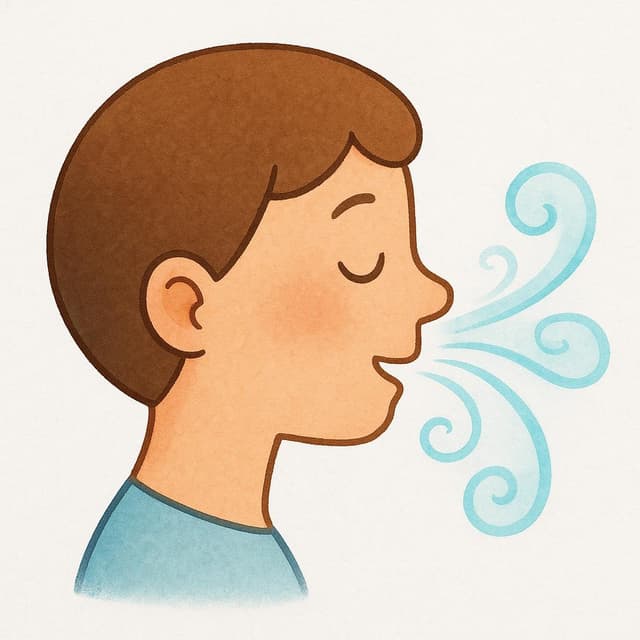
respirar — to breathe
The preterite of respirar (respiré) indicates completed past actions.
respirar Preterite Forms
When to Use the Preterite
Use the preterite to talk about a specific, completed action of breathing in the past. It has a clear beginning and end.
Notes on respirar in the Preterite
Respirar is regular in the preterite. All endings follow the standard -ar pattern.
Example Sentences
Respiré profundamente cuando llegué a la cima.
I breathed deeply when I reached the summit.
yo
¿Respiraste bien después del susto?
Did you breathe okay after the scare?
tú
Él respiró aliviado cuando vio que todo estaba bien.
He breathed a sigh of relief when he saw everything was okay.
él/ella/usted
Respiramos juntos para calmarnos.
We breathed together to calm ourselves down.
nosotros
Ellos respiraron el aire contaminado por accidente.
They breathed the polluted air by accident.
ellos/ellas/ustedes
Common Mistakes
Mistake: Using the imperfect for a single, completed breath.
Correct: Say 'Respiré hondo' (I breathed deeply) for a specific instance, not 'Respiraba hondo'.
Why: The imperfect describes ongoing or habitual past actions, while the preterite is for completed actions.
Mistake: Missing accent on 'yo' form.
Correct: The 'yo' form is 'respiré' with an accent on the 'é'.
Why: The accent distinguishes the preterite 'yo' form from other similar-looking forms and indicates the stressed syllable.
Master Spanish verbs in context
Memorizing tables only gets you so far. Read 200+ illustrated and narrated Spanish stories to see verbs like 'respirar' used naturally — in the tenses you're learning.
Related Tenses
Present
yo: respiro
The present tense of respirar (respiro) describes habitual actions, things happening now, and general truths.
Imperfect
yo: respiraba
The imperfect tense of respirar (respiraba) describes ongoing or habitual past actions and sets the scene.
Future
yo: respiraré
The future tense of respirar (respiraré) indicates actions that will happen or expresses probability.
Conditional
yo: respiraría
The conditional of respirar (respiraría) expresses hypotheticals ('would breathe'), polite requests, or future-in-the-past.
Present Subjunctive
yo: respire
The present subjunctive of respirar (respire) is used for wishes, doubts, emotions, and after certain conjunctions.
Imperfect Subjunctive
yo: respirara
The imperfect subjunctive of respirar (respirara/respirase) expresses past hypotheticals, wishes, or doubts.
Affirmative Imperative
yo: respira
Use the imperative of respirar for direct commands: respira (tú), respire (usted), respiremos (nosotros), respiren (ustedes), respirad (vosotros).
Negative Imperative
yo: no respires
Negative commands for respirar use the present subjunctive: no respires (tú), no respire (usted), no respiremos (nosotros), no respiren (ustedes), no respiréis (vosotros).