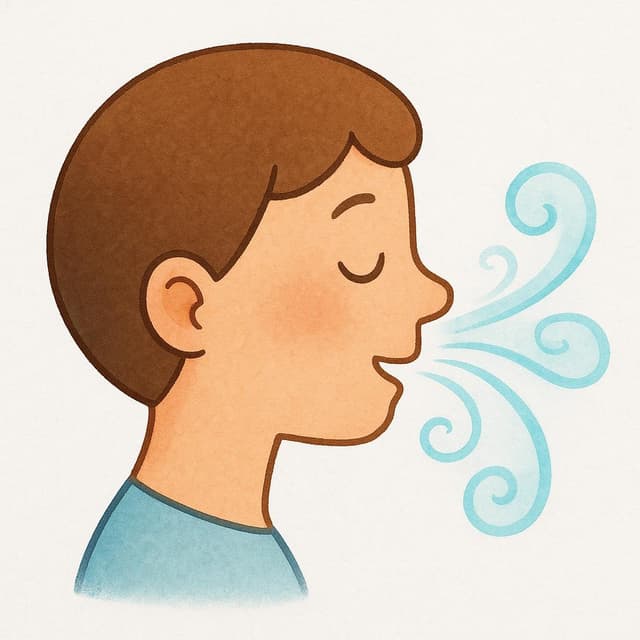
respirar Negative Imperative Conjugation
respirar — to breathe
Negative commands for respirar use the present subjunctive: no respires (tú), no respire (usted), no respiremos (nosotros), no respiren (ustedes), no respiréis (vosotros).
respirar Negative Imperative Forms
When to Use the Negative Imperative
Use the negative imperative when you want to forbid someone from doing something. For respirar, it means 'don't breathe'.
Notes on respirar in the Negative Imperative
Respirar is regular in the negative imperative, using the present subjunctive forms. The vosotros form 'no respiréis' is unique to this group.
Example Sentences
No respires tan rápido.
Don't breathe so fast.
tú
No respire mientras cuento.
Don't breathe while I count.
usted
No respiremos con miedo.
Let's not breathe with fear.
nosotros
No respiren tan fuerte.
Don't breathe so loudly.
ustedes
No respiréis después de comer.
Don't breathe heavily after eating (vosotros).
vosotros
Common Mistakes
Mistake: Using the infinitive instead of the subjunctive.
Correct: It should be 'No respirar' is incorrect for a command. Use 'No respires' (tú).
Why: Negative commands in Spanish use the present subjunctive, not the infinitive.
Mistake: Forgetting 'no' before the verb.
Correct: A negative command requires 'no'. 'Respires' alone isn't a negative command.
Why: The 'no' is essential to negate the command.
Master Spanish verbs in context
Memorizing tables only gets you so far. Read 200+ illustrated and narrated Spanish stories to see verbs like 'respirar' used naturally — in the tenses you're learning.
Related Tenses
Present
yo: respiro
The present tense of respirar (respiro) describes habitual actions, things happening now, and general truths.
Preterite
yo: respiré
The preterite of respirar (respiré) indicates completed past actions.
Imperfect
yo: respiraba
The imperfect tense of respirar (respiraba) describes ongoing or habitual past actions and sets the scene.
Future
yo: respiraré
The future tense of respirar (respiraré) indicates actions that will happen or expresses probability.
Conditional
yo: respiraría
The conditional of respirar (respiraría) expresses hypotheticals ('would breathe'), polite requests, or future-in-the-past.
Present Subjunctive
yo: respire
The present subjunctive of respirar (respire) is used for wishes, doubts, emotions, and after certain conjunctions.
Imperfect Subjunctive
yo: respirara
The imperfect subjunctive of respirar (respirara/respirase) expresses past hypotheticals, wishes, or doubts.
Affirmative Imperative
yo: respira
Use the imperative of respirar for direct commands: respira (tú), respire (usted), respiremos (nosotros), respiren (ustedes), respirad (vosotros).