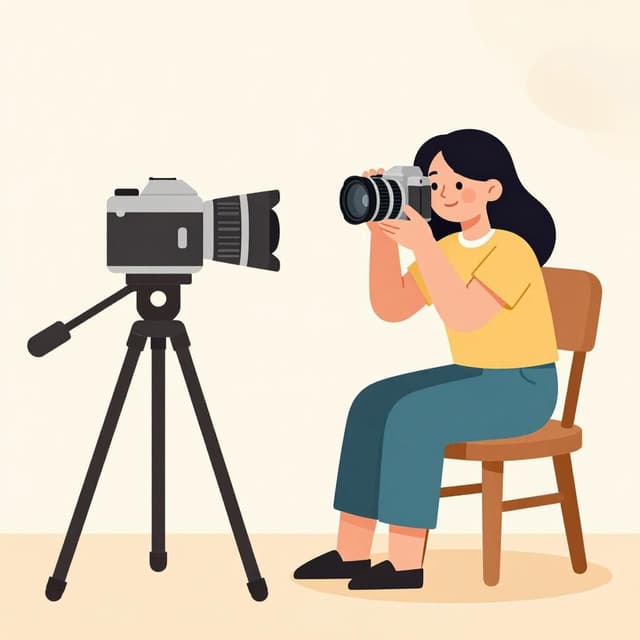
retratar Imperfect Conjugation
retratar — to take a portrait
Regular imperfect: retrataba, retratabas, retrataba, retratábamos, retratabais, retrataban.
retratar Imperfect Forms
When to Use the Imperfect
Use the imperfect for ongoing or habitual actions in the past ('I used to photograph', 'I was photographing') or to describe background settings ('The sun was shining while he photographed').
Notes on retratar in the Imperfect
Retratar is regular in the imperfect tense, following the standard -aba endings for -ar verbs.
Example Sentences
Cuando era niño, retrataba a mis juguetes.
When I was a child, I used to photograph my toys.
yo
¿Tú retratabas flores en el jardín?
Were you photographing flowers in the garden?
tú
Ella retrataba a la gente que pasaba por la plaza.
She used to photograph the people passing through the square.
Nosotros retratábamos la vida nocturna de la ciudad.
We used to capture the city's nightlife.
nosotros
Common Mistakes
Mistake: Using the preterite for ongoing past actions.
Correct: Use 'retrataba' for ongoing or habitual past actions, not 'retraté'.
Why: The imperfect describes duration or repetition, while the preterite describes completed events.
Mistake: Incorrectly conjugating the 'nosotros' form.
Correct: The correct form is 'retratábamos'.
Why: Learners might forget the accent or the 'b'.
Master Spanish verbs in context
Memorizing tables only gets you so far. Read 200+ illustrated and narrated Spanish stories to see verbs like 'retratar' used naturally — in the tenses you're learning.
Related Tenses
Present
yo: retrato
Regular present tense: retrato, retratas, retrata, retratamos, retratáis, retratan.
Preterite
yo: retraté
Retratar is regular in the preterite: retraté, retrataste, retrató, retratamos, retratasteis, retrataron.
Future
yo: retrataré
Regular future: retrataré, retratarás, retratará, retrataremos, retrataréis, retratarán.
Conditional
yo: retrataría
Regular conditional: retrataría, retratarías, retrataría, retrataríamos, retrataríais, retratarían.
Present Subjunctive
yo: retrate
Present subjunctive 'retrate' (yo/él/ella/usted) and 'retrates' (tú) express wishes, doubts, or emotions.
Imperfect Subjunctive
yo: retratara
The imperfect subjunctive 'retratara' (yo/él/ella/usted) and 'retrataras' (tú) are used for past hypotheticals or wishes.
Affirmative Imperative
yo: retrata
Imperative 'retrata' (tú) and 'retrate' (usted) are irregular, while others follow the regular -ar pattern.
Negative Imperative
yo: no retrates
Negative commands use the present subjunctive: 'no retrates' (tú), 'no retrate' (usted).