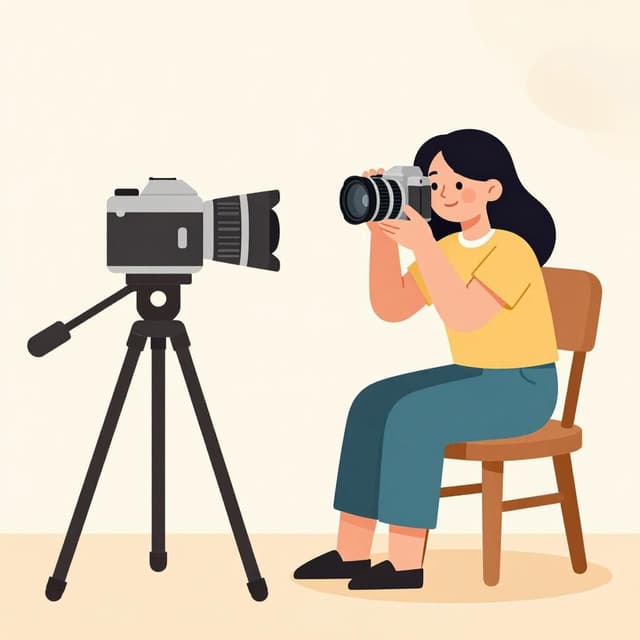
retratar Preterite Conjugation
retratar — to take a portrait
Retratar is regular in the preterite: retraté, retrataste, retrató, retratamos, retratasteis, retrataron.
retratar Preterite Forms
When to Use the Preterite
Use the preterite for completed actions in the past related to capturing an image or posing. For example, 'He photographed the event yesterday' or 'She posed for the portrait last week'.
Notes on retratar in the Preterite
Retratar is a regular -ar verb and follows the standard conjugation pattern in the preterite tense.
Example Sentences
Ayer retraté a mi familia.
Yesterday I photographed my family.
yo
¿Retrataste el edificio antiguo?
Did you capture the old building?
tú
El artista retrató al rey.
The artist painted a portrait of the king.
él/ella/usted
Ellos nos retrataron en la playa.
They photographed us on the beach.
ellos/ellas/ustedes
Common Mistakes
Mistake: Forgetting the accent on the 'yo' form.
Correct: It should be 'retraté', not 'retrace'.
Why: The accent on the final 'é' is crucial for the 'yo' preterite form and indicates stress.
Mistake: Confusing the preterite 'nosotros' form with the present indicative.
Correct: The preterite 'nosotros' is 'retratamos', same as the present. Context is key.
Why: This is a common feature of regular -ar verbs; learners must rely on context to differentiate.
Master Spanish verbs in context
Memorizing tables only gets you so far. Read 200+ illustrated and narrated Spanish stories to see verbs like 'retratar' used naturally — in the tenses you're learning.
Related Tenses
Present
yo: retrato
Regular present tense: retrato, retratas, retrata, retratamos, retratáis, retratan.
Imperfect
yo: retrataba
Regular imperfect: retrataba, retratabas, retrataba, retratábamos, retratabais, retrataban.
Future
yo: retrataré
Regular future: retrataré, retratarás, retratará, retrataremos, retrataréis, retratarán.
Conditional
yo: retrataría
Regular conditional: retrataría, retratarías, retrataría, retrataríamos, retrataríais, retratarían.
Present Subjunctive
yo: retrate
Present subjunctive 'retrate' (yo/él/ella/usted) and 'retrates' (tú) express wishes, doubts, or emotions.
Imperfect Subjunctive
yo: retratara
The imperfect subjunctive 'retratara' (yo/él/ella/usted) and 'retrataras' (tú) are used for past hypotheticals or wishes.
Affirmative Imperative
yo: retrata
Imperative 'retrata' (tú) and 'retrate' (usted) are irregular, while others follow the regular -ar pattern.
Negative Imperative
yo: no retrates
Negative commands use the present subjunctive: 'no retrates' (tú), 'no retrate' (usted).