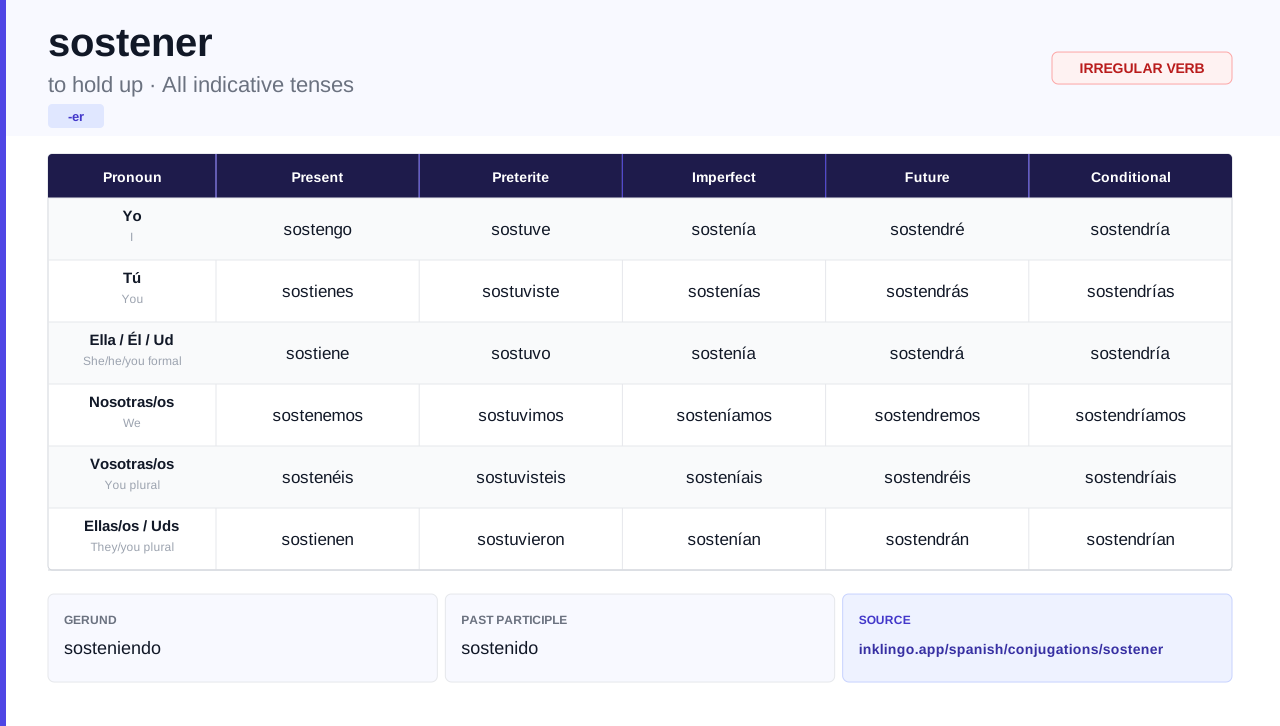
sostenerConjugation
sostener means to hold up.
Complete Conjugation Tables
Reference all tenses and moods
Subjunctive
Imperfect Subjunctive
The imperfect subjunctive uses the 'sostuv-' stem: sostuviera, sostuvieras, sostuviera, sostuviéramos, sostuvierais, sostuvieran.
Present Subjunctive
The present subjunctive is based on the 'sosteng-' stem: sostenga, sostengas, sostenga, sostengamos, sostengáis, sostengan.
Imperative
Imperative
The informal command is 'sostén'; others use the 'sosteng-' stem.
Negative Imperative
Negative commands always use the present subjunctive forms: no sostengas, no sostenga, no sostengamos, no sostengáis, no sostengan.
Indicative
Imperfect
Sostener is regular in the imperfect: sostenía, sostenías, sostenía, sosteníamos, sosteníais, sostenían.
Conditional
The conditional uses the 'sostend-' stem: sostendría, sostendrías, sostendría, sostendríamos, sostendríais, sostendrían.
Present
Sostener follows the 'tener' pattern: it has a 'go' in the yo form and a stem change (e to ie) for most others.
Preterite
Sostener uses the irregular 'uv' stem: sostuve, sostuviste, sostuvo, sostuvimos, sostuvisteis, sostuvieron.
Future
Sostener adds a 'd' to the stem: sostendré, sostendrás, sostendrá, sostendremos, sostendréis, sostendrán.
Practice Conjugations
Test your knowledge with interactive exercises
Take sostener from tables to real Spanish
Conjugation tables are the start. Read 200+ illustrated and narrated Spanish stories to see 'sostener' in action across real sentences — and build the instinct that native speakers have.
Frequently Asked Questions
What does sostener mean in Spanish?
sostener means "to hold up".
Is sostener a regular or irregular verb?
sostener is a irregular -er verb in Spanish.
How do you conjugate sostener in the present tense?
The present tense of sostener is: yo sostengo, tú sostienes, él/ella/usted sostiene, nosotros sostenemos, vosotros sostenéis, ellos/ellas/ustedes sostienen.
How do you conjugate sostener in the preterite (past tense)?
The preterite of sostener is: yo sostuve, tú sostuviste, él/ella/usted sostuvo, nosotros sostuvimos, vosotros sostuvisteis, ellos/ellas/ustedes sostuvieron.
sostener conjugation cheat sheet