votarConjugation
votar means to vote.
Complete Conjugation Tables
Reference all tenses and moods
Indicative
Present
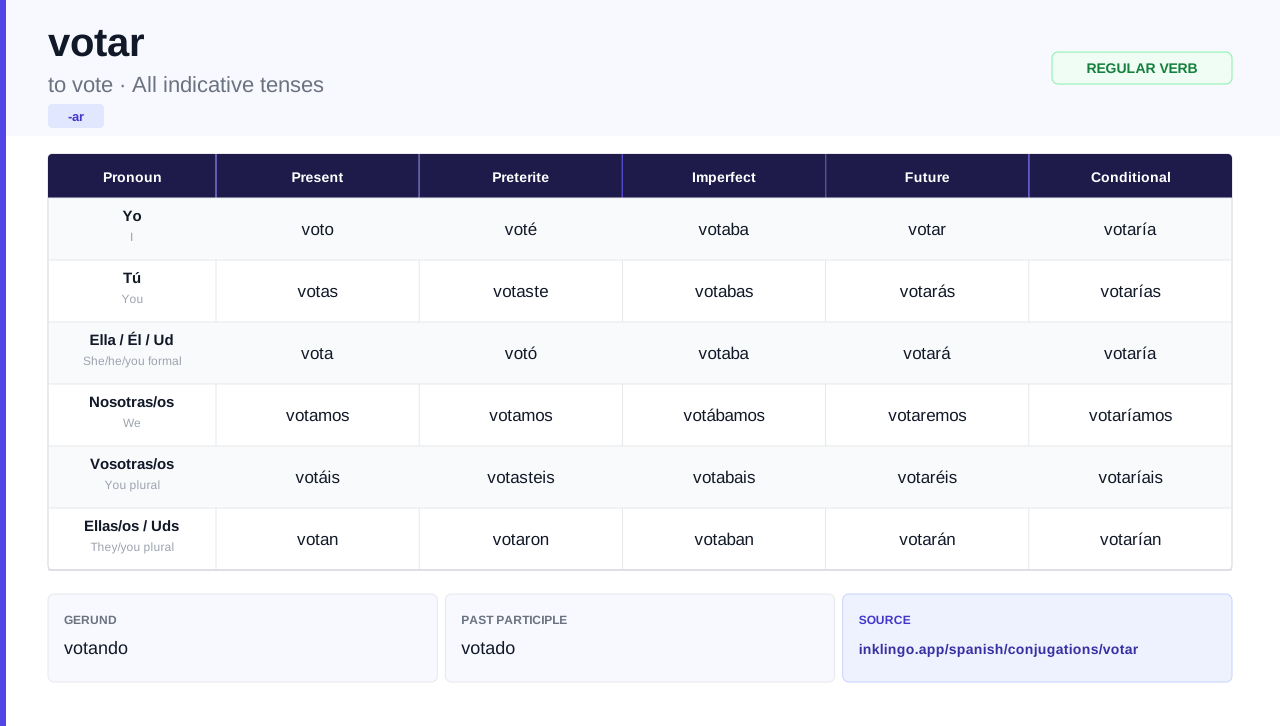
The present tense of votar is completely regular: voto, votas, vota, votamos, votáis, votan.
Future
The future of votar is formed by adding endings to the infinitive: votaré, votarás, votará, votaremos, votaréis, votarán.
Imperfect
The imperfect of votar is regular: votaba, votabas, votaba, votábamos, votabais, votaban.
Conditional
The conditional of votar is regular: votaría, votarías, votaría, votaríamos, votaríais, votarían.
Preterite
The preterite of votar follows the regular -ar pattern: voté, votaste, votó, votamos, votasteis, votaron.
Imperative
Negative Imperative
The negative imperative uses the present subjunctive: no votes, no vote, no votéis, no voten.
Imperative
The affirmative imperative gives direct commands: vota (tú), vote (usted), votad (vosotros), voten (ustedes).
Subjunctive
Present Subjunctive
The present subjunctive of votar flips the 'a' to 'e': vote, votes, vote, votemos, votéis, voten.
Imperfect Subjunctive
The imperfect subjunctive of votar uses the -ra endings: votara, votaras, votara, votáramos, votarais, votaran.
Practice Conjugations
Test your knowledge with interactive exercises
Take votar from tables to real Spanish
Conjugation tables are the start. Read 200+ illustrated and narrated Spanish stories to see 'votar' in action across real sentences — and build the instinct that native speakers have.
Frequently Asked Questions
What does votar mean in Spanish?
votar means "to vote".
Is votar a regular or irregular verb?
votar is a regular -ar verb in Spanish.
How do you conjugate votar in the present tense?
The present tense of votar is: yo voto, tú votas, él/ella/usted vota, nosotros votamos, vosotros votáis, ellos/ellas/ustedes votan.
How do you conjugate votar in the preterite (past tense)?
The preterite of votar is: yo voté, tú votaste, él/ella/usted votó, nosotros votamos, vosotros votasteis, ellos/ellas/ustedes votaron.
votar conjugation cheat sheet