abrochar
“abrochar” means “to fasten” in Spanish (general use for clothing or belts).
to fasten, to button up
Also: to buckle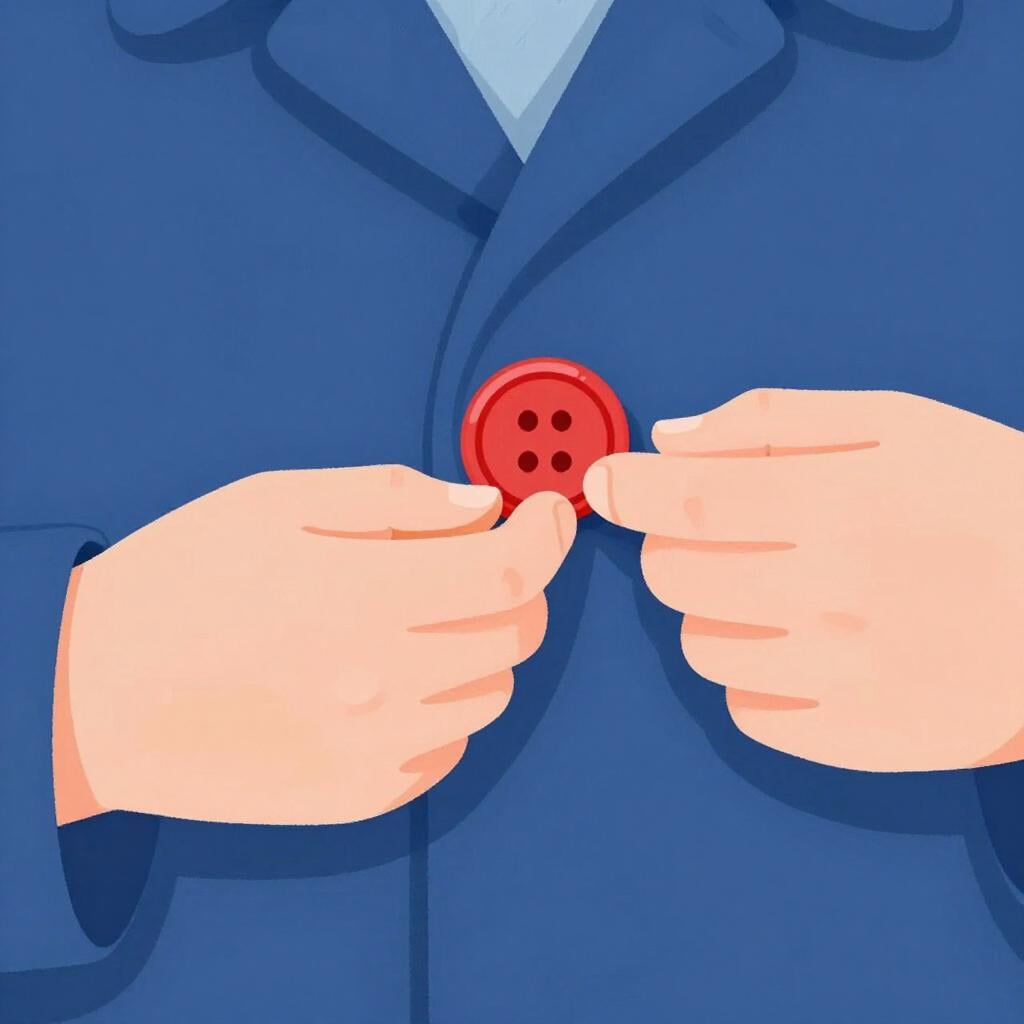
📝 In Action
Abrocha tu chaqueta, que hace frío.
A1Button up your jacket; it's cold.
Por favor, abróchense los cinturones de seguridad.
A2Please, fasten your seatbelts.
No puedo abrocharme este vestido yo sola.
B1I can't zip/fasten this dress by myself.
Subjunctive
Imperfect Subjunctive
Present Subjunctive
Indicative
Preterite
Imperfect
Present
Translate to Spanish
✏️ Quick Practice
Quick Quiz: abrochar
Question 1 of 3
How do you say 'Fasten your seatbelts' (plural/formal)?
📚 More Resources
👥 Word Family▼
📚 Etymology▼
Derived from the word 'broche' (clasp), which comes from Old French 'broche'. It originally referred to a pointed tool or a decorative pin used to hold clothes together.
First recorded: 13th century
Cognates (Related words)
💡 Master Spanish
Take your Spanish to the next level. Read 200+ illustrated and narrated Spanish stories tailored to your level with the Inklingo app!
Frequently Asked Questions
Can I use 'abrochar' for shoelaces?
Generally, no. For shoelaces, we use 'atar' (to tie) or 'amarrar'. Use 'abrochar' if the shoe has a buckle or a strap.
Is 'abrochar' only for buttons?
No, it's used for buttons, zippers (sometimes), buckles, seatbelts, and any type of clasp that secures clothing or gear.
What is the difference between 'abrochar' and 'abotonar'?
'Abotonar' specifically refers to buttons. 'Abrochar' is a broader term that includes buttons, buckles, and clips.