arreglaré
“arreglaré” means “I will fix” in Spanish. It has 3 different meanings depending on context:
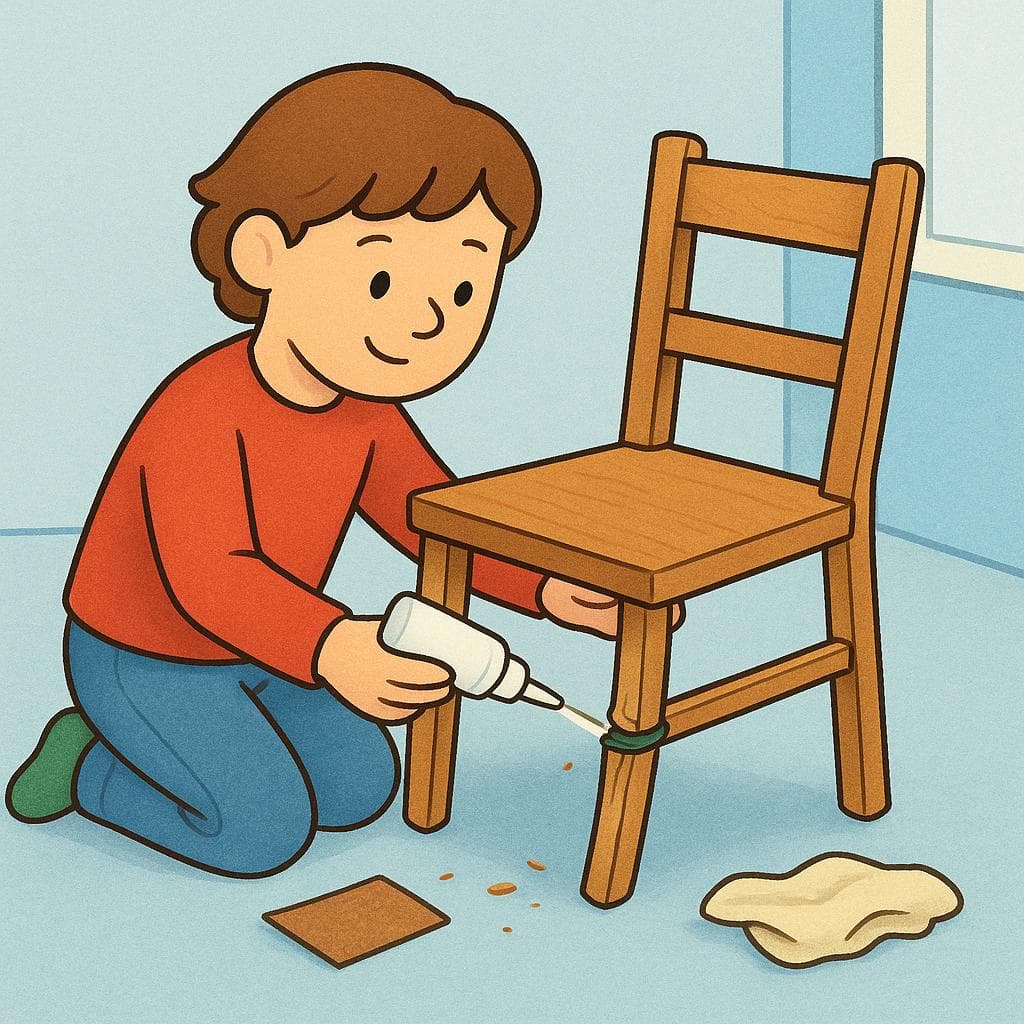


I will fix, I will tidy up
Also: I will arrange, I will sort out
📝 In Action
Arreglaré mi cuarto antes de salir.
A1I will tidy up my room before I go out.
El técnico me dijo que arreglaré la computadora mañana.
A2The technician told me that I will fix the computer tomorrow.
I will repair
Also: I will mend
📝 In Action
La lavadora está rota. Creo que arreglaré el motor yo mismo.
A2The washing machine is broken. I think I will fix the motor myself.
Si llueve, arreglaré el tejado el fin de semana.
B1If it rains, I will repair the roof this weekend.
I will solve
Also: I will settle
📝 In Action
No te preocupes por la deuda, yo la arreglaré.
B1Don't worry about the debt, I will settle it.
Si tenemos un desacuerdo, lo arreglaré hablando con mi jefe.
B2If we have a disagreement, I will sort it out by talking to my boss.
🔄 Conjugations
indicative
present
imperfect
preterite
subjunctive
present
imperfect
✏️ Quick Practice
Quick Quiz: arreglaré
Question 1 of 1
Which of these situations would you NOT use 'arreglaré'?
📚 More Resources
👥 Word Family▼
🎵 Rhymes▼
📚 Etymology▼
The verb 'arreglar' comes from the Spanish word 'regla' (rule or regulation), which itself comes from the Latin 'regula'. Therefore, to 'arreglar' something originally meant to put it back according to the 'rule' or in the correct order.
First recorded: 15th century
Cognates (Related words)
💡 Master Spanish
Take your Spanish to the next level. Read 200+ illustrated and narrated Spanish stories tailored to your level with the Inklingo app!
Frequently Asked Questions
What is the difference between 'arreglaré' and 'voy a arreglar'?
Both mean 'I will fix/tidy up,' but 'arreglaré' (Future Simple) is generally used for plans further out or for formal promises. 'Voy a arreglar' (Periphrastic Future) is much more common in everyday speech for immediate, near-future plans.
How do I know if 'arreglaré' means 'fix' or 'tidy up'?
Look at the direct object (the thing receiving the action). If it's something broken (like a car or a clock), it means 'fix.' If it's a space (like a room or a closet), it means 'tidy up' or 'organize'.