bebés
“bebés” means “babies” in Spanish. It has 2 different meanings depending on context:
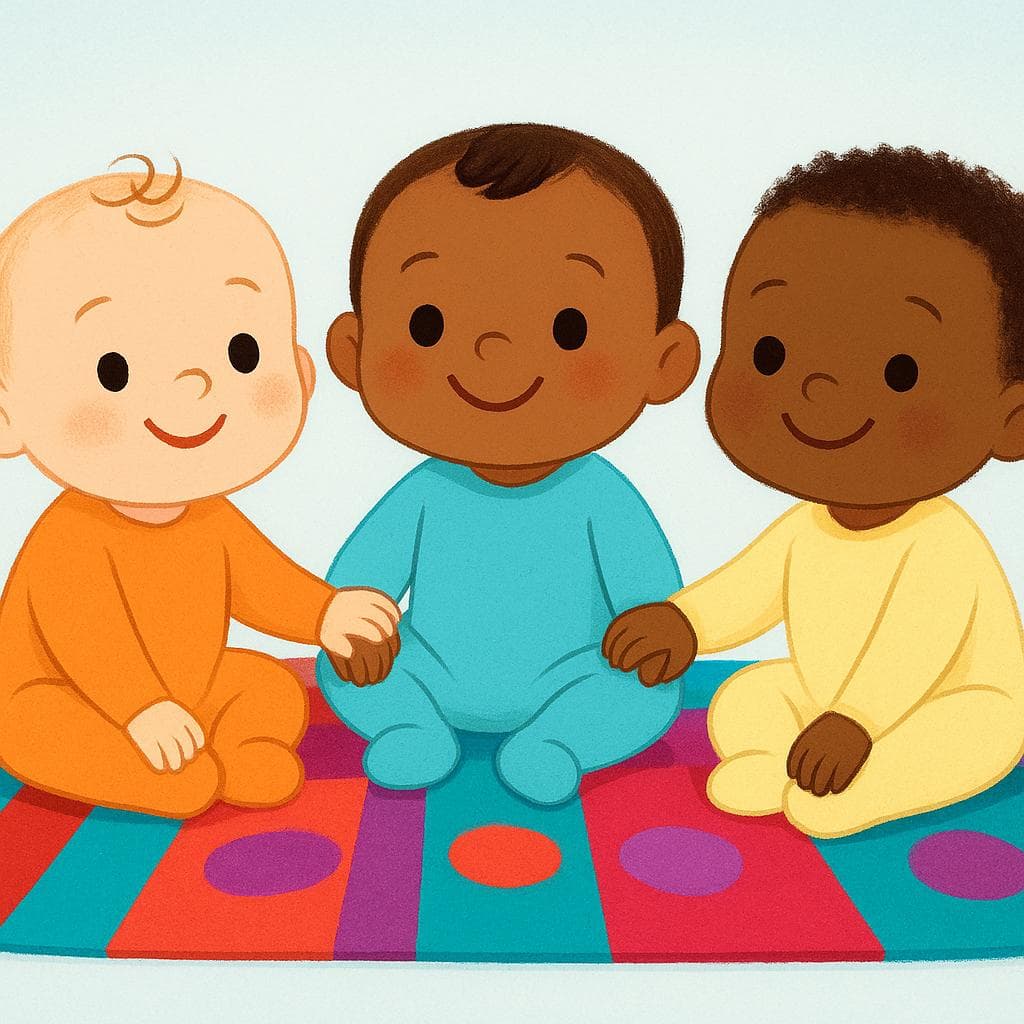

babiesAlso: infants

📝 In Action
Los bebés necesitan dormir muchas horas al día.
A1Babies need to sleep many hours a day.
Hay dos bebés en la cuna.
A1There are two babies in the crib.
La guardería tiene diez bebés nuevos este mes.
A2The daycare has ten new infants this month.
Word Connections
you drinkAlso: you are drinking

📝 In Action
¿Qué tipo de leche bebés en el desayuno?
A1What kind of milk do you drink for breakfast?
Si bebés café por la noche, no podrás dormir.
A2If you drink coffee at night, you won't be able to sleep.
Tú bebés mucha agua después de correr, ¿verdad?
A1You drink a lot of water after running, right?
Word Connections
Indicative
Present
Imperfect
Preterite
Subjunctive
Present Subjunctive
Imperfect Subjunctive
Translate to Spanish
Words that translate to "bebés" in Spanish:
✏️ Quick Practice
Quick Quiz: bebés
Question 1 of 3
Which sentence correctly uses the noun form of 'bebés'?
📚 More Resources
👥 Word Family
📚 Etymology
The noun 'bebés' comes from the singular noun 'bebé,' which is an onomatopoeic word (imitating the sound of a baby). The verb 'bebés' comes from the Latin verb *bibere*, meaning 'to drink.' The two words are unrelated in origin but have merged in spelling and sound.
First recorded: Both roots date back to Vulgar Latin, with the modern Spanish forms stabilizing in the Middle Ages.
Cognates (Related words)
💡 Master Spanish
Take your Spanish to the next level. Read 200+ illustrated and narrated Spanish stories tailored to your level with the Inklingo app!
Frequently Asked Questions
Why do 'bebés' (noun) and 'bebés' (verb) look and sound the same?
They are homonyms, meaning they are two different words with different origins that happen to sound identical in Spanish. The noun 'bebés' (babies) has a written accent (é) to show where the stress falls, while the verb 'bebés' (you drink) does not need one because the stress naturally falls there.
Is 'bebés' (babies) masculine or feminine?
The singular word 'bebé' is often treated as masculine ('el bebé') regardless of the child's gender unless you specify 'la bebé' for a girl. The plural form 'los bebés' is typically used for a group of any gender.