casarme
“casarme” means “to get married (me/I)” in Spanish (Used when the subject ('I') is also the one receiving the action.).
to get married (me/I)
Also: for me to marry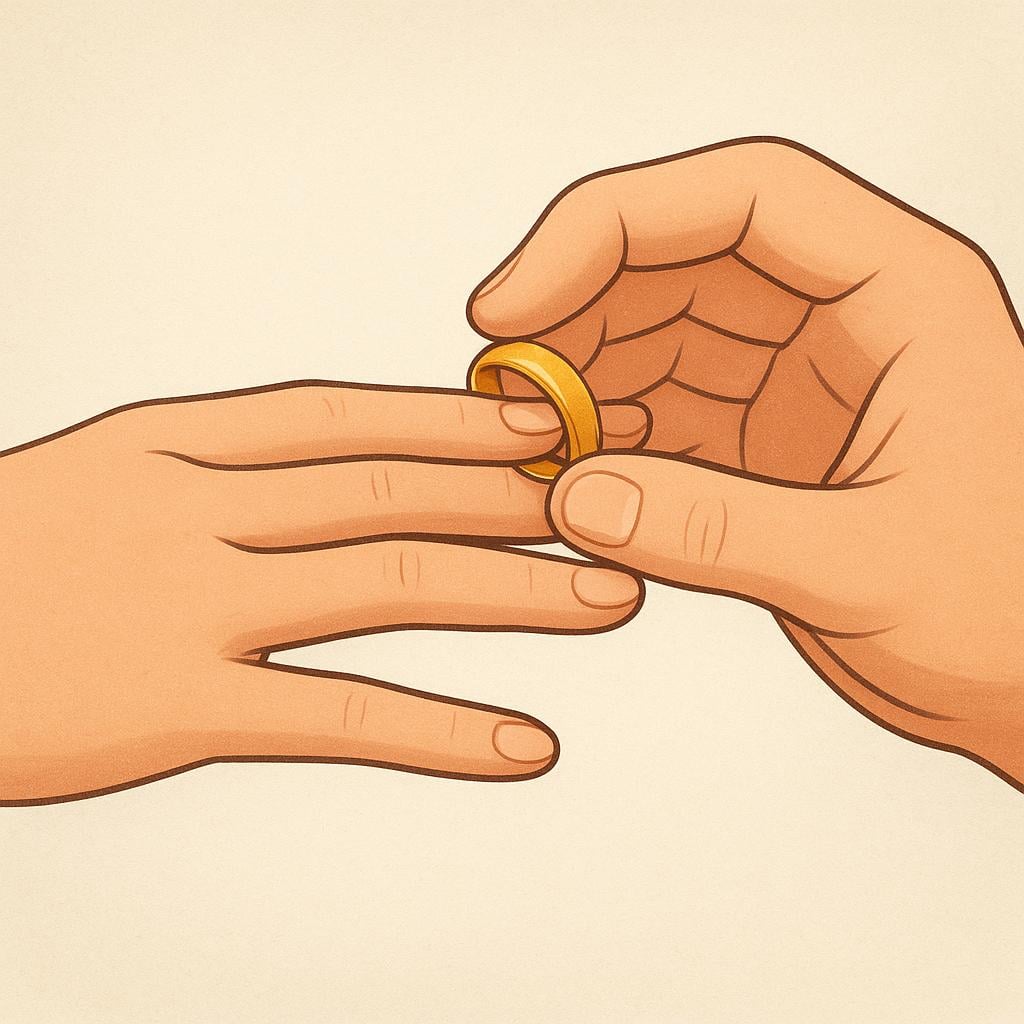
📝 In Action
Quiero casarme el próximo verano en la playa.
A2I want to get married next summer on the beach.
Antes de casarme, necesito encontrar un trabajo estable.
B1Before getting married, I need to find a stable job.
Estoy pensando en casarme pronto.
A2I am thinking about getting married soon.
🔄 Conjugations
indicative
present
imperfect
preterite
subjunctive
present
imperfect
✏️ Quick Practice
Quick Quiz: casarme
Question 1 of 2
Which sentence correctly uses 'casarme'?
📚 More Resources
👥 Word Family▼
🎵 Rhymes▼
📚 Etymology▼
The root verb 'casar' comes from the Latin word 'casa,' meaning 'house' or 'hut.' Originally, 'casar' meant 'to build a house' or 'to settle down.' This meaning naturally evolved to mean 'to marry' because establishing a household was the central purpose of marriage.
First recorded: 13th century (in Spanish)
Cognates (Related words)
💡 Master Spanish
Take your Spanish to the next level. Read 200+ illustrated and narrated Spanish stories tailored to your level with the Inklingo app!
Frequently Asked Questions
Why does the pronoun 'me' attach to the end of the verb?
In Spanish, when you use a reflexive verb after a preposition (like 'antes de') or after a helper verb (like 'querer' or 'necesitar'), you have the choice: you can either put the pronoun ('me') before the conjugated verb, or attach it directly to the end of the infinitive ('casarme').
What is the difference between 'casar' and 'casarse'?
'Casar' (without the pronoun) means 'to marry someone else' or 'to perform the marriage ceremony.' 'Casarse' (with the pronoun) means 'to get married'—the action is done by you, to yourself.